PART 3 — THE LIFE THEY THOUGHT I HAD ALREADY FINISHED
Thomas Brennan still had one final document to reveal.
I knew because he had placed it facedown on the dining-room table before my children arrived.
He had not touched it once during the argument.
Not when Jennifer learned she was no longer a beneficiary on my investment accounts.
Not when Michael discovered the house had been transferred into a protected trust.
Not when Lisa realized the life insurance policy they had quietly divided in their imaginations no longer listed any of them.
And not when I placed my hospital discharge papers on the table and told them the sentence I had rehearsed only once.
“I wasn’t punishing you. I finally believed you when you told me to figure things out myself.”
The room had gone quiet after that.
Not peaceful.
There is a difference between silence and peace.
This silence was heavy with all the things nobody wanted to admit.
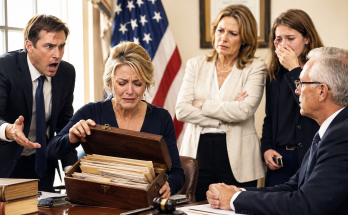
Jennifer sat stiffly at the far end of my dining table, still wearing the cream wool coat she had refused to take off.
Michael leaned back in his chair with his arms crossed as though he were waiting for someone to announce that the whole thing had been a ridiculous misunderstanding.
Lisa stared at the hospital bracelet I had placed beside the discharge papers.
I had kept it.
I did not know why at the time.
Maybe some part of me already understood that one day I would need proof that fear could be lonely.
The little white band looked absurdly harmless against the polished wood.
My name.
My date of birth.
The date I had believed I might die.
None of my children had been there.
Thomas folded his hands.
“I think we should finish.”
Jennifer turned sharply toward him.
“Finish what?”
Thomas looked at me.
Not at her.
At me.
That mattered.
For most of my adult life, conversations about my family somehow became conversations conducted around me instead of with me.
Doctors sometimes did it after Richard died.
Bankers occasionally did it once my hair became gray.
My own children had begun doing it without noticing.
They would say things like:
Mom probably shouldn’t drive at night anymore.
Mom needs to simplify.
Mom should think about selling.
Mom doesn’t understand how complicated these investments are.
As if growing older were the same thing as slowly disappearing from the room.
Thomas never did that.
He waited for me to nod.
I did.
He turned the final document over.
Michael’s eyes went immediately to the heading.
“What is that?”
“My new durable power of attorney,” I said.
Jennifer laughed once.
A short, disbelieving sound.
“We already knew you changed that.”
“No,” Thomas said. “You knew your mother removed you.”
Jennifer looked at me.
“Removed us in favor of who?”
Thomas slid the document across the table.
Jennifer grabbed it first.
Her eyes moved quickly over the first page.
Then stopped.
“Who is Eleanor Grant?”
I almost smiled.
“Ellie.”
Lisa frowned.
“From across the street?”
“Yes.”
Michael stared at me.
“You gave the neighbor control over your finances?”
“No.”
His voice rose.
“That is literally what a power of attorney does.”
Thomas intervened.
“No, Michael. A durable power of attorney authorizes a named person to act under specific conditions and within the powers granted in the instrument. Your mother’s document contains restrictions.”
Michael barely looked at him.
“You gave Ellie authority over us?”
I felt the old reflex.
Explain.
Soothe.
Make everyone comfortable.
I let it pass through me.
Then I answered.
“I gave authority to someone who answered the phone when I called.”
That stopped him.
Lisa looked down.
Jennifer set the document on the table.
“You’ve known that woman, what, five years?”
“Eight.”
“That’s not the point.”
“It is to me.”
“She isn’t family.”
There it was.
Family.
The word my children had ignored for months and now lifted like a flag.
I looked at Jennifer.
“Neither was the Uber driver who brought me home from the hospital.”
Her face tightened.
“Mom—”
“Neither was the nurse who sat beside me at two in the morning because I was afraid to sleep.”
“Stop.”
“Neither was Mr. Alvarez from two houses down, who shoveled my driveway after Richard died without ever asking whether he was in my will.”
Jennifer stood.
“I said stop.”
Thomas started to speak.
I lifted one hand.
“No. Let her stand.”
Jennifer stared at me.
For a moment, I saw her at fourteen.
Furious because I would not let her go to an unsupervised party.
Her chin lifted exactly the same way.
Her eyes sharpened exactly the same way.
And just like that, I understood one of the strangest things about being a mother.
Your children grow up.
They marry.
They have mortgages.
Some of them raise children of their own.
They become middle-aged people with gray strands at their temples.
And still, in certain moments, you can see every age they have ever been layered beneath their face.
I loved that girl.
I loved the woman she had become too.
Love was not the problem.
That realization had taken me seventy-two years.
Jennifer pointed at the legal document.
“You cannot possibly think this is normal.”
“What part?”
“Replacing your children with a neighbor.”
“I didn’t replace anyone.”
“That’s exactly what you did.”
“No.”
My voice stayed calm.
“You left a job vacant.”
Her hand dropped.
Nobody said anything.
I continued.
“You all told me you had your own lives.”
Michael stared at the table.
“I listened.”
Lisa whispered, “Mom…”
“I listened to every word.”
I turned toward her.
“You said I should move somewhere more manageable.”
Lisa’s eyes filled.
“I was worried about you.”
“Were you?”
“Yes.”
“Then why didn’t you come when I was in the hospital?”
Her mouth opened.
Closed.
“I had the kids.”
“Your oldest is sixteen.”
“I know, but—”
“You live forty minutes away.”
She began crying.
I almost apologized.
I almost stood and wrapped my arms around her.
That was what I had always done.
Their pain arrived.
Mine stepped aside.
But Thomas had said something to me weeks earlier while we revised the estate plan.
“Maggie, boundaries often feel cruelest to the person who was accustomed to having none.”
I had not liked the sentence.
That was probably why I remembered it.
So I stayed in my chair.
Not cold.
Not triumphant.
Present.
Lisa wiped her eyes.
“I thought you were okay.”
“I told you I was scared.”
“I know.”
“No. You knew after I said it. There’s a difference.”
She covered her face.
Michael shifted uncomfortably.
Jennifer remained standing.
Then she looked at Thomas.
“What exactly does this neighbor control?”
Thomas answered carefully.
“Eleanor Grant is first agent under the durable power of attorney. If she cannot serve, the successor agent is David Cho.”
Michael frowned.
“Who the hell is David Cho?”
“My financial adviser.”
“You gave some adviser power too?”
“I gave two trustworthy people clearly defined responsibilities.”
“You don’t trust your own children?”
This time I did not hesitate.
“Not with my money.”
It landed.
Michael looked as though I had slapped him.
For a second, I hated myself.
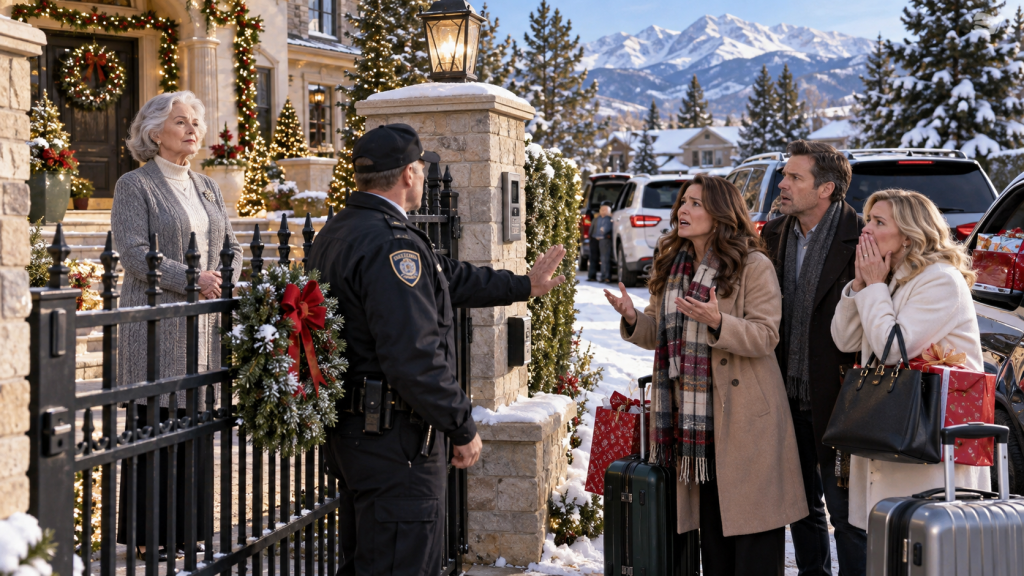
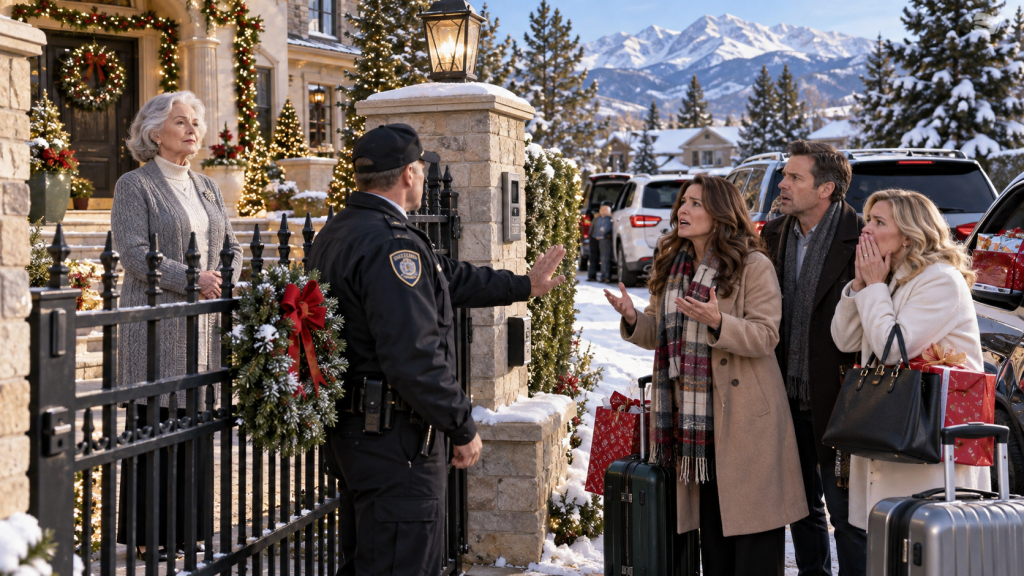
Then I remembered him standing at my gate three months earlier, typing in the old code.
Once.
Twice.
Then wrapping both hands around the metal bars and starting to climb.
He had not called first.
He had not asked whether I needed groceries.
He had not asked whether I had made plans for Christmas.
He came because Jennifer said they were going to discuss my future.
My house.
My finances.
My care.
My life.
And when the gate did not open, his first instinct had been to climb over it.
Trust is not an inheritance.
That was another lesson I learned late.
Michael stared at me.
“So that’s it?”
“No.”
His expression hardened.
“What else?”
I looked at Thomas.
He nodded.
“The most important change,” I said, “isn’t the house.”
Jennifer slowly sat back down.
“It isn’t the insurance.”
Nobody moved.
“It isn’t the will.”
Lisa lowered her hands.
“What is it?”
I looked at the three people I had loved longer than almost anyone alive.
“My medical directive.”
Michael exhaled.
“Oh, for God’s sake.”
I ignored him.
“I removed all three of you from medical decision-making.”
Jennifer looked stunned.
“You cannot be serious.”
“I am.”
“What happens if you have a stroke?”
“Ellie is my health-care proxy.”
Jennifer pushed her chair back again.
This time she did not stand.
“You’re trusting a woman across the street with whether you live or die?”
“No.”
I leaned forward.
“I am trusting her to follow what I wrote.”
Then I pulled another folder toward me.
Inside were eight pages.
My advance directive.
My wishes.
What I wanted if I could not speak for myself.
What treatments I wanted.
What treatments I did not.
Who could decide.
Who could not.
The kind of details that healthy people avoid because writing them down feels like inviting death into the room.
After Richard died without warning, I should have done it years earlier.
I had not.
Maybe because I believed my children would know what I wanted.
Maybe because I believed they would care enough to ask.
Then I pictured myself unconscious in a hospital bed while the three of them argued about cost, care facilities, and how quickly the house might need to be sold.
That image had frightened me more than death.
“I documented everything,” I told them.
“My doctors have copies. Thomas has a copy. Ellie has one.”
Jennifer looked wounded.
“And we don’t?”
“No.”
“Why?”
“Because it isn’t your decision anymore.”
The clock above the fireplace ticked.
I could hear the refrigerator humming from the kitchen.
Outside, snow had begun falling again.
Soft flakes moving past the dining-room windows.
Christmas lights glowed along the railing of the porch.
The house looked warm from inside.
It was strange to realize how much coldness could exist inside a beautiful room.
Michael finally spoke.
“This is insane.”
Thomas’s expression changed slightly.
“Be careful.”
Michael turned.
“With what?”
“With where you take that argument.”
“What is that supposed to mean?”
“It means your mother has already been evaluated.”
That silenced everyone.
Jennifer’s face changed.
“Evaluated?”
“Yes.”
My stomach tightened.
I had agreed to this reveal.
Still, hearing Thomas say it made the last three months rush back.
The competency assessment.
The neurologist.
The psychologist.
The cognitive testing.
The questions.
What year is it?
Who is the president?
Remember these five words.
Draw a clock.
Explain how you would respond if you smelled smoke in a crowded theater.
I had resented every minute.
Not because the doctors were unkind.
Because my children’s insinuations had made it necessary.
Jennifer looked at me.
“You went to a neurologist?”
“I did.”
“Why didn’t you tell us?”
I almost laughed.
“You mean during one of the calls you weren’t making?”
She looked away.
Thomas pulled another page from his folder.
“Margaret underwent an independent cognitive evaluation after Jennifer contacted my office expressing concern about possible incapacity.”
Lisa stared at her sister.
“You did what?”
Jennifer stiffened.
“I was worried.”
Michael looked equally surprised.
“You called Mom’s lawyer?”
“I called because none of this sounded like her.”
I felt something settle inside me.
Not anger.
Clarity.
“What part didn’t sound like me?”
Jennifer did not answer.
I did.
“Saying no?”
Her face flushed.
“Changing my own beneficiaries?”
“Mom—”
“Putting up a gate?”
“That came out of nowhere.”
“No.”
I shook my head.
“It came out of being seventy-two years old, alone, and finally understanding that three people who expected access to my house did not feel responsible for giving me access to their time.”
Nobody spoke.
Thomas placed the evaluation letter on the table.
“The conclusion was unequivocal,” he said.
“Mrs. Margaret Hale demonstrated full decisional capacity, intact executive functioning, and clear understanding of her financial and legal decisions.”
Michael glanced at Jennifer.
She looked pale.
Thomas continued.
“I recommended the assessment because allegations of incapacity are common when older adults make estate changes that disappoint expected heirs.”
The word expected stung.
Expected heirs.
My children had never said inheritance.
Not directly.
They did not have to.
Jennifer had asked whether Richard’s life insurance had been invested.
Michael had asked whether my estate would face probate.
Lisa had sent me listings for senior communities after commenting that maintaining a large house at my age was “financially inefficient.”
Individually, each question had sounded practical.
Together, they sounded like people measuring curtains before the previous owner moved out.
Jennifer looked at me.
“You think I was trying to have you declared incompetent?”
“I think you called my attorney because you wanted to know whether I was competent.”
“I was worried someone was influencing you.”
“Who?”
She glanced toward the window.
“Ellie. Thomas. Whoever.”
“Anyone except me?”
“That isn’t what I meant.”
“It’s what you did.”
Her eyes shone.
“I don’t even recognize you.”
The sentence pierced somewhere old.
For decades I had been recognizable because I behaved predictably.
I called.
I hosted.
I forgave.
I accommodated.
I mailed birthday checks to grandchildren whose parents rarely reminded them to call.
I cooked Thanksgiving for eighteen people and apologized if the rolls were late.
I said, “I understand,” when they canceled.
I said, “Maybe next time,” when next time never came.
I made myself easy to neglect.
That woman was recognizable.
This one was not.
“I recognize myself,” I said.
And that, more than anything else that day, made Jennifer cry.
She turned away quickly.
Michael stood.
“I’m done.”
“Sit down,” Jennifer said.
“No.”
He looked at me.
“This entire thing is manipulative.”
I felt strangely calm.
“How?”
“You want us to beg.”
“No.”
“You want us to prove something.”
“No.”
“You changed everything, called us here, and now you’re making us listen to a lecture about how awful we are.”
“I didn’t call you here.”
That stopped him.
Thomas nodded.
“That’s correct. You requested the meeting.”
Michael looked at him.
Then at Jennifer.
She wiped her face.
“I asked for the meeting because we needed to talk.”
“You wanted to talk about whether I should be allowed to control my own property.”
“That is not fair.”
I leaned back.
“You arrived at my house in December after I told you not to come.”
Jennifer flinched.
“You brought your spouses and your children.”
“We thought you were just upset.”
“You came prepared to stay for Christmas.”
“Because we thought once we were here you’d calm down.”
There it was.
I had heard versions of that sentence throughout motherhood.
Once she calms down.
Once Mom gets over it.
Once she stops being emotional.
People often call a woman emotional when her feelings interfere with what they wanted from her.
I looked at all three.
“You didn’t believe my no was real.”
No one argued.
That was the beginning.
Not the dramatic part.
Not the estate changes.
Not the gate.
That moment.
The first moment they understood that my no did not mean convince me.
It meant no.
Michael sat back down.
Slowly.
Thomas closed one folder and opened another.
“This meeting can end whenever Margaret wants.”
Jennifer wiped her eyes.
“What happens now?”
I had asked myself that question every night for three months.
What happens now?
After anger.
After paperwork.
After the gate.
After the feeling of power fades and the quiet returns.
Because that was the part nobody warned me about.
Setting a boundary feels strong during the confrontation.
Living with it afterward can feel unbearably lonely.
I had spent Christmas Eve sitting with Ellie and her husband, Frank.
They invited me over after the gate incident.
I nearly declined.
I told myself I preferred being alone.
Ellie looked straight at me and said, “Maggie, there’s a difference between solitude and punishment.”
So I went.
We ate roast chicken.
Frank burned the gravy.
Their grandson showed me a card trick and messed it up three times.
Nobody discussed my house.
Nobody asked about my will.
At nine, we walked through fresh snow to the little Lutheran church three blocks away.
I had not attended a Christmas Eve service in years.
When everyone lit candles and sang “Silent Night,” I cried.
Not because I missed my children.
Though I did.
I cried because I realized there were still places in the world where I could enter without proving my usefulness.
That was new.
So when Jennifer asked what happened now, I did not answer from anger.
I answered from what came after anger.
“That depends on you.”
Michael’s brows pulled together.
“So you do want us to prove something.”
“No.”
I looked from him to Jennifer to Lisa.
“I am not giving you a list.”
“Then what do you want?”
“I want nothing you have to be forced to give.”
Lisa whispered, “Mom…”
“If you call because you are afraid of losing money, don’t call.”
Jennifer lowered her gaze.
“If you visit because you think showing up six times will restore you to my will, don’t visit.”
Michael’s jaw tightened.
“If you ask whether I need help because you want evidence for a future competency petition, don’t ask.”
Jennifer closed her eyes.
“But if you want a mother…”
My voice failed.
I had not planned to cry.
I hated crying in front of them.
Not because tears are weakness.
Because my children had always reacted to my tears by either panicking or becoming defensive.
I breathed until I could continue.
“If you want your mother, then I am still here.”
Lisa began sobbing.
This time I went to her.
Not because I was surrendering.
Because I wanted to.
Choice changes the meaning of an act.
I walked around the table and put one hand on her shoulder.
She leaned into me.
“I’m sorry,” she said.
I closed my eyes.
Her hair still smelled faintly of the same floral shampoo she used in college.
“I know.”
“No, you don’t.”
She lifted her face.
“I really am.”
I sat beside her.
Jennifer looked at us.
Michael stared toward the window.
Lisa wiped her cheeks.
“I kept thinking you were stronger than other people.”
The sentence confused me.
“What?”
“After Dad died.”
She shook her head.
“You handled everything.”
“I didn’t have a choice.”
“I know, but that’s how I saw you. You were the one who handled things.”
She laughed bitterly.
“When the hospital thing happened, I read your message and I thought, Mom always gets through stuff.”
I felt my heart ache.
“Being strong doesn’t mean I don’t get scared.”
“I know that now.”
“Do you?”
“Yes.”
She took my hand.
“I think I made your strength an excuse.”
That sentence stayed with me.
I had never heard it put so clearly.
People admire strong women.
Then sometimes they use that admiration to abandon them.
You can handle it.
You always do.
Lisa squeezed my fingers.
“I’m sorry.”
I believed her.
Not completely.
Belief is not a switch.
But enough.
Jennifer stood.
“I need air.”
She walked toward the back door.
Thomas glanced at me.
I nodded.
Let her go.
Michael remained seated.
He looked older than forty-four.
He had Richard’s hands.
That always got me.
Broad palms.
Short fingers.
A small scar near the thumb.
When Michael was nine, Richard taught him how to change the oil in our old station wagon.
They spent four hours in the garage.
Michael came in covered in grease, glowing with pride.
For years after Richard died, seeing those hands could make grief rise without warning.
Now they were folded tightly together.
“You think I only care about money,” he said.
I considered lying.
“No.”
He looked up.
“I think you care about me.”
His face softened slightly.
“And I think you also counted on my money.”
He exhaled.
“That’s not the same thing.”
“No.”
“It makes me sound disgusting.”
“I didn’t say that.”
“You didn’t have to.”
I studied him.
There are moments when revenge is available.
Easy.
Tempting.
You can see exactly which words would hurt the person in front of you.
Parenthood teaches you their weak places.
Love gives you a map.
I chose not to use it.
“Michael, wanting an inheritance doesn’t make you a monster.”
His eyes lifted.
“Treating me like I was already gone is what hurt.”
His mouth tightened.
I continued.
“You asked me about probate while I was still alive.”
He looked down.
“You asked whether I had updated the deed.”
“I thought I was helping.”
“You never asked if I had been sleeping.”
Silence.
“Or eating.”
He rubbed his palms together.
“Or whether I still woke up some nights reaching for your father.”
That did it.
He covered his mouth.
I looked away.
Richard had been gone thirteen years.
Grief had changed shape.
But some nights I still woke around two and reached across the bed.
The empty side no longer shocked me.
That was almost worse.
Human beings adapt to absence with a cruelty that resembles mercy.
Michael’s voice cracked.
“I miss him too.”
“I know.”
“I don’t talk about it.”
“You never did.”
“I thought you didn’t want to.”
I looked at him.
“Why?”
“Because you always changed the subject.”
That surprised me.
Then I remembered.
The first Christmas after Richard died.
Michael tried to tell a story about his father getting lost on a fishing trip.
I left the table.
At the time, I thought I was preventing myself from ruining dinner.
Maybe Michael saw it differently.
Families build entire histories from moments nobody explains.
“I couldn’t talk about him then,” I said.
Michael nodded.
“I figured.”
“I can now.”
His eyes filled.
“Okay.”
That one word carried thirty years.
Okay.
Thomas quietly gathered some papers.
Not all wounds needed witnesses.
I appreciated him for knowing that.
The back door opened.
Jennifer returned.
Snow dusted the shoulders of her coat.
She sat down.
Her face looked exhausted.
“I called because I thought something had happened to you.”
I knew which call she meant.
The one to Thomas.
“When you stopped reaching out,” she continued, “it felt wrong.”
“You could have called me.”
“I did.”
“Three months later.”
She winced.
“I kept thinking you would call first.”
There it was.
Not malice.
Habit.
I had called first for forty years.
From dorm rooms.
New jobs.
Marriage problems.
Pregnancies.
Flu.
Birthdays.
Arguments.
I reached.
They received.
When I stopped, each child interpreted the silence as something I was doing to them.
None of them immediately recognized it as the absence of something I had always done for them.
Jennifer removed her coat.
Finally.
She laid it across the chair beside her.
“I thought you were punishing us.”
“At first, I was.”
All three looked at me.
I had not intended to admit that.
But truth had become expensive enough in our family.
I did not want to waste it.
“The first week, yes.”
I smiled without humor.
“I wanted all of you to notice.”
Lisa’s eyes filled again.
“You wanted us to call.”
“Yes.”
“Did you wait?”
“Every day.”
Nobody moved.
That was harder to say than anything about the money.
“I put my phone beside me at breakfast.”
My voice trembled.
“At lunch.”
I looked toward the kitchen.
“At dinner.”
The memory embarrassed me.
Seventy-two years old.
Checking a screen.
Telling myself they were busy.
Then going to bed.
“The first month, every time a car slowed down outside, I thought maybe one of you had come.”
Michael looked sick.
“Mom…”
“I bought extra chicken one Sunday because I thought Lisa might stop by.”
Lisa bowed her head.
“I didn’t.”
“No.”
“I’m sorry.”
“I know.”
I breathed.
“By the second month, I stopped waiting.”
That was the real estate change.
Not the trust.
Not the beneficiary forms.
Not the locks.
I stopped waiting.
There is a grief particular to giving up hope in people who are still alive.
You cannot bury it.
There is no funeral.
No casserole arrives.
Nobody sends flowers.
You simply wake one morning and realize expectation has become more painful than absence.
That morning, I made coffee.
Called Thomas.
And changed my life.
Jennifer wiped her eyes.
“Why didn’t you just tell us?”
I almost became angry.
Then I realized she genuinely did not know.
“I did.”
She shook her head.
“No. I mean tell us you were this hurt.”
“I told you I was scared after the hospital.”
“Yes, but—”
“I asked if I could count on you.”
She looked down.
“You said I was being dramatic.”
Her face changed.
I had not forgotten.
Apparently, she had.
That is another cruel thing about hurt.
The person delivering it often remembers the argument.
The person receiving it remembers the sentence.
Jennifer’s lips trembled.
“I said that?”
“Yes.”
“I don’t remember.”
“I do.”
She covered her mouth.
I gave her time.
Then Thomas cleared his throat gently.
“There is one point we need to address before we conclude.”
I knew what was coming.
The foundation.
Not exactly a foundation in the grand sense.
I was not a billionaire.
I did not have buildings with my name carved into stone.
But after months of meetings, I had created something small.
Intentional.
Thomas opened the trust summary.
“A portion of Margaret’s estate, upon her death, will endow the Richard and Margaret Hale Independence Fund.”
Michael looked up.
“Dad’s name?”
I nodded.
Richard would have liked that.
Not the recognition.
The purpose.
My husband was many things.
Stubborn.
Terrible at folding laundry.
Hopeless with computers.
But he believed deeply that nobody should feel trapped because of money.
When we were newly married, his sister stayed with us after leaving a violent husband.
Richard slept on our sofa for four months so she and her son could have the second bedroom.
He never complained once.
The fund would provide emergency assistance to older adults living alone after widowhood, illness, or family estrangement.
Transportation.
Home repairs.
Temporary care.
Legal consultations.
Small things.
Sometimes the difference between independence and panic is not a fortune.
Sometimes it is a ride home from the hospital.
I looked at my children.
“The fund will help older people who don’t have anyone nearby when they need something.”
Michael understood first.
“The Uber.”
“Yes.”
Lisa cried again.
Jennifer stared at the papers.
“You’re giving everything away?”
“No.”
Thomas answered.
“The estate plan includes specific gifts to each grandchild and certain personal items to the children.”
Their eyes moved toward me.
I almost laughed.
Even after everything, money made the room tighten.
I continued.
“You are not disinherited.”
Jennifer looked confused.
“But you said—”
“I changed the structure.”
Michael frowned.
“What does that mean?”
“It means none of you is getting rich because I die.”
Nobody spoke.
The sentence sounded harsher aloud than it had in my head.
So I softened it with the truth.
“And none of you needs to.”
Jennifer had a successful marketing career.
Michael owned a construction company.
Lisa and her husband were both teachers.
They were not struggling.
Not truly.
The grandchildren had education accounts Richard and I had established years ago.
I was not abandoning anyone.
I was refusing to let my death become a financial event they quietly anticipated.
“You’ll receive keepsakes,” I said.
“Some money.”
I looked at Jennifer.
“You’ll get my mother’s emerald ring.”
Her face broke.
She had always loved it.
I looked at Michael.
“You’ll get your father’s tools.”
His eyes filled instantly.
“His red toolbox?”
“All of it.”
He looked away.
“And Lisa…”
She waited.
“You’ll get the piano.”
She laughed through tears.
“You hate that piano.”
“I hate listening to myself play it.”
She laughed harder.
For a moment, the room loosened.
The family we had once been flickered through.
Not gone.
Just buried beneath resentment, fear, expectation, and years of laziness with one another.
Then Jennifer touched the estate summary.
“How much goes to the fund?”
“Most of what remains after the grandchildren’s educational trusts and specific gifts.”
Her eyes widened.
“So potentially over a million dollars.”
“Yes.”
Michael rubbed his forehead.
“Jesus.”
I smiled.
“Your father said something similar the first time we had more than ten thousand dollars saved.”
Lisa gave a small laugh.
But Jennifer did not.
“Do you realize what this looks like?”
I knew.
A mother punishing children.
An old woman manipulated by outsiders.
A late-life tantrum written into legal documents.
That story would be easier.
Cleaner.
But I knew what it actually was.
“I do.”
She waited.
“It looks like my money has a job.”
That ended it.
Not the conversation.
But the argument about whether I needed their approval.
For the first time, they understood there was no button they could press to make me return to the woman I had been.
The old gate code was not going to work.
Not at the driveway.
Not in my life.
—
The meeting ended two hours later.
Thomas left first.
He stood in the foyer putting on his coat while snow pressed white against the glass beside the front door.
“You did well,” he said.
“I feel terrible.”
He smiled.
“Those can both be true.”
I hated that he was always saying things like that.
“Do lawyers practice these sentences?”
“Only the expensive ones.”
I laughed.
Then I hugged him.
He seemed surprised.
“Thank you.”
He returned the hug carefully.
“For what?”
“For talking to me like I’m still here.”
His expression softened.
“Maggie.”
“I mean it.”
I pulled back.
“I didn’t know how invisible I’d started feeling until someone stopped treating me that way.”
Thomas looked toward the dining room, where my children were still gathering coats.
“You aren’t invisible.”
“I know that now.”
Outside, his car disappeared slowly down the snow-covered street.
When I closed the door, Michael was standing behind me.
“Do you need me to shovel tomorrow?”
The question was so ordinary I almost cried.
“No.”
He looked disappointed.
Then I added:
“But you can if you want.”
His face changed.
“Okay.”
That was how it began.
Not with a grand apology.
With snow.
The next morning at eight fifteen, I heard scraping outside.
I looked through the window.
Michael was shoveling my driveway.
He had not called.
At first that irritated me.
Then I noticed he had parked on the street.
He had not entered the gate.
He had not assumed.
He cleared the sidewalk.
The porch steps.
The path to the mailbox.
Then he texted:
Driveway’s clear. I didn’t want to wake you.
I stood at the window with my coffee.
My finger hovered over the phone.
Old Maggie would have invited him inside immediately.
Made eggs.
Sent leftovers home.
Turned one act into a whole day of mothering.
New Maggie wrote:
Thank you. That was kind.
Then I put the phone down.
Ten minutes later:
Love you, Mom.
I stared at the screen.
It had been months since any of them wrote that without attaching a request.
I replied:
Love you too.
Then I finished my coffee.
—
January was quiet.
Not silent.
Quiet.
Lisa called twice the first week.
The first conversation lasted eleven minutes.
I know because I checked afterward.
Not because I was counting.
Because I had spent so long measuring absence that presence felt strange.
She asked about my book club.
I almost said:
You never cared about my book club before.
But people cannot change if you punish them for trying.
So I told her.
We were reading a terrible mystery novel everyone pretended to like.
She laughed.
Then she told me about Sophie, my sixteen-year-old granddaughter, arguing about college applications.
For twenty minutes, nobody mentioned money.
When we hung up, I sat very still.
It felt surprisingly intimate.
Maybe because nothing important had happened.
I had forgotten that families are built mostly from unimportant things.
What are you making for dinner?
Did you see the snow?
Your niece got a haircut.
I found Dad’s old jacket.
The doctor says my cholesterol is fine.
Ordinary details are the bricks of closeness.
We had let ours erode.
Jennifer did not call.
Not at first.
She sent flowers.
I hated that.
Not because flowers are bad.
Because the card said:
Thinking of you. Love, Jen.
It felt like something sent after surgery.
Or death.
I put the flowers on the table anyway.
White lilies.
Beautiful.
Too fragrant.
Three days later, Jennifer texted.
Could we have coffee? Just us.
I stared at it for a long time.
My stomach tightened.
I thought of the competency call.
The gate.
Her face when she learned about the estate.
Then I thought of the phrase I had been trying to learn.
A boundary is not a wall unless you never put in a door.
I answered.
Thursday. 10 a.m. You can come here.
She arrived at 9:52.
Jennifer was always early when nervous.
She carried no folder.
No husband.
No children.
No agenda that I could see.
Just two coffees.
She held mine up.
“Half-caf. One sugar.”
I took it.
“You remembered.”
Her face folded.
That was the first time she cried that day.
We sat at the kitchen table.
Same table where I had sat alone after the phone call that changed everything.
The irony was not lost on me.
Jennifer wrapped both hands around her cup.
“I called Thomas because I thought you were being manipulated.”
“I know.”
“I need you to know I didn’t call because I wanted your money.”
I waited.
She looked at me.
“Okay. That’s not entirely true.”
I almost smiled.
She laughed weakly.
“I hate this.”
“Truth?”
“Yes.”
“It grows on you.”
That actually made her laugh.
Then she became serious.
“I did think about the money.”
I appreciated that more than any denial.
“Dad always said the house was our security.”
I frowned.
“He said what?”
“When I was in college.”
Jennifer stared at her cup.
“I was freaking out about student loans. He told me not to worry so much. He said one day the house would belong to us and he had life insurance and investments.”
My chest tightened.
Richard.
Suddenly, I saw an old conversation differently.
Years earlier, Jennifer had asked why we never sold the house and bought something bigger.
Richard laughed and said, “This place is worth more every year. It’ll pay for somebody’s retirement.”
I thought he meant ours.
Maybe he did.
Maybe Jennifer heard something else.
She continued.
“I think I grew up treating your estate like something already promised.”
“Your father never discussed that with me.”
“I know.”
“He shouldn’t have.”
“I know.”
We sat with Richard’s absence between us.
Even dead, parents make mistakes.
That is comforting in a way.
Death often turns people into saints because guilt edits the memory.
Richard had been a good man.
He had also planted expectations that survived him.
Jennifer’s voice softened.
“When you changed everything, I felt like Dad was being erased too.”
That surprised me.
“The house. The money. Christmas.”
She swallowed.
“It felt like you were dismantling our family.”
I looked around the kitchen.
The yellow ceramic bowl Richard bought me on our twentieth anniversary still sat on the counter.
His photograph was on the mantel.
His winter coat remained in the cedar closet because I had never managed to donate it.
“I’m not erasing your father.”
“I know that now.”
She wiped her eye.
“But at the time, I thought if I could prove somebody was influencing you, then we could put things back.”
Put things back.
That was what everyone wanted after a change.
But there is no back.
Not really.
Even reconciliation is forward movement.
You cannot return to innocence after truth.
You can only build something that includes it.
“Why didn’t you come to the hospital?” I asked.
Her shoulders sagged.
“I had a presentation.”
I waited.
She winced.
“I know how awful that sounds.”
“Were you going to lose your job?”
“No.”
“Would you have been fired?”
“No.”
“Could someone else have presented?”
She stared at the table.
“Yes.”
I said nothing.
“I told myself you’d been admitted, so you were safe.”
My eyes filled.
“I wasn’t asking you to save me.”
“I know.”
“I wanted you to come.”
“I know.”
“You didn’t.”
She nodded.
“No.”
I let the silence do what anger could not.
Jennifer cried without defending herself.
When she finally looked up, she seemed younger.
“I’m sorry.”
“I believe you.”
She blinked.
“You do?”
“Yes.”
That did not mean everything was fixed.
An apology can be true before trust is repaired.
Both things can coexist.
“I don’t know how to fix this,” she whispered.
“Stop trying to fix it.”
“What do I do instead?”
“Be here.”
She nodded.
“That simple?”
“No.”
I smiled faintly.
“But simple and easy are not the same thing.”
Jennifer reached across the table.
She did not grab my hand.
She placed hers beside mine.
Close.
Waiting.
I turned my palm over.
She took it.
We sat that way a long time.
—
Spring came.
Denver turned green in cautious stages.
Snow lingered in the shaded corners of yards while crocuses pushed through the soil as if winter had merely inconvenienced them.
I joined a walking group.
That was Ellie’s fault.
She showed up one Tuesday morning in neon sneakers and announced, “You’re coming.”
I asked where.
She said, “Outside.”
That was apparently enough information for friendship after seventy.
The group met three mornings a week.
There were six of us at first.
Then nine.
Widows.
Divorced women.
One man named Arthur who claimed he joined because women walked slower and immediately regretted saying it.
We circled Washington Park.
Complained about our knees.
Gossiped.
Talked about books.
Doctors.
Children.
Sex, surprisingly often.
The first time seventy-six-year-old Bernice announced that she had started dating again, I nearly choked on my water.
“Dating who?” I asked.
She looked offended.
“A man, Maggie.”
“I assumed.”
“Then why did you ask?”
Ellie laughed so hard she had to sit on a bench.
I had forgotten how good it felt to be around people who did not need me to be their mother.
That spring, I planted tomatoes.
Richard always handled the vegetable garden.
After he died, I let it go.
Weeds grew.
Then grass.
I told myself I was not a gardener.
One Saturday, Michael arrived with lumber.
“What’s that?”
“Raised beds.”
“Why?”
“You said your knees hurt.”
“When?”
“Three weeks ago.”
I had forgotten.
He had not.
That mattered.
He built two raised beds beside the fence.
Not because I asked.
Not because he was trying to get into the will.
At least, I did not think so anymore.
He did not mention the estate once.
He brought his son Ethan.
My grandson was thirteen and mostly interested in his phone.
I put him to work anyway.
By noon, all three of us were dirty.
Michael held up a tomato plant.
“Dad used to plant these too deep.”
“No, he didn’t.”
“He absolutely did.”
“Your father grew excellent tomatoes.”
“Because you fixed them after he went inside.”
I stared at him.
“How do you know that?”
Michael grinned.
“I watched you.”
I laughed.
For some reason, that made me cry.
Michael pretended not to notice.
Another kindness.
He simply kept digging.
That evening, after they left, I sat on the patio with a glass of iced tea.
The raised beds stood in the golden light.
Tiny tomato plants trembling in the breeze.
I thought about inheritance.
My children had spent years assuming inheritance meant property.
Money.
Jewelry.
A house.
But here was Richard too.
In the way Michael held a shovel.
In the bad joke Ethan told.
In my reflex to plant basil beside tomatoes because Richard swore it kept pests away.
We inherit people in gestures.
Voices.
Recipes.
Bad habits.
We inherit sentences.
Fears.
Expectations.
Sometimes we inherit damage.
Sometimes love.
Usually both.
No lawyer can revise all of that.
—
The gate stayed.
That surprised everyone.
Even me.
By summer, I no longer needed the security officer who had been present around Christmas.
But I kept the gate.
Not because I feared my children.
Because I liked choosing who entered.
There was a keypad.
A camera.
A call button.
The code was different for everyone I trusted.
Ellie had one.
Thomas had one.
My housekeeper Rosa had one.
Eventually, Lisa received one.
Then Michael.
Jennifer noticed.
Of course she did.
She stood beside the keypad one afternoon while I opened the gate remotely.
“Lisa has a code.”
“Yes.”
“And Michael.”
“Yes.”
She looked at me.
“I don’t?”
“Not yet.”
That hurt her.
I saw it.
My first instinct was to fix it.
I did not.
Trust rebuilt slowly.
That was the part nobody liked.
Apologies are dramatic.
Trust is boring.
It is consistency repeated until the nervous system stops expecting betrayal.
Jennifer nodded.
“Okay.”
No argument.
No guilt.
Just okay.
Three months later, I gave her a code.
She stared at the text message.
Then called me.
“Really?”
“Yes.”
“Why now?”
“Because you stopped asking.”
She laughed.
Then cried.
My children cried an extraordinary amount that year.
So did I.
Maybe we were making up for decades.
—
In August, I had another health scare.
Not chest pain.
Dizziness.
I was standing in the grocery store when the aisle seemed to tilt.
I grabbed the cart.
A young employee brought me a chair.
Someone called paramedics.
At the hospital, the doctor decided it was likely dehydration combined with a blood-pressure medication that needed adjusting.
Nothing catastrophic.
Still, the old fear returned.
The smell of disinfectant.
The paper bracelet.
The monitor beside the bed.
Richard.
I thought of Richard.
Death can make every harmless symptom wear the face of the person you lost.
I had my phone.
I stared at the three names.
Jennifer.
Michael.
Lisa.
For a second, pride stopped me.
I had built independence.
I had promised myself I would not beg.
Then I heard Ellie’s voice.
Independence is not refusing help.
It is choosing it.
I called Michael.
He answered on the second ring.
“Mom?”
“I’m at St. Joseph’s.”
Silence.
Then:
“What happened?”
“I got dizzy.”
“Are you alone?”
“Yes.”
“I’m coming.”
No questions about whether it was serious enough.
No sigh.
No delay.
“I’m coming.”
He arrived twenty-three minutes later.
Work boots.
Dust on his jeans.
A smear of something white on his sleeve.
Drywall, probably.
He walked into the room too quickly.
“Are you okay?”
“I’m fine.”
His face changed.
“Don’t say that.”
I blinked.
“What?”
“Don’t say you’re fine if you’re scared.”
My throat closed.
That sentence traveled backward through time.
Past Christmas.
Past the gate.
Past the hospital night nobody came.
I took his hand.
“I was scared.”
“I know.”
He sat beside me.
Stayed through discharge.
Drove me home.
Walked me inside.
Then paused in the kitchen.
“Do you want me to stay?”
Not:
I’m staying.
Not:
You shouldn’t be alone.
A question.
Choice.
“Yes.”
He nodded.
“I’ll sleep on the couch.”
“You’re forty-five. Your back will never forgive you.”
“I’ll survive.”
He made tea.
Badly.
Richard had never taught him that.
At two in the morning, I woke and found him sitting in the dark living room scrolling on his phone.
“You’re awake.”
“So are you.”
“I came for water.”
“I came for doom-scrolling.”
I laughed.
Then he became serious.
“Mom?”
“Yes?”
“I’m sorry I wasn’t there last time.”
My eyes filled.
“I know.”
“I keep thinking about you taking an Uber.”
“So do I.”
He looked toward the window.
“I hate that.”
“Good.”
He blinked.
I smiled.
“Some things should bother us.”
Michael nodded.
Then I went back to bed.
For the first time in years, I slept in that house knowing one of my children was downstairs.
Not because I had summoned him with guilt.
Because I called.
And he came.
—
The fund launched the following year.
I was still alive, so technically it began as a charitable program rather than an estate endowment.
I decided I did not want to wait until death to see what my money could do.
Thomas tried to remain professional when I told him.
Then he smiled.
“You’ve discovered the major flaw in posthumous philanthropy.”
“What?”
“You miss all the good parts.”
We started small.
Transportation vouchers.
Emergency home repairs.
Legal consultations for seniors facing financial exploitation.
Short-term home-care support after hospital discharge.
That last one mattered most to me.
The first person we helped was named Gloria Ruiz.
Seventy-nine.
Widowed.
Two daughters living out of state.
She had fallen and fractured her wrist.
Medicare covered some medical care, but she needed temporary help at home and transportation to follow-up appointments.
When the coordinator told me Gloria had been planning to cancel appointments because she could not afford rides, I felt something inside me move.
The fund paid for six weeks of transportation and in-home assistance.
I asked whether I could call her.
The coordinator said only if Gloria agreed.
She did.
Her voice was tiny over the phone.
“Mrs. Hale?”
“Maggie.”
“I don’t know how to thank you.”
“You don’t have to.”
“I was scared.”
I closed my eyes.
There it was.
The sentence at the center of everything.
I was scared.
The sentence my children had once treated like inconvenience.
I answered the way I wished someone had answered me.
“I understand.”
Gloria cried.
So did I.
After we hung up, I sat at my desk.
Richard’s photograph stood near the lamp.
He was fifty-seven in it.
Two years before he died.
Sunburned.
Smiling.
Holding a fish he insisted was larger in person.
“You’d like this,” I told him.
The photograph said nothing.
But after thirteen years of speaking to my dead husband, I had become comfortable carrying both sides of the conversation.
“You’d tell me we should have done it sooner.”
I smiled.
“Then you’d complain about the administrative costs.”
That made me laugh.
Grief had become companionship.
Not always.
Sometimes it still cut.
But no longer every time.
—
My seventy-fourth birthday fell on a Saturday.
Jennifer planned brunch.
I almost refused on principle.
Then caught myself.
Not every offer was manipulation.
Sometimes brunch was brunch.
All three children came.
The grandchildren too.
Jennifer brought a cake from the bakery Richard used to love.
Chocolate.
Too much frosting.
Perfect.
At one point, I went upstairs to get a sweater.
When I returned, nobody noticed me immediately.
They were talking in the kitchen.
I paused on the stairs.
Not eavesdropping.
At least, that is what I told myself.
Jennifer said, “Does Mom know how much the fund gave out last quarter?”
Michael answered, “Probably.”
Lisa laughed.
“She knows more about the finances than all of us combined.”
Jennifer said, “I still can’t believe she did all that without telling us.”
My body tensed.
Then Michael responded.
“Why should she have?”
Silence.
Jennifer sighed.
“I know.”
Then Lisa said something that made me sit down on the stair.
“I think we thought being her kids meant we were entitled to know everything.”
Jennifer answered quietly.
“Yeah.”
Michael said, “We were kind of assholes.”
Lisa laughed.
“Kind of?”
Michael:
“Okay. Major assholes.”
They all laughed.
I covered my mouth.
Not because it was funny.
Because for the first time, they were telling the truth when they did not know I was listening.
There is a kind of apology meant for the injured person.
And another kind people make to themselves after they finally see who they were.
The second can matter more.
I walked into the kitchen.
“What’s funny?”
Three guilty faces turned toward me.
Michael nearly dropped a fork.
“Nothing.”
“Liar.”
I took a strawberry from the platter.
Jennifer narrowed her eyes.
“How long were you standing there?”
“Long enough to hear you confess.”
Michael groaned.
“Great.”
I smiled.
“Relax. Your inheritance is already ruined.”
There was one second of shocked silence.
Then all three of them laughed.
Really laughed.
So did I.
That was the first joke we ever made about the estate.
Afterward, the subject lost some power.
Money thrives in secrecy.
So does resentment.
Humor punctured both.
—
Not everything healed.
I want that clear.
There were setbacks.
Jennifer once canceled dinner with me at the last minute and I reacted far too strongly.
She had a legitimate emergency at work.
But my body remembered years of rejection before my mind understood this one event was different.
I said, “Of course. You have your own life.”
The bitterness in my voice was unmistakable.
Jennifer went silent.
Then:
“Mom, that’s not fair.”
She was right.
I apologized.
That mattered too.
Boundaries can become weapons if you never examine them.
I did not want to turn my hurt into lifelong punishment.
Michael once asked whether the house might eventually be sold to fund the charity.
The question immediately enraged me.
He saw it.
“Never mind.”
I took a breath.
“No. Ask.”
“I was just curious.”
“That’s okay.”
And it was.
Questions were not crimes.
History made them feel loaded.
We had to learn each other again.
Lisa became overattentive for a while.
She called every morning.
Then every evening.
She started dropping by with groceries I had not requested.
At first I was touched.
Then irritated.
One Tuesday she arrived with three bags from Whole Foods and started reorganizing my refrigerator.
I stood behind her.
“Lisa.”
“Yes?”
“Go home.”
She turned, stunned.
“What?”
“I love you.”
“Okay…”
“Take the kale.”
Her face fell.
“I thought you liked kale.”
“Nobody likes this much kale.”
That made her laugh.
Then I explained.
“You don’t have to make up for the hospital every day.”
Her smile disappeared.
“I know.”
“No, I don’t think you do.”
She leaned against the counter.
“I just don’t want you to think I don’t care.”
“I don’t.”
“Really?”
“Yes.”
“How?”
“Because you came yesterday.”
She looked confused.
“To return your casserole dish.”
“Exactly.”
“That counts?”
“That counts more.”
Her eyes filled.
“Why?”
“Because guilt makes grand gestures.”
I took her hand.
“Love returns casserole dishes.”
Lisa laughed and cried at the same time.
Then she took two bags of kale home.
—
Two years after the gate incident, I sold the house.
That was the change nobody expected.
Not my children.
Not Ellie.
Not even me.
The idea began after I fell on the back steps.
Nothing serious.
Bruised hip.
Wounded pride.
But lying in the snow for thirty seconds before I got up, I looked at the roofline.
Three bedrooms upstairs.
Basement laundry.
Large yard.
The gate.
The stairs.
A beautiful house.
A house that had held forty years of life.
And suddenly, I understood something.
I had spent so long resisting my children’s suggestion that I move that I had confused refusing them with choosing for myself.
Those are not the same thing.
They wanted me to move because they saw the house as an asset.
I had stayed partly because I wanted to prove it was mine.
Both choices allowed them too much influence.
I called Ellie.
“I think I want to move.”
She said, “Good.”
“You don’t even know where.”
“Doesn’t matter. You said want.”
That was Ellie.
Annoying.
Wise.
Often both.
I did not move to the senior community Lisa had suggested.
I toured it.
Too beige.
Too many organized activities.
I am suspicious of any place with mandatory enthusiasm.
Instead, I bought a smaller townhome near Washington Park.
One level.
Two bedrooms.
A small patio.
Walking distance to coffee, the library, and the park.
The gate did not come with me.
I no longer needed it.
The old house sold for $973,000.
When the offer came in, I sat at the dining table and cried.
Not because of the number.
Because strangers would sleep in my bedroom.
Someone else’s child would run down the hallway.
Another family would put magnets on my refrigerator.
I called Jennifer.
She answered immediately.
“Mom?”
“I sold the house.”
Silence.
Then:
“Are you okay?”
That was her first question.
Not how much.
Not why.
Are you okay?
I closed my eyes.
“Yes.”
“Do you want me to come?”
“Yes.”
“I’m leaving now.”
That was the second time I knew we might be all right.
—
Packing was harder than selling.
Every closet contained a version of me I had forgotten.
Richard’s bowling shoes.
A box of preschool art.
Jennifer’s Girl Scout sash.
Michael’s broken model airplane.
Lisa’s recital programs.
Christmas ornaments made from salt dough.
A drawer full of takeout menus from restaurants that had closed fifteen years earlier.
Why do widows keep such things?
Because when someone dies suddenly, objects become witnesses.
Throwing them away feels like firing the last person who remembers.
My children came every weekend.
We made piles.
Keep.
Donate.
Trash.
Fight about.
The last pile was the largest.
Jennifer wanted Grandma’s china.
Michael wanted Richard’s fishing equipment.
Lisa cried over a box of sheet music.
I found the answering machine.
An actual answering machine.
Small.
Dusty.
From the early 2000s.
I plugged it in.
To my astonishment, it still worked.
There were old saved messages.
Most were meaningless.
A dentist reminder.
Richard asking me to buy milk.
Lisa calling from college.
Then one played.
Richard’s voice.
“Maggie, it’s me. Don’t forget we’re meeting Mike at six. Love you.”
The room stopped.
My children froze.
Richard had been dead fifteen years by then.
But there he was.
Casual.
Alive.
Asking me not to forget dinner.
Love you.
No final wisdom.
No farewell.
Just ordinary love.
Michael sat on the floor.
Jennifer covered her mouth.
Lisa whispered, “Play it again.”
So I did.
“Maggie, it’s me. Don’t forget we’re meeting Mike at six. Love you.”
We listened seven times.
Then I laughed.
“He was always reminding me of things he was the one most likely to forget.”
Michael laughed through tears.
“Dad was supposed to meet me that night.”
“Was he late?”
“Twenty minutes.”
“Of course.”
We sat on the floor among boxes.
Four people.
One dead man’s voice.
That day, the house stopped feeling like an inheritance dispute.
It became what it had always been.
A container.
Not the family itself.
Just where the family had happened.
That made leaving possible.
—
The final night before closing, I slept alone in the house.
My children offered to stay.
I said no.
Not because I was proving anything.
Because some goodbyes need quiet.
I walked room to room.
Touched walls.
In the hallway, I stopped at the pencil marks where we measured the children’s height.
Jennifer at six.
Michael at eight.
Lisa at four.
Richard had written dates beside each line.
I had painted around them three different times.
The buyers agreed to leave that section untouched until closing.
After that, it belonged to them.
I took photographs.
Not because photographs replace things.
Because sometimes memory needs a railing.
In our bedroom, I sat on the floor where the bed had been.
I remembered our first night in the house.
Richard and I had slept on a mattress because the movers arrived late.
We ate pizza from the box.
We had thirty-two dollars left until payday.
The house had cost $74,000.
At the time, that number seemed impossible.
I laughed.
Then cried.
“I’m selling it, Richie.”
My voice echoed.
“You’d hate the price.”
I imagined him saying:
Nine hundred thousand? Take it before they change their minds.
That helped.
In the kitchen, I sat at the table one last time.
The table was coming with me.
Some things should.
I thought of the night after my children told me to stop calling.
I remembered crying in that chair.
I remembered the next morning.
Calling Thomas.
I once believed that phone call changed my life.
It didn’t.
The change happened before the call.
It happened when I stopped trying to convince people to care in the exact way I needed.
The lawyer only gave the decision paperwork.
I touched the table.
“Thank you.”
To the house.
To Richard.
To myself.
Then I turned off the kitchen light.
Locked the door.
And slept surprisingly well.
—
At closing, the young couple buying the house brought their little daughter.
She was five.
Her name was Emma.
She wore purple rain boots though it had not rained.
While the adults signed documents, she sat under the conference table coloring.
Afterward, her mother asked if I wanted to say goodbye to the property one last time before they moved in.
I said I already had.
Then Emma ran up.
“Did you live there?”
“Forty-two years.”
Her eyes widened.
“That’s a hundred.”
“Almost.”
She considered this.
“Was it a good house?”
That question nearly broke me.
“Yes.”
I knelt.
“It was a very good house.”
She smiled.
“We’re gonna paint my room yellow.”
I looked at her mother.
“Which room?”
“The one facing the backyard.”
Lisa’s old room.
Pink walls.
Glow-in-the-dark stars still faintly visible on the ceiling.
“Yellow is better,” I said.
Emma grinned.
As they left, she waved.
And suddenly I could see it.
Another mother making lunches.
Another child measuring height against the wall.
Christmas mornings that did not belong to us.
Laughter my family would never hear.
That is what letting go means.
Not erasing what happened.
Allowing something else to happen afterward.
—
My townhome felt too clean at first.
No memories had settled into the corners.
I hated that.
Then I spilled coffee near the back door.
A week later, Lisa’s grandson dented the baseboard with a toy.
Ellie dropped a wineglass.
Michael installed shelves crooked.
Jennifer left a sweater over a chair.
Life arrived.
The place softened.
I hosted Christmas there that year.
Not because tradition demanded it.
Because I wanted to.
Twelve people barely fit.
The dining table extended into the living room.
Michael complained there was no elbow room.
Jennifer told him to lose weight.
Lisa brought the wrong dessert.
The grandchildren argued about a board game.
It was noisy.
Messy.
Wonderful.
At dinner, Jennifer tapped her glass.
“I want to say something.”
I groaned.
“If this becomes a speech, I’m leaving.”
Everyone laughed.
She smiled.
“It’s short.”
I waited.
“Two years ago, we showed up at Mom’s house because we thought she needed us to manage her life.”
Michael muttered, “This sounds dangerous.”
Jennifer ignored him.
“She didn’t.”
The room became quiet.
“What she needed was for us to be part of it.”
My throat tightened.
Jennifer looked at me.
“We confused those things.”
She swallowed.
“And I’m sorry.”
Michael lifted his glass.
“So am I.”
Lisa started crying before anyone looked at her.
“I’m already sorry.”
Everyone laughed.
I laughed hardest.
Jennifer raised her glass.
“To Mom.”
I shook my head.
“No.”
She blinked.
I lifted mine.
“To showing up.”
The room stilled.
Then everyone raised their glasses.
“To showing up.”
That was enough.
—
The Richard and Margaret Hale Independence Fund grew.
Not dramatically.
Steadily.
A local foundation matched some of my contribution.
Thomas helped bring in donors.
Jennifer offered pro bono marketing.
I hesitated.
Then accepted.
Boundaries should protect relationships.
Not prevent contribution.
Michael convinced several contractors to donate labor for emergency home repairs.
Lisa organized a transportation volunteer program through her school community.
None of them asked whether this would affect their inheritance.
That mattered.
One afternoon, we held a small luncheon for volunteers.
Gloria Ruiz came.
She walked with a cane.
When she saw me, she hugged me.
“You’re the Uber lady.”
I laughed.
“I’ve been called worse.”
She told the story to everyone.
How she had almost skipped treatment.
How a few rides had changed everything.
Afterward, Jennifer stood beside me.
Her eyes were wet.
“That came from your hospital night?”
“Yes.”
She stared toward Gloria.
“If we had come…”
I knew the question.
Would the fund exist?
Maybe not.
Pain creates things sometimes.
That does not make the pain good.
People like to romanticize suffering once something meaningful grows from it.
I refuse.
I would still rather my children had come.
I would rather not have cried alone.
I would rather the idea for that fund had arrived in some gentler way.
But life does not ask which lesson plan we prefer.
It hands us what happened.
Then we decide what to build with it.
“If you had come,” I told Jennifer, “something else would have happened.”
She looked at me.
“But you didn’t.”
Her eyes lowered.
“And now we do this.”
I touched her arm.
“That’s enough.”
She nodded.
For once, neither of us tried to rewrite the past.
—
At seventy-five, I fell in love again.
That was not part of the plan.
His name was Arthur.
Yes.
The same Arthur from the walking group who once claimed women walked slower.
For almost two years, I found him irritating.
He interrupted.
He told long stories.
He wore terrible hats.
Then one morning he brought me coffee exactly the way I liked it without asking.
I became suspicious.
Ellie noticed before I did.
“You like him.”
“I do not.”
“You wore lipstick to walk.”
“I wear lipstick.”
“Not at seven thirty in the morning.”
“Mind your business.”
She grinned.
Arthur was seventy-eight.
Widowed six years.
Retired civil engineer.
Two daughters in Oregon.
He cooked.
Poorly.
He danced.
Worse.
He had no interest in my money because he had enough of his own and an almost aggressive commitment to splitting restaurant bills.
The first time he asked me to dinner, I said no.
The second time, no.
The third time:
“Maggie, I’m old. I don’t have time for this level of suspense.”
I laughed so hard I agreed.
Jennifer was horrified when I told her.
“Who is he?”
“Arthur.”
“What’s his last name?”
“Bennett.”
“What did he do?”
“He was an engineer.”
“Was?”
“He’s retired, Jennifer.”
“Does he have children?”
“Yes.”
“Money?”
I stared at her.
She froze.
Then covered her face.
“Oh my God.”
I started laughing.
“I’m sorry.”
“You have learned nothing.”
“I know.”
She laughed too.
Then she asked the question that mattered.
“Do you like him?”
“Yes.”
“Then I’m happy.”
Arthur never replaced Richard.
That would have been impossible.
People are not chairs.
Love does not require vacancy.
The heart, I discovered, can build additions.
Arthur knew about Richard.
I knew about his wife, Ruth.
Sometimes we talked about them over dinner.
Sometimes we did not.
The first time Arthur slept at my townhome, I woke around two and reached across the bed.
For decades, the empty space had belonged to grief.
This time, my hand touched a warm shoulder.
I froze.
Arthur murmured in his sleep.
I began crying.
Quietly.
He woke.
“Maggie?”
“I’m okay.”
He turned.
“No, you’re not.”
I laughed through tears.
Apparently that sentence had become hereditary.
“I just…”
I could not explain.
Richard.
Arthur.
Time.
Guilt.
Gratitude.
The strange unfairness of still being alive.
Arthur took my hand.
“You can miss him here.”
That sentence undid me.
Not:
Don’t think about him.
Not:
I’m here now.
You can miss him here.
So I did.
Arthur held me.
The next morning, he burned eggs.
Life continued.
—
My children adjusted to Arthur slowly.
Michael liked him almost immediately because they could talk tools.
Lisa liked everyone.
Jennifer interrogated him.
Arthur enjoyed it.
At dinner, she asked whether he had a will.
I kicked her under the table.
“Ow.”
Arthur laughed.
“Yes, Jennifer. I have a will.”
She blushed.
“Sorry.”
“Your mother warned me you’re in estate planning.”
“I work in marketing.”
“Could’ve fooled me.”
I nearly choked.
Later, Jennifer whispered:
“I like him.”
“I know.”
“How?”
“You stopped asking financial questions.”
She rolled her eyes.
Growth.
Not perfection.
Arthur and I never married.
We discussed it.
Decided paperwork could survive without romance.
Thomas drew cohabitation agreements anyway.
I had learned my lesson.
Love can be tender and still use contracts.
Especially love.
—
At seventy-seven, I had a minor stroke.
This time, the medical directive mattered.
I woke unable to move my left hand properly.
My speech came out thick.
Arthur called 911.
In the emergency room, I could understand everything but struggled to answer.
Fear became physical.
A prison between thought and language.
The hospital called Ellie because she was still my medical proxy.
She arrived before all three children.
Jennifer came twenty minutes later.
Michael thirty-five.
Lisa forty.
They did not argue.
They did not demand control.
They read the directive.
Asked Ellie what I had wanted.
Talked to doctors.
Stayed.
All three.
When I woke the next morning, Jennifer was asleep in the chair.
Michael was on the windowsill.
Lisa had her head on the foot of the bed.
The room was ugly.
Fluorescent.
Noisy.
Beautiful.
I made a sound.
Jennifer woke immediately.
“Mom?”
I lifted my right hand.
My left was improving but weak.
She took it.
“How do you feel?”
My speech was slow.
“Like… hell.”
Michael laughed.
Lisa cried.
I looked at them.
All three.
There.
I remembered the first hospital stay.
The Uber.
The empty apartment.
The phone screen.
I could have used the moment to punish them.
See?
This is what you should have done.
I did not.
The lesson had already been learned.
Some truths do not need reenactment.
Jennifer leaned close.
“We’re here.”
I nodded.
I knew.
That was enough.
—
Recovery took four months.
Physical therapy.
Speech exercises.
Frustration.
Arthur drove me to appointments until I snapped at him for hovering.
He snapped back.
Healthy.
Michael installed grab bars.
I hated them.
Then used them.
Lisa brought soup.
Not kale.
Jennifer managed logistics when I asked.
When I did not ask, she stayed out.
That may have been the greatest evidence of change.
Ellie eventually told me she wanted to step down as health-care proxy.
Not because she regretted it.
Because things were different.
“Your kids are ready.”
I looked at her.
“Which one?”
“Jennifer.”
I laughed.
“Really?”
“She’s the one who argued with the neurologist about your written preferences.”
“That sounds like Jennifer.”
“She was right.”
“That also sounds like Jennifer.”
I thought for a week.
Then I asked Jennifer.
She cried for ten minutes before answering.
“Yes.”
I updated the directive.
Not because blood had become magical again.
Because trust had returned.
Earned.
Slowly.
I kept Ellie as successor.
She said, “Smart.”
Jennifer said, “Also smart.”
No one was offended.
That was growth too.
—
Years earlier, when I first changed my estate, part of me wanted the children to feel what I had felt.
Excluded.
Powerless.
Uncertain.
I am not proud of that.
Pain often disguises revenge as fairness.
But over time, the estate stopped being a weapon.
It became what it should have been all along.
A plan.
I revised it one more time at seventy-eight.
Not to restore the old arrangement.
I did not.
The fund still received most of the estate.
The grandchildren’s education provisions remained.
The children still received specific gifts and modest financial bequests.
But I added something.
Letters.
One for each child.
Not legal.
Personal.
Thomas offered to store them with the estate documents.
I wrote Jennifer’s first.
My dear Jennifer,
You were the child who taught me motherhood could feel like terror and joy in the same breath. When they placed you in my arms, you opened your eyes and looked furious about being born. You have been arguing with life ever since.
I smiled.
Then cried.
I told her what I admired.
Her competence.
Her loyalty once she decided to give it.
Her ability to walk into a crisis and organize chaos.
I told her what had hurt.
Not to punish.
Because I did not want death to turn me into a saint either.
Then I wrote:
You once asked how to fix what happened between us. You did not fix it. Neither did I. We built something else. I think that was better.
Michael’s letter began:
My beautiful boy,
He would hate that.
Good.
I wrote about baseball.
Richard.
The driveway.
The hospital.
His hands.
I wrote:
The day you came after I called from St. Joseph’s, you gave me something no money could have bought. You gave the frightened version of me from the first hospital night a different ending.
Lisa’s letter was hardest.
My youngest.
The one I had always worried about protecting.
I wrote:
Sweet Lisa, you spent years believing love meant making everyone comfortable. I know where you learned that. I am sorry.
That sentence made me stop for an hour.
Children inherit what we model.
Even the things we later realize were mistakes.
I ended all three letters the same way.
Do not measure my love by what I left you. Measure it by the years I stayed, the calls I made, the meals I cooked, the mistakes I admitted, and the fact that even after we hurt each other, we kept finding our way back to the table.
That was the inheritance I wanted them to understand.
—
Arthur died when I was eighty.
Aneurysm.
Fast.
Unfair.
He kissed me that morning.
Complained about the weather.
Died before dinner.
I thought grief might be easier the second time.
It was not.
Different love.
Different grief.
Same violence of absence.
My children came.
All of them.
Without being asked.
Jennifer handled food.
Michael dealt with Arthur’s daughters.
Lisa slept in my guest room for a week.
At the funeral, Arthur’s daughter Claire hugged me.
“He loved you.”
“I loved him.”
She cried.
“So did Dad love my mom.”
I nodded.
“Yes.”
Claire smiled.
“I’m glad he got both.”
That sentence healed something I had never realized was wounded.
After everyone left, I sat alone in my townhome.
Two dead men now lived in my heart.
Richard.
Arthur.
Different rooms.
No competition.
I looked at my phone.
For one second, the old fear returned.
Stop calling us.
We have our own lives.
Then the phone rang.
Michael.
Five minutes later, Jennifer.
Then Lisa.
I laughed while crying.
They had coordinated it.
Apparently, Lisa worried three simultaneous calls would overwhelm me.
I answered all of them.
Not because I needed rescuing.
Because they were there.
—
I am eighty-two now.
That sentence still surprises me.
Eight-two sounds like an age belonging to someone else.
Someone with perfect white hair and sensible shoes.
My hair is white.
My shoes remain questionable.
The fund has helped 614 people.
I know the number because Jennifer had it engraved on a small plaque for the program’s tenth anniversary.
I told her that was obnoxious.
She said marketing requires metrics.
Some things never change.
Thomas retired.
His daughter Claire—not Arthur’s Claire, another Claire, because apparently the universe ran short of names—handles my estate now.
Ellie moved to Arizona.
She hates the heat but refuses to admit the move was a mistake.
Michael’s son Ethan is engaged.
Sophie finished law school.
Jennifer is a grandmother.
That delights me more than is decent.
Watching your child become a grandparent is one of life’s most satisfying jokes.
The first time Jennifer complained that her daughter never returned calls, I nearly fell out of my chair.
“Not one word,” she warned.
I smiled.
“I said nothing.”
“You’re thinking it.”
“I’m eighty-two. Let me have this.”
She laughed.
Then she picked up her phone and called her daughter again.
Some cycles repeat.
Others soften.
—
Last Christmas, all three children came to my townhome.
No gate.
No security officer.
No lawyer.
Just family.
Michael brought the wrong wine.
Lisa burned the rolls.
Jennifer arrived early and started moving serving dishes until I slapped her hand with a towel.
Grandchildren.
Great-grandchildren.
Noise.
Arthur’s photograph beside Richard’s on the bookshelf.
Ellie joining by video from Arizona and complaining that nobody knew how to position the phone.
At some point, my great-granddaughter Mia crawled into my lap.
She is four.
Sticky fingers.
Wild hair.
She looked at the photographs.
“Who’s that?”
She pointed at Richard.
“That’s your great-grandpa.”
“Is he dead?”
Children are wonderfully direct.
“Yes.”
Then Arthur.
“Is he dead too?”
“Yes.”
She frowned.
“Everyone’s dead.”
Michael nearly spit out his drink.
I laughed.
“Not everyone.”
Mia looked around.
“Oh.”
Satisfied.
Then she saw the old framed picture on my shelf.
The one from Richard’s sixtieth birthday party.
All five of us.
Me.
Richard.
Jennifer.
Michael.
Lisa.
Before death.
Before distance.
Before gates.
Before lawyers.
Before any of us knew what was waiting.
“Who’s that lady?”
Mia pointed at me.
I gasped.
“Excuse me?”
Everyone laughed.
Jennifer leaned over.
“That’s Grandma Maggie.”
Mia stared at the photograph.
Then at me.
“No.”
“Yes.”
“You were young.”
“Rude.”
More laughter.
Mia touched my cheek.
“You got old.”
“That happens if you’re lucky.”
She thought about that.
“Are you lucky?”
The room slowly quieted.
Children sometimes ask questions too large for the size of their bodies.
I looked around.
My three children.
Their children.
Their children.
The people I had lost.
The people I had found.
The table.
The noise.
My life.
“Yes.”
I kissed her forehead.
“Very.”
—
After everyone left, Jennifer stayed behind to help clean.
She loaded the dishwasher.
I sat at the table.
At eighty-two, helping often means allowing other people to do things badly.
Jennifer stacked the plates incorrectly.
I said nothing.
Growth.
She brought me tea.
Then sat across from me.
“You tired?”
“Exhausted.”
“Good Christmas?”
“Yes.”
She smiled.
Then her eyes moved toward the bookshelf.
“Do you ever think about that first Christmas?”
I knew exactly which one.
The gate.
“Yes.”
“A lot?”
“Less now.”
She nodded.
“I still feel sick when I think about it.”
“Why?”
“Because you told us not to come.”
I waited.
“And we came anyway.”
“Yes.”
“We actually thought bringing the whole family would make it harder for you to say no.”
That was new.
I stared at her.
Jennifer looked ashamed.
“God.”
She rubbed her forehead.
“I hadn’t admitted that out loud.”
I thought about the three cars at the gate.
Children.
Spouses.
Luggage.
Gifts.
Pressure disguised as Christmas.
“You were trying to corner me.”
“Yes.”
I appreciated the honesty.
“I’m sorry.”
“I know.”
She touched her mug.
“When Michael started climbing the gate…”
I laughed.
She did too.
“Idiot.”
“He still says the security guy overreacted.”
“The security guy was six-foot-four.”
“That’s why Michael says it.”
We laughed.
Then Jennifer became quiet.
“What would’ve happened if you’d opened the gate?”
I had wondered that.
A thousand times.
Maybe we would have eaten dinner.
Maybe everyone would have pretended.
Maybe they would have raised the house again.
Maybe I would have cried.
Maybe I would have caved.
Maybe nothing would have changed.
“I don’t know.”
She nodded.
“I’m glad you didn’t.”
That surprised me.
“Really?”
“Yes.”
She looked around my small home.
“At the time I thought that gate was the cruelest thing you’d ever done.”
Her eyes filled.
“Now I think it was the first time I understood you were a person separate from being my mother.”
My throat tightened.
That sentence might have been the final piece.
Because motherhood is strange.
The world praises selflessness.
Give.
Sacrifice.
Put them first.
And for years, that is necessary.
Babies cannot wait while you discover yourself.
Children need rides.
Food.
Safety.
Attention.
Teenagers need boundaries they will hate you for.
Young adults need help leaving.
But somewhere along the way, if you are not careful, the role consumes the person.
I had become Mom so completely that even my children forgot Maggie existed.
Maybe I had forgotten too.
“What did you think I was before?”
Jennifer gave a sad smile.
“Home.”
I cried.
So did she.
Home.
What a beautiful thing to be.
What a dangerous thing to be if everyone assumes home does not have needs.
Does not close.
Does not get tired.
Does not require care.
I reached across the table.
Jennifer took my hand.
“You were home,” she said.
“But we forgot home needs people in it.”
I laughed through tears.
“Now that sounds like something expensive Thomas would say.”
She smiled.
“Maybe I should bill you.”
“Don’t push it.”
—
A week later, I went through the estate papers one final time.
Not because anything was wrong.
Because eighty-two teaches you to respect unfinished business.
I checked the beneficiaries.
The medical directive.
The funeral instructions.
The letters.
The fund.
Everything was clear.
Then I found a copy of the old gate contract.
I had somehow kept it.
There was the original security code.
1959.
The year Richard and I were born.
My son had typed it into that keypad twice on December 23.
Denied.
Then he climbed.
I laughed.
There was something almost biblical about the stupidity of it.
For years, I thought the changed gate code was the symbol of everything.
It was not.
Locks are easy.
You hire someone.
They come with tools.
Keys change.
Codes reset.
The difficult locks are inside us.
The belief that love must be chased.
The belief that saying no is cruel.
The belief that motherhood ends your right to privacy.
The belief that being needed is the same as being loved.
The belief that money can guarantee loyalty.
Those locks took years.
Some I am still changing.
I tore the gate contract in half.
Then again.
Dropped it into recycling.
No ceremony.
It was only paper.
—
Sometimes people who hear part of my story tell me:
“Your children got what they deserved.”
I do not like that.
It makes the story too simple.
My children hurt me.
Deeply.
They became careless with my love.
They mistook my availability for permanence.
They thought my money was part of their future.
They failed me when I was frightened.
Those things are true.
But they are not the only things true.
Jennifer learned to show up.
Michael learned to listen before fixing.
Lisa learned that guilt is not love.
And I learned that a mother can set boundaries without becoming heartless.
We all learned late.
Late is not never.
That matters.
If I had died the night of my first hospital stay, my final understanding of my children would have been that none came.
What a terrible ending that would have been.
I did not die.
Life gave us more pages.
We nearly wasted them.
Then we stopped.
—
The last time all three children came over, we sat on my patio.
Late September.
Aspen leaves turning.
Michael grilled.
Poorly.
Jennifer criticized him.
Professionally.
Lisa brought wine.
We told stories about Richard.
Then Arthur.
Then childhood.
At one point Michael said:
“Mom, do you remember telling us to stop slamming the screen door?”
“You broke it twice.”
“Dad broke it once.”
“Your father broke many things and blamed physics.”
Jennifer laughed.
Then Lisa asked:
“Mom?”
“Yes?”
“Are you happy with what you changed?”
I knew she meant the estate.
But I answered a larger question.
“Yes.”
“Everything?”
“No.”
They waited.
“I wish I had not needed to.”
Their faces fell.
“But I’m glad I did.”
Michael nodded slowly.
“What would you change if you could do it over?”
I thought.
“I would call Thomas sooner.”
Jennifer groaned.
“Of course.”
I laughed.
Then I became serious.
“And I would have told all three of you more clearly that I was lonely before I reached my breaking point.”
Lisa looked surprised.
“You think you did something wrong?”
“Of course.”
I smiled.
“I’m your mother, not the narrator of a revenge story.”
They laughed.
“But yes.”
I continued.
“I spent years hinting.”
Come visit sometime.
I’d love to hear your voice.
Maybe we can have dinner.
I’m fine.
I’m fine.
I’m fine.
Women of my generation became fluent in sentences that asked for nothing directly.
Then we felt abandoned when people took us literally.
“I should have said, ‘I need you.’”
Michael looked down.
“We still should have known.”
“Maybe.”
I touched his arm.
“But knowing is easier when people tell you.”
Jennifer nodded.
Then she smiled faintly.
“So if you need something now…”
“I tell you.”
“You definitely do.”
“I have become demanding.”
Michael laughed.
“Understatement.”
I lifted my wineglass.
“Good.”
We sat beneath the changing leaves until sunset.
No one checked the time.
No one asked about my house.
No one talked about my future as though I was absent from it.
They were simply there.
That was all I had wanted in the first place.
Funny how complicated people can make the simplest need.
—
That night, after they left, I stood at the patio door.
Their cars disappeared one by one.
Years earlier, I used to stand at the front window hoping their cars would arrive.
Now I watched them leave knowing they would return.
There is no bank account large enough to buy that peace.
No insurance policy.
No house.
No will.
You cannot force love into consistency with paperwork.
You can only protect yourself while people decide who they are going to be.
Sometimes they disappoint you.
Sometimes they surprise you.
Sometimes both.
I turned off the porch light.
Before bed, I opened the drawer beside my desk.
Inside were four things.
Richard’s wedding ring.
Arthur’s old watch.
A photograph of my children when they were young.
And the hospital bracelet from that night.
I had considered throwing the bracelet away many times.
I never did.
Not because I wanted to stay angry.
Because it reminded me that pain can become a doorway if you are willing to walk through it.
I picked it up.
The plastic was yellowing.
The printed letters fading.
MARGARET HALE.
Seventy-one then.
Eighty-two now.
I thought of the woman who had sat alone in the hospital.
Afraid.
Checking her phone.
Making excuses for three grown children.
Then taking an Uber home.
I wished I could sit beside her.
Tell her what was coming.
Not the lawyer.
Not the gate.
Not the fund.
I would tell her:
You are going to be lonely for a while.
Do not confuse that with being unloved.
You are going to become angry.
Do not build a home inside the anger.
Your children will disappoint you.
Do not reduce them to their worst moment.
You will disappoint them too.
Apologize when you should.
Do not apologize when you shouldn’t.
Keep your money.
Spend some.
Give some away.
Eat the expensive dessert.
Let someone else drive.
Fall in love again if love shows up wearing an ugly hat.
And when people tell you that your age means your life should become smaller, do not believe them.
Seventy-two is not an ending.
Neither is eighty-two.
As long as you can choose, choose.
I put the bracelet back.
Closed the drawer.
Then I looked at Richard’s photograph on the desk.
“Well,” I said.
“We made a mess of them.”
His smile remained frozen.
I imagined his answer.
They turned out all right.
I smiled.
“Yes.”
They did.
So did I.
—
The strangest thing about that December afternoon all those years ago is how clearly I can still see the gate.
Michael gripping the bars.
Jennifer at the intercom.
Lisa standing behind them.
Three cars loaded for Christmas.
Three children certain the home they grew up in would always open because it always had.
They believed the changed code was the problem.
It wasn’t.
The code had been only four numbers.
The real change could not be typed into a keypad.
I had stopped confusing motherhood with surrender.
I had stopped treating their convenience as more important than my dignity.
I had stopped believing that money left behind was more meaningful than life lived now.
I had stopped waiting at the window.
And once I changed those things, every other lock became easy.
That is what my children discovered that Christmas.
Not that I could keep them out.
That I was finally willing to let them back in only if they entered differently.
Years later, Michael asked me whether I would really have had the security officer remove them.
“Yes.”
He looked shocked.
“All of us?”
“Yes.”
“On Christmas?”
“Especially on Christmas.”
He laughed.
Then shook his head.
“You’re terrifying.”
“No.”
I smiled.
“I was seventy-two.”
“What’s the difference?”
“At seventy-two, terrifying women finally get tired of explaining themselves.”
He laughed until he cried.
So did I.
—
People often think the ending of a family story is forgiveness.
It is not.
Forgiveness is only one scene.
Sometimes not even the most important one.
The ending is what you build afterward.
A shoveled driveway.
A returned casserole dish.
A code given back after trust returns.
A son sitting beside a hospital bed.
A daughter who asks if you are okay before asking about the house.
A family laughing at the very subject that once nearly broke it.
A mother selling the property everyone thought defined her.
A widow falling in love again.
A fund paying for a frightened stranger’s ride home.
A great-grandchild asking whether you are lucky.
And an old woman finally understanding that being loved and being inherited are not the same thing.
My children will receive something when I die.
Some money.
Some objects.
Letters.
Stories.
Photographs.
The piano nobody wants until I threaten to donate it.
They will not receive everything.
I hope by then none of us cares.
Because the best part of my estate has already been distributed.
I gave Jennifer the chance to know me as a woman.
I gave Michael the chance to become present instead of useful.
I gave Lisa permission to stop apologizing with groceries.
They gave me something too.
They learned.
They returned.
Not because a will demanded it.
Because love finally did what money could not.
It grew up.
—
This morning, Jennifer called.
No emergency.
No question about my health.
No financial issue.
She simply said:
“Mom, I’m driving to work and I thought of you.”
I looked out the window.
Autumn light.
Coffee cooling beside me.
A life I once thought was nearly over.
“What made you think of me?”
“There was a woman yelling at somebody for parking in her space.”
I laughed.
“That reminded you of me?”
“Immediately.”
“Rude.”
“I love you.”
The words came easily now.
“I love you too.”
We talked for nine minutes.
Traffic.
Her granddaughter.
My book club.
Nothing important.
Everything important.
After we hung up, I did not stare at the phone hoping it would ring again.
I did not measure how long the call lasted.
I did not wonder whether she remembered me out of guilt.
I simply finished my coffee.
That may be the greatest change of all.
I no longer wait to be chosen.
I know I am loved.
And I also know I will be all right in the moments when love is busy elsewhere.
There is freedom in both.
—
So yes.
When my three children told me:
“Stop calling us. We have our own lives.”
I stopped.
At first, I stopped because they hurt me.
Then I stopped because I was angry.
Then because I was learning.
Eventually, I began calling again.
But differently.
I called when I wanted to speak.
Not to check whether I mattered.
I invited them when I wanted company.
Not to test whether they loved me.
I asked for help when I needed it.
Not to prove they would come.
And I said no when no was the truth.
That is what changed.
Not only the locks.
Not only the estate.
Not only the gate code.
Me.
And once I changed, something remarkable happened.
My children changed too.
Not immediately.
Not perfectly.
But enough.
Enough for one more Christmas.
One more hospital room.
One more garden.
One more apology.
One more call.
One more chance to become better than the people we had been.
That is the part I treasure most.
Not that I taught my children a lesson.
Life is too short to treat love like a courtroom.
It is that all four of us learned one.
A mother is not an inheritance.
A child is not an obligation fulfilled by occasional texts.
A family is not proved by blood, property, holidays, or the ability to remember an old gate code.
Family is participation.
It is showing up.
And love, if it is going to survive, must sometimes learn to knock.
I am Maggie Hale.
I am eighty-two years old.
I have buried two men I loved.
I raised three imperfect children.
I have frightened lawyers, annoyed doctors, changed wills, sold a house, built a fund, planted tomatoes, survived a stroke, fallen in love twice, and discovered that my life belonged to me much later than it should have.
But late is still life.
And if I have anything worth leaving behind, it is this:
Do not wait until people understand your value before you begin valuing yourself.
Do not use money to purchase attention.
Do not mistake being needed for being loved.
Do not punish people forever for the moment that woke you up.
But do not go back to sleep either.
Change the locks if you must.
Change the will if you should.
Change the gate code.
Change the plan.
Change your mind.
Change the way you allow people to speak to you.
And when the people you love finally learn how to come back properly, you may open the door.
Not because they are entitled to enter.
Because you have chosen to let them in.
That difference changed everything.
And on the first Christmas after I truly understood it, there was no gate between my children and me.
Only a front door.
At noon, the bell rang.
I opened it.
Jennifer stood there holding pie.
Michael had wine.
Lisa carried flowers.
Behind them were grandchildren, coats, laughter, too many shoes, and the beautiful chaos of a family that had once nearly mistaken inheritance for love.
Nobody tried a code.
Nobody reached for the handle.
Nobody assumed.
They waited.
Jennifer smiled.
“Can we come in, Mom?”
For one second, I saw another December.
Metal bars.
A security camera.
My son climbing.
My voice saying no.
Then I looked at them now.
Older.
Softer.
Changed.
So was I.
I stepped aside.
“Yes.”
And this time, when I opened the door, it was not because I was afraid they would leave if I didn’t.
It was because I knew I would be whole either way.
They came inside.
I closed the door behind them.
And finally, after all those years of calling, waiting, forgiving, grieving, changing, and learning what love was supposed to feel like, I stopped wondering whether my children would remember me.
They had come.
Not for the house.
Not for the money.
Not for what would someday be theirs.
For me.
And that was the only inheritance I had ever wanted to give them.
The chance to understand, before it was too late, that the person they called Mom had a life of her own.
A heart of her own.
A door of her own.
And the right to decide when it opened.
THE END STORIES! THANK YOU FOR READING GOOD LUCK !❤️
Related Posts

I cried as I drove my husband to the airport because he said he was going to “work in canada for two years” — but…
Source: storygemusa.com