PART 3 — THE ANNIVERSARY GIFT HE NEVER FORGOT
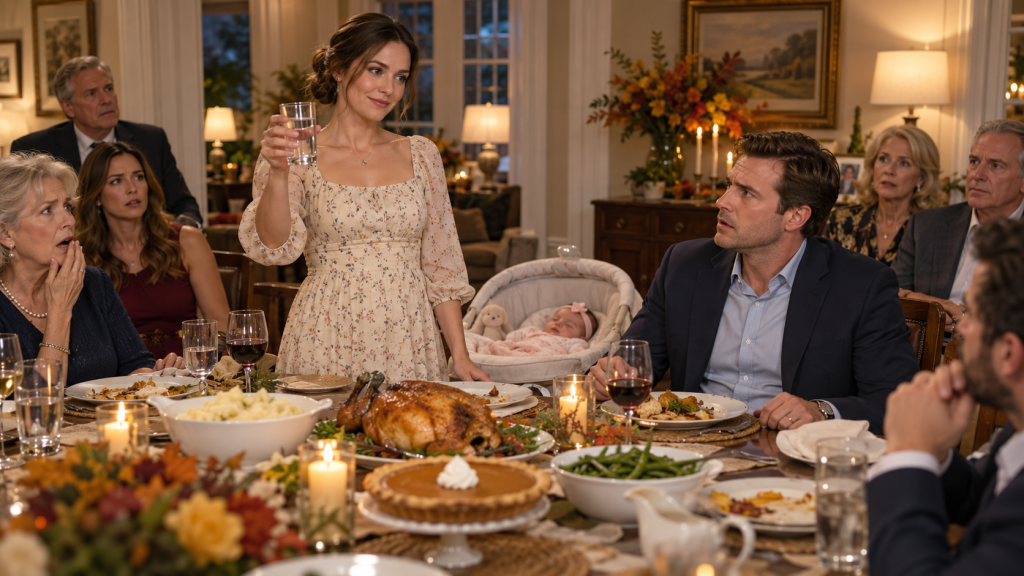
For several seconds after I slid the divorce papers across the table, nobody moved.
Elon stared at the folder.
Then at me.
Then back at the folder.
He looked like a man watching the floor disappear beneath his feet while still trying to convince everyone else the room was stable.
His mother’s hand remained pressed over her mouth.
My father sat so still that the coffee in front of him stopped steaming.
My mother held Sophie against her chest, gently rocking her even though the baby had fallen asleep.
And somewhere in the middle of that silence sat a cheap black recorder containing the sentence that had ended my marriage before Elon even knew I had heard it.
Of course I hate her.
I had repeated those words so many times inside my head over the previous six days that I thought hearing them again would destroy me.
It didn’t.
That surprised me.
Pain changes once it is no longer a secret.
When I first heard him say those words through the phone, they had felt like knives.
Now, sitting in front of both our families, they sounded like evidence.
Elon finally touched the folder.
He did not open it.
“What is this supposed to be?”
I almost laughed.
“Divorce papers.”
“I can see that.”
“Then I’m not sure what part confused you.”
His jaw tightened.
“This is insane.”
His father looked at him.
“Son.”
Elon turned.
“Dad, stay out of this.”
His father’s face hardened.
“I just listened to you tell another woman you hated your wife.”
“That conversation was private.”
That was the moment my father stood.
Slowly.
He was not a dramatic man.
My father had spent thirty-eight years repairing elevators and believed nearly every problem could be solved with patience, the correct wrench, or silence.
But there was something in the way he looked at Elon that made the entire room change.
“Elon,” Dad said, “if the best defense you have is that your betrayal was supposed to be private, I suggest you stop talking.”
Elon stared at him.
Then looked at me.
“You’ve been planning this?”
“For six days.”
“You called a lawyer?”
“Yes.”
“You moved money?”
“My money.”
“Our money.”
“No.”
I opened the folder beside me and removed a page.
“You remember the inheritance from my grandmother?”
His face changed.
That money had been sitting in an account in my name for years.
Most of it untouched.
Elon knew about it.
He had also repeatedly suggested that we use it for renovations, a new car, or one of his investment ideas.
I had always refused.
“That account is mine,” I said. “So is the maternity savings account I funded from my salary before Sophie was born.”
“What about the checking account?”
“Still there.”
“The savings?”
“Still there.”
“The house?”
“Still jointly owned.”
I held his gaze.
“I didn’t steal anything, Elon. I protected what was legally mine, copied every account statement, froze the joint credit card before you could run up expenses, and documented the balance in every shared account.”
His mother slowly lowered her hand.
“You had to do all of that?”
I looked at her.
“I didn’t know what else he was hiding.”
That sentence made Elon flinch.
Good.
Not because I wanted him hurt.
Because for six days I had lived with the terrifying realization that the person sleeping beside me had become a stranger.
I did not know how long the affair had been happening.
I did not know whether he had spent money on her.
I did not know whether there was a second phone.
A second account.
A second life.
I knew only that my husband had told another woman he loved her while I stood in our kitchen sterilizing bottles.
That was enough to make me cautious.
Elon pushed his chair back.
“I’m not doing this in front of everyone.”
I folded my hands.
“You did it behind my back. I decided where the truth would happen.”
His eyes flashed.
“So this is revenge.”
“No.”
“Then why invite our parents?”
That was a fair question.
And for a moment I hated that the answer made me look almost cruel.
Because part of me had wanted witnesses.
Not applause.
Witnesses.
I had spent six days imagining Elon denying everything.
Telling people I was hormonal.
Emotional.
Paranoid.
Still recovering from childbirth.
I had imagined him calling the recording incomplete.
A joke.
A misunderstanding.
I had imagined being alone while he rewrote the story.
I was not going to let that happen.
“I invited them because I knew what you would do.”
“What would I do?”
“Exactly what you’re doing now.”
His face darkened.
“Which is?”
“Make my reaction the problem instead of your affair.”
His mother closed her eyes.
My mom whispered my name.
Not because she wanted me to stop.
Because she knew.
She knew how many times women are encouraged to make betrayal easier for the person who committed it.
Elon stood.
“I’m leaving.”
I nodded.
“That’s probably best.”
“You don’t get to tell me to leave my own house.”
That sentence froze me.
Not because he was right.
Because Sophie was sleeping ten feet away.
I looked at my daughter.
Her cheek rested against my mother’s blouse.
Tiny fist closed near her face.
She had no idea her parents were ending.
No idea that the man who kissed her forehead that morning had already promised another woman a future.
No idea that adulthood could be this ugly.
“Elon,” I said quietly, “do not turn this into a fight with a newborn in the room.”
His father stood too.
“Come stay with us tonight.”
“I don’t need—”
“Yes,” his mother said.
Her voice shook.
“You do.”
Elon looked around the table.
I could see him searching again.
For someone who would rescue him.
Someone who would say:
Everyone makes mistakes.
Think about the baby.
Marriage takes work.
Don’t throw away two years over one bad decision.
Nobody did.
That mattered more than I expected.
Finally, he grabbed his jacket.
Then stopped beside me.
His voice dropped.
“You’re going to regret humiliating me.”
For the first time all evening, fear moved through me.
Not dramatic fear.
A colder thing.
Because those words were not an apology.
They were a promise.
My father heard them too.
He stepped closer.
“Elon.”
My husband looked at him.
Dad’s voice was calm.
“If you are angry, go cool off. But do not threaten my daughter.”
“I didn’t threaten her.”
“You did.”
“I said she’d regret this.”
Dad nodded.
“And now I’m telling you to leave.”
Elon stared at me one final time.
Then he walked out.
The front door slammed.
Sophie woke.
She began crying.
Immediately, every adult in the room moved.
My mother bounced her.
His mother reached for a bottle.
My father collected dishes because he did not know what else to do.
Elon’s father stood near the window watching his son’s car disappear.
And I sat at the table.
Still.
Completely still.
The fight was over.
I had won the confrontation.
And I had never felt more devastated in my life.
That is what revenge fantasies never include.
The quiet afterward.
The empty chair.
The knowledge that exposing betrayal does not magically restore what betrayal destroyed.
You can catch someone.
You can prove it.
You can make them uncomfortable.
You can even make them ashamed.
And afterward you are still the person whose marriage is over.
I looked down at my wedding ring.
Two years.
Not thirteen.
Not thirty.
Just two.
And somehow, I had still believed we would grow old together.
I had imagined Sophie’s first steps.
Her first day of school.
Family vacations.
Arguments about curfew.
College.
Grandchildren.
Every future memory had included Elon.
Now the future looked like a photograph someone had torn in half.
His mother sat beside me.
“I am so sorry.”
That sentence broke me.
Not because it was profound.
Because it was the first gentle thing anyone had said since the recorder played.
I covered my face.
And sobbed.
Not quietly.
Not gracefully.
I cried like my body had been waiting six days for permission.
My mother gave Sophie to my father and wrapped both arms around me.
Elon’s mother cried too.
His father stared at the wall.
Nobody tried to tell me I was strong.
Thank God.
I was tired of being strong.
That night, for the first time since Sophie was born, I let someone else take care of me.
—
Elon came back the next afternoon.
He texted first.
I need clothes.
No apology.
No question about Sophie.
Just clothes.
I almost told him to come whenever he wanted.
Then my lawyer’s voice returned.
Do not create informal access patterns you may later regret.
Her name was Maya Chen.
I had found her through a friend from nursing school.
She was forty-something, terrifyingly organized, and had the unnerving ability to make me feel calmer simply by opening a notebook.
The day after I heard the call, I sat in her office with Sophie asleep against my chest and told her everything.
Maya listened.
Then asked:
“Are you safe?”
I had not expected that.
“He’s never hit me.”
“That wasn’t my question.”
I thought.
“Yes.”
Then:
“I think so.”
She nodded.
“Good. We plan from there.”
Now I texted Elon:
Come at 4. My father will be here. You can take clothing and personal items. Please don’t remove shared property.
He replied almost instantly.
You’re unbelievable.
I did not answer.
At 3:55, Dad arrived.
At four, Elon pulled into the driveway.
He walked in without knocking.
Dad said nothing.
Neither did I.
For twenty minutes, Elon moved through the bedroom filling a suitcase.
I stayed in the living room feeding Sophie.
When he came downstairs, he looked at her.
For the first time since the dinner, his expression softened.
“Can I hold her?”
Every part of me wanted to say no.
That frightened me.
Because Sophie was not mine to weaponize.
Elon had betrayed me.
Not her.
At least, not yet.
I looked at Dad.
Then back at Elon.
“Wash your hands.”
He almost argued.
Then didn’t.
He washed them.
Sat down.
I placed Sophie in his arms.
My daughter blinked up at him.
Elon’s face changed.
Something real moved through it.
Regret.
Love.
Fear.
Maybe all three.
“Hi, baby girl.”
His voice cracked.
I had to look away.
I hated that I still loved him in that moment.
Not romantically.
Not exactly.
But love does not disappear on command.
That is another lie people tell about betrayal.
They think once you discover what someone has done, love should vanish and dignity should take its place.
Sometimes love stays.
Humiliated.
Injured.
Unwelcome.
But alive.
The heart is embarrassingly slow to receive new information.
Elon kissed Sophie’s forehead.
Then looked at me.
“How long are you going to keep her from me?”
I stared.
“I’m not.”
“You already are.”
“You left last night.”
“You threw me out.”
“My father invited you to his house after you threatened me.”
His jaw tightened.
“I didn’t threaten you.”
I almost laughed.
“I’m not doing this again.”
“I have rights.”
“Yes.”
I kept my voice calm.
“So do I. That’s why lawyers exist.”
The word lawyers angered him more than affair.
“You really want strangers deciding when I see my daughter?”
“No.”
I looked at Sophie.
“I wanted a husband who came home for dinner.”
That shut him up.
For a moment.
Then:
“I made a mistake.”
I looked at him.
There are words so insufficient they become insulting.
“A mistake?”
“Yes.”
“You accidentally fell in love?”
He looked away.
“I shouldn’t have said what I said.”
“The problem isn’t that I heard it.”
“I know.”
“Do you?”
He stood carefully and handed Sophie back.
Then:
“I was angry.”
“At me?”
“Yes.”
“For what?”
He laughed bitterly.
“Everything.”
I waited.
“The baby.”
My entire body went cold.
“What about Sophie?”
“Not her.”
He ran both hands through his hair.
“Just… everything changed.”
“Yes. We had a child.”
“I know.”
“You wanted a child.”
“I know.”
“You cried when the pregnancy test was positive.”
“I know.”
His voice rose.
“I know.”
Dad shifted near the doorway.
Elon lowered his tone.
“I didn’t realize what it would be like.”
I stared.
“What what would be like?”
He gestured vaguely.
“This.”
The bottles.
Diapers.
Sleep deprivation.
My maternity clothes.
The breast pump on the counter.
The bassinet.
The reality of a baby.
“You mean parenthood?”
“I mean us.”
My throat tightened.
“You stopped being…”
He paused.
I knew before he said it.
Fun.
Sexy.
Available.
Easy.
He did not say any of those words.
Maybe even he knew better.
Instead:
“You stopped being you.”
I actually laughed.
Not because it was funny.
Because after weeks of bleeding, healing, nursing, sleeping in two-hour fragments, and learning how to keep a tiny human alive, my husband had decided the real tragedy was that I was less entertaining.
“I had a baby.”
“I know.”
“Your baby.”
“I know.”
“I’m still me.”
“That’s not what I meant.”
“It’s exactly what you meant.”
He looked toward Dad.
“This is why I didn’t want people involved.”
Dad spoke for the first time.
“No, son. People are involved because you brought another woman into your marriage.”
Elon looked at him.
“You don’t know anything about my marriage.”
Dad nodded.
“You’re right.”
Then:
“But I know what loyalty looks like.”
That ended it.
Elon took his suitcase.
At the door, he turned.
“I want to see Sophie tomorrow.”
I swallowed.
“Text me a time.”
He seemed surprised.
“You’re saying yes?”
“I told you. I am not keeping her from you.”
He stared at me.
Maybe he had expected cruelty because it would help him justify his own.
I would not give him that gift.
He left.
Dad sat beside me.
“You okay?”
“No.”
“Good.”
I looked at him.
He shrugged.
“If you said yes, I’d know you were lying.”
I leaned my head against his shoulder.
And for a while, I let myself be someone’s daughter instead of someone’s mother.
—
The woman’s name was Claire.
I learned that three days later.
Not because Elon told me.
Because she did.
She messaged me on social media.
I stared at her name for five minutes before opening it.
I think we need to talk.
No.
We did not.
I almost blocked her.
Then another message arrived.
There are things he told me that I’m beginning to think weren’t true.
Of course.
I looked at Sophie sleeping beside me.
Then typed:
What did he tell you?
The typing bubble appeared.
Disappeared.
Appeared again.
Finally:
That you were separated emotionally and only staying together because of the pregnancy.
I laughed.
Actually laughed.
Sophie startled in her sleep.
I lowered the phone.
Emotional separation.
I had planned a surprise anniversary dinner.
We shared a bed.
We had discussed summer vacation.
Three weeks before I overheard the call, Elon had sent me a text from work saying:
Can’t wait to come home to my girls.
Separated emotionally.
Convenient.
I typed:
We were not separated. I had no idea he was seeing anyone.
Claire replied almost immediately.
I’m sorry.
I stared at the words.
I wanted to hate her.
That would have been easier.
Make her the villain.
The woman.
The home-wrecker.
The thief.
But there is a particular cruelty in discovering the other woman may also have been lied to.
Not innocent, perhaps.
But lied to.
I wrote:
Did you know I’d just had Sophie?
Long pause.
Yes.
There it was.
My compassion stopped before absolution.
She knew.
Maybe not everything.
Enough.
How long?
Seven months.
My stomach turned.
Seven months.
I did the math.
I had been pregnant.
Very pregnant.
The Christmas party.
The baby shower.
The night Elon rubbed my swollen feet while Sophie kicked against his hand.
Seven months.
I ran to the bathroom and vomited.
When I returned, Sophie was crying.
I picked her up.
Pressed her against my chest.
And understood something terrible.
There was no version of my pregnancy untouched by the affair.
Every memory now had a shadow.
Claire sent another message.
He told me he was going to leave after the baby was born because he didn’t want stress to hurt your pregnancy.
How noble.
How considerate.
My husband had apparently framed delaying abandonment as prenatal care.
I laughed again.
Then cried.
Then laughed because grief sometimes becomes so absurd the body cannot choose.
Claire wrote:
I ended it today.
That surprised me.
I stared.
Why?
Her answer took longer.
Because if he lied to me about you, I don’t know what else he lied about.
I almost typed:
Welcome to the club.
I didn’t.
She added:
I’m not asking you to forgive me. I knew he was married. I believed what I wanted to believe. That’s on me.
That sentence saved me from hating her.
Not completely.
But enough.
Accountability is disarming.
I wrote:
Thank you for telling me. Please don’t contact me again.
She replied:
I understand. I’m sorry.
I blocked her.
Then sat on my bedroom floor.
Seven months.
The affair had begun when I was five months pregnant.
Elon had watched my body change while beginning another relationship.
That knowledge carved something final inside me.
Before then, a small humiliating part of me had wondered whether our marriage could be repaired.
I had not admitted it.
Not to Maya.
Not my parents.
Not even myself.
But it was there.
A tiny opening.
If he begged.
If he ended the affair.
If he went to therapy.
If he became the man I had believed him to be.
Seven months closed the opening.
Some betrayals are not one bad night.
They are systems.
Schedules.
Reservations.
Passwords.
Hundreds of choices repeated until lying becomes architecture.
Elon had not fallen.
He had built.
And I was done living inside it.
—
When I told him Claire had contacted me, he exploded.
We were standing in the driveway after his visit with Sophie.
“You talked to her?”
“She contacted me.”
“What did she say?”
“Enough.”
“What does that mean?”
“It means I know it started seven months ago.”
His face changed.
Not guilt.
Fear.
Because now he understood I had more of the truth than he controlled.
“She’s lying.”
I stared.
Of all possible responses, he chose that one.
“She sent me screenshots.”
Silence.
I had not told him she had.
She had not, actually.
I was testing him.
His face told me everything.
I felt almost sick.
“You just proved it.”
He swore.
Then paced.
“You trapped me.”
“No.”
I held Sophie’s diaper bag tighter.
“You keep confusing consequences with traps.”
He turned.
“You have no idea what she’s like.”
“I don’t care.”
“She’s crazy.”
I actually smiled.
Of course.
The woman he loved enough to marry six days ago had become crazy now that she had left him.
“How convenient.”
“What did she tell you?”
“I’m not discussing her.”
“You brought her up.”
“No. You brought her into our marriage seven months ago.”
He lowered his voice.
“Stop saying seven months like it means something.”
I froze.
Then laughed once.
“It means seven months.”
“You know what I mean.”
“No, I don’t.”
“It wasn’t serious the whole time.”
There are moments when a person hands you the shovel they are using to bury themselves.
I let him keep digging.
“When did it become serious?”
He stopped.
“That’s not—”
“When?”
“I don’t know.”
“Before or after Sophie was born?”
His face answered before his mouth did.
I felt something inside me go quiet.
“Goodbye, Elon.”
“Wait.”
“No.”
“Can we please talk without you walking away?”
I looked at him.
“I spent seven months in a conversation I didn’t know I was having.”
He stared.
“I think I’ve listened enough.”
I put Sophie in the car.
Closed the door.
And left.
That night, I removed my wedding ring.
Not dramatically.
No tears.
I placed it in the jewelry box.
Closed the lid.
Then washed bottles.
Because even the end of a marriage has to fit around a baby’s feeding schedule.
—
Divorce is less like a battle than people imagine.
Most days, it is paperwork.
Emails.
Numbers.
Schedules.
Forms asking you to reduce the architecture of a marriage into boxes.
Date married.
Date separated.
Assets.
Debts.
Dependents.
Insurance.
Retirement.
Furniture.
Custody.
There is no box marked:
The exact moment you stopped recognizing the person beside you.
No line for:
How much does betrayal cost when measured in lost sleep?
No space for:
Who keeps the memory of being happy?
Maya handled the law.
I handled Sophie.
Elon handled himself badly.
At first, he demanded fifty-fifty custody immediately.
Not because he had ever changed a diaper without being asked.
Because his lawyer apparently told him equal parenting time could affect child support.
I hated myself for thinking that.
Then he proved me right.
During mediation, he said:
“I don’t see why I should pay her when I can keep Sophie half the time.”
Maya’s face did not move.
The mediator asked:
“What childcare arrangements do you have during your workday?”
Silence.
Elon worked ten-hour days.
Sometimes twelve.
“Daycare.”
“Which daycare?”
He had not researched one.
“What pediatrician does Sophie see?”
He did not remember the name.
“What formula does she use when not breastfeeding?”
He guessed wrong.
“What medications is she currently taking?”
None.
He invented one.
I sat there with my hands folded under the table so nobody could see them shaking.
I did not feel victorious.
I felt heartbroken.
Because the questions were not traps.
They were my daughter’s life.
Maya asked for a gradual parenting plan.
Short visits.
Then longer.
Then overnights once Sophie was older and Elon demonstrated consistency.
He called that humiliating.
I called it parenting.
Eventually, the mediator agreed.
Three evenings a week.
One weekend daytime visit.
Then transition to overnights.
I promised myself something that day.
I would never poison Sophie against her father.
Not because he deserved protection.
Because she did.
Children should not have to carry adult betrayal before they are old enough to understand it.
One day she could know.
When appropriate.
When she asked.
But she would never hear me call him a cheater.
A liar.
A selfish man.
Even when I thought all three.
She would have her own relationship with him.
He would build it.
Or ruin it.
That part belonged to him.
—
Elon’s parents remained in my life.
That became complicated.
His mother, Diane, called every two days.
At first I thought she was checking on Sophie.
Then one afternoon she said:
“I need you to know I’m ashamed.”
I was folding tiny onesies.
“Of what?”
“Him.”
My hands stopped.
“He’s still your son.”
“I know.”
Her voice broke.
“That’s what makes it worse.”
I sat down.
Diane had always loved Elon fiercely.
The kind of mother who kept school projects twenty years.
Who still made his favorite cake.
Who defended him when Arthur—no, not Arthur, that’s prior story; must not leak. Need fix. We’re in final already. I must avoid unrelated. Let’s continue carefully. Could say his father. Need maybe user won’t mind. Don’t mention Arthur.
She continued.
“I keep asking myself what we missed.”
“You didn’t make him cheat.”
“I raised him.”
“And I married him.”
Silence.
“We both loved someone who made terrible choices.”
That was all.
Not our fault.
Not ours to fix.
Diane cried.
Then asked:
“Will you let me still be Sophie’s grandmother?”
That question hurt.
Not because I considered saying no.
Because she thought divorce might erase her.
“Of course.”
She sobbed.
After that, Diane stopped apologizing for Elon.
She simply showed up.
Diapers.
Soup.
Laundry.
Not every visit.
Not intrusively.
She asked.
That mattered.
Sometimes family is not who stays loyal to the person they are related to.
Sometimes family is who refuses to make loyalty an excuse for blindness.
—
Three months after the anniversary dinner, Elon lost his job.
I learned from Diane.
Then he called.
“I need more time before support payments start.”
“They already started.”
“I know.”
“So what are you asking?”
“Can we handle it privately?”
“No.”
He went quiet.
“Seriously?”
“Yes.”
“You know I’m unemployed.”
“I know.”
“You have your nursing salary when maternity leave ends.”
“Yes.”
“You have savings.”
“Yes.”
“You’re really going to make me pay child support while I’m between jobs?”
I almost screamed.
Instead:
“Maya can discuss modification with your attorney.”
“I’m talking to you.”
“And I’m telling you the legal process exists for a reason.”
He laughed bitterly.
“You’ve become so cold.”
There it was again.
Cold.
A woman who no longer absorbs consequences is cold.
A woman who does paperwork instead of rescuing is cold.
A woman who says ask your lawyer is cold.
I looked at Sophie sleeping in her swing.
“I’m not cold.”
“What would you call this?”
“Clear.”
He hung up.
Two days later, Diane told me why he lost the job.
Claire worked there.
Not directly with him.
Same company.
After ending the affair, she disclosed the relationship to HR because Elon had been her supervisor for part of it.
That changed everything.
There were policies.
Power issues.
Messages sent on company systems.
Expense reports that did not align with business purposes.
The company investigated.
Elon was terminated.
I sat at my kitchen table after Diane told me.
I should have felt satisfied.
Part of me did.
I am not noble enough to lie.
But mostly I felt tired.
His affair had now consumed his marriage.
His relationship.
His job.
And still, none of that gave me back the months I believed he was working late for our future.
Consequences do not refund time.
—
By Sophie’s first birthday, I had returned to work part-time.
The first morning I put on scrubs again, I cried.
Not because I wanted to leave Sophie.
Although I did not.
Because the woman in the mirror looked familiar.
Before marriage.
Before pregnancy.
Before betrayal.
I had been a pediatric nurse.
I loved the work.
Elon used to complain about my shifts.
Weekends.
Nights.
Holidays.
When I became pregnant, we agreed I would take extended leave.
Somewhere along the way, the plan quietly changed into:
Maybe you should stay home longer.
Childcare is expensive.
My career is taking off.
It makes sense for you to handle things for now.
I had agreed.
At the time, it felt practical.
After discovering the affair, I wondered whether my growing dependence had made dishonesty easier for him.
That thought frightened me.
Not because staying home was weakness.
It wasn’t.
But because I had stopped checking whether the arrangement still served me.
So I returned.
Three shifts a week.
My mother watched Sophie one day.
Daycare two days.
The first paycheck hit my account on a Friday.
I stared at the number.
Not huge.
Not life-changing.
But mine.
I bought myself lunch.
Something ridiculous.
Seventeen-dollar sushi from the hospital cafeteria kiosk.
It was terrible.
I ate every piece.
Independence tastes expensive and occasionally over-refrigerated.
I loved it.
—
The divorce finalized fourteen months after the dinner.
Elon wore a navy suit.
I wore gray.
No families.
No recorder.
No dramatic speech.
Just lawyers.
Documents.
A judge.
I had imagined feeling something when the marriage legally ended.
Relief.
Grief.
Victory.
Instead, I felt almost nothing until the judge asked:
“Is the marriage irretrievably broken?”
Maya had warned me.
Simple question.
Simple answer.
“Yes.”
My voice cracked.
Elon looked at me.
The judge asked him.
“Yes.”
That was it.
Two people who once promised forever answered yes.
Irretrievably broken.
A phrase too clinical for the wreckage it describes.
Outside the courthouse, Elon stopped me.
“Maya can give you the final copies.”
“I know.”
I started walking.
“Wait.”
I turned.
He looked different.
Thinner.
Older.
He had found another job.
Smaller company.
Lower salary.
He had moved into a two-bedroom apartment so Sophie could have her own room during overnights.
To his credit, he had become better with her.
Not perfect.
But better.
He knew the pediatrician’s name now.
Her allergies.
Her nap schedule.
Her favorite song.
He had earned overnight weekends.
That mattered.
“What?” I asked.
Elon shoved his hands into his pockets.
“I’m sorry.”
I stared.
He had apologized before.
Sort of.
I’m sorry you heard it.
I’m sorry things got this far.
I’m sorry you’re hurt.
Not this tone.
This one frightened me more because it sounded real.
“For what?”
He looked down.
“All of it.”
I waited.
“I don’t know what I thought I was doing.”
“That isn’t an apology.”
“I know.”
He breathed.
“I was selfish.”
A pause.
“Cowardly.”
Another.
“I told myself we were already unhappy because it made what I was doing easier.”
My throat tightened.
“We weren’t unhappy.”
“I know.”
That was painful.
Strangely validating.
“I mean, we were tired.”
“Yes.”
“Stressed.”
“Yes.”
“But that’s not the same.”
“No.”
He nodded.
“I know that now.”
Cars moved past us.
People entered and left the courthouse carrying their own endings.
“I was angry that everything changed after Sophie.”
My body stiffened.
“Not at her.”
He added quickly.
“At myself.”
He looked embarrassed.
“I didn’t like coming home and feeling unnecessary.”
That surprised me.
“What?”
“You knew what she needed.”
He laughed bitterly.
“I didn’t.”
“So you left me to do more of it?”
“I know how stupid that sounds.”
“Yes.”
He smiled faintly.
At least he could admit it.
“You were tired all the time. She wanted you. You were feeding her. Holding her. You didn’t need me the same way.”
I stared.
“Elon, I needed you more than I ever had.”
His face broke.
“I know.”
That was the tragedy.
He had mistaken my exhaustion for rejection.
My competence for independence.
My attention to our newborn for lack of love.
And instead of speaking, he found someone who made him feel central.
Claire had no leaking breasts.
No stitches.
No baby waking every two hours.
No resentment about dishes.
She saw him for dinner.
Hotels.
Perfume.
Compliments.
He had compared marriage under pressure to an affair protected from reality.
Of course the affair felt easier.
It had no laundry.
“I’m sorry,” he said again.
This time I believed him.
That did not change anything.
“I accept your apology.”
His eyes lifted.
Hope.
Tiny.
Dangerous.
So I added:
“But I don’t want you back.”
The hope disappeared.
I hated doing that.
But kindness without clarity would be cruelty.
“I know.”
He looked toward the courthouse.
“I didn’t think you did.”
“I did.”
We stood there.
Then he asked:
“Do you hate me?”
I thought about the phone call.
The flowers.
The anniversary dinner.
Claire.
The court filings.
Sophie laughing when he picked her up.
His mother crying in my kitchen.
The marriage.
The divorce.
“No.”
That surprised both of us.
“I did.”
I swallowed.
“For a while.”
He nodded.
“Now?”
I looked at him.
“Now I think you were weak when I needed you to be brave.”
His eyes filled.
“And I think I spent too much time trying to understand why someone who loved me would hurt me instead of accepting that both can happen.”
He looked away.
“I’m sorry.”
“I know.”
Then:
“Take care of Sophie.”
“I will.”
“Not for me.”
“I know.”
“For her.”
“I know.”
I turned.
Walked down the courthouse steps.
And did not look back.
I thought I might.
I didn’t.
That was how my marriage ended.
Not with the recorder.
Not the affair.
Not the judge.
With me walking away after no longer needing him to become a monster in order for leaving to be justified.
—
Healing was boring.
I mean that as a compliment.
After months of chaos, boring felt luxurious.
Work.
Daycare.
Groceries.
Laundry.
Baths.
Sleep.
Sometimes sleep.
Sophie learned to walk.
Then run.
Then climb onto furniture designed specifically to prevent toddlers from climbing.
She called everyone “Mama” for two weeks.
Including the dog at my parents’ house.
Elon was “Dada” eventually.
He cried when she said it.
Diane sent me the video.
I cried too.
There was no jealousy.
That surprised me.
Sophie loved him.
That did not subtract from me.
One of the most freeing things about motherhood after divorce was realizing love is not arithmetic.
Her bond with him did not make mine smaller.
His success as a father did not erase his failure as a husband.
Both could exist.
People kept asking whether I was dating.
For the first year, the idea made me angry.
Why did everyone assume an empty romantic space needed filling?
I had a child.
Work.
Friends.
A body still learning to belong to me again.
I did not need a boyfriend.
I needed eight hours of sleep and a mechanic I trusted.
My mother worried.
“You’re young.”
“I know.”
“You don’t have to be alone.”
“I’m not alone.”
“You know what I mean.”
I did.
I just hated the implication that being unmarried was a waiting room.
I had left one life.
I wanted time before entering another.
So I did something I had not done since college.
I traveled alone.
Nothing dramatic.
Three days at the coast while Sophie stayed with Elon during his scheduled weekend.
The first night, I ordered room service.
Watched a terrible movie.
Slept diagonally.
Woke at eight.
Eight.
Parents understand the spiritual significance.
I drank coffee on the balcony.
No one touched me.
No one asked for anything.
I did not feel lonely.
I felt quiet.
There is a kind of silence that feels abandoned.
And another that feels owned.
That morning, I learned the difference.
—
Two years after the divorce, I met Marcus.
I know.
I know.
This sounds like the part where the story gives the betrayed woman a better man so everyone understands she won.
That is not what happened.
Marcus did not save me.
I was already living.
That was why I could recognize him as a person instead of a rescue.
He was a physical therapist at the hospital.
We met because he stole my chair.
Not intentionally.
The staff lounge was crowded.
I had left my water bottle on a chair.
He moved it.
Sat.
I returned.
“That’s my seat.”
He looked around.
“There are no names.”
“There is a bottle.”
“That could belong to anyone.”
“It has my name on it.”
He picked it up.
Read.
Then:
“This is inconvenient.”
I laughed despite myself.
He moved.
The next week, he brought me coffee.
“Peace offering.”
“I don’t accept beverages from chair thieves.”
“Understandable.”
We became friends.
Then slowly something else.
Very slowly.
The first time he asked me to dinner, I said no.
He said:
“Okay.”
That was it.
No persuasion.
No wounded ego.
No asking whether I was seeing someone.
Just okay.
A month later, I asked him.
He smiled.
“Are you sure? I have a reputation.”
“For what?”
“Furniture crime.”
Our first date lasted four hours.
I told him I had a daughter.
He knew.
I told him I was divorced.
He knew.
I did not tell him the whole story.
Not yet.
Because I wanted to be something other than the woman whose husband cheated.
Trauma can become an identity if you tell the story too often.
I wanted Marcus to meet me without Elon in the room.
Months later, I told him.
The accidental call.
The woman’s laugh.
The anniversary dinner.
The recorder.
Marcus listened.
Then asked:
“Do you still love him?”
I appreciated that question.
Not:
Do you hate him?
Not:
Would you ever take him back?
“Some part of me probably always will.”
Marcus nodded.
“Okay.”
“You’re not bothered?”
“Why?”
“He’s my ex-husband.”
“He’s Sophie’s father.”
I stared.
“You built a life with him.”
His voice was gentle.
“I’d be more worried if you needed to pretend none of it mattered.”
That was the moment I became afraid of loving Marcus.
Because emotionally safe people are terrifying after betrayal.
They give you nothing obvious to defend against.
—
I introduced Marcus to Sophie after nine months.
Slow.
Neutral.
A park.
She was almost four.
He did not hug her.
Did not call himself anything.
Did not try too hard.
He pushed her on a swing because she asked.
Then she demanded higher.
He looked at me.
“How high are we legally allowed?”
I laughed.
By the end of the afternoon, Sophie had decided Marcus was acceptable because he could make duck noises.
Children have excellent standards.
Elon learned about Marcus before the introduction.
I told him myself.
Not because he controlled my dating life.
Because another adult would eventually be around our daughter.
I would have wanted the same.
He went quiet.
“How serious?”
“Serious enough that I’m telling you.”
“Has he met Sophie?”
“Not yet.”
“Who is he?”
I gave basic information.
He asked too many questions.
I stopped him.
“You do not get to investigate my personal life.”
“I’m her father.”
“And you can ask anything relevant to her safety.”
He got quiet.
Then:
“Do you love him?”
I almost said none of your business.
Instead:
“Yes.”
Silence.
Long.
Then:
“Okay.”
It was not okay for him.
I could hear that.
But he did not punish me.
That was growth.
Painful growth.
A week later, when he dropped Sophie off, he saw Marcus’s car.
His face tightened.
Marcus stayed inside.
Good.
No masculine theater on my driveway.
Elon handed over Sophie’s backpack.
“She ate at five.”
“Okay.”
“Bath already.”
“Thank you.”
He lingered.
Then:
“Is he good to you?”
I looked at him.
The question was almost unbearable.
“Yes.”
Elon nodded.
“That’s good.”
His voice cracked.
He left.
I closed the door.
Cried.
Then went inside to the man who had not caused the tears and did not demand they stop.
—
Elon remained single for a while.
Or at least did not introduce anyone to Sophie.
Three years after the divorce, he began dating a woman named Natalie.
She was a teacher.
Divorced.
One son.
When he told me, I felt something strange.
Not jealousy.
More like the feeling of seeing your old house with someone else’s furniture.
Familiar structure.
Different life.
“Is Sophie going to meet her?”
“Eventually.”
“Good.”
He looked nervous.
“What?”
“I thought you’d be weird.”
“I am weird.”
He laughed.
“You know what I mean.”
“I do.”
I looked at him.
“I want you happy.”
He looked shocked.
Then suspicious.
“Why?”
I laughed.
“Because miserable people make terrible co-parents.”
He smiled.
Fair.
Eventually, I met Natalie.
At Sophie’s kindergarten performance.
She approached me first.
“Hi.”
“Hi.”
Awkward.
Then she said:
“I know this is probably strange.”
“It is.”
She laughed.
That helped.
She was kind.
Normal.
Not twenty-three.
Not mysterious.
Not trying to replace me.
Afterward, I told Marcus:
“I like her.”
He looked horrified.
“You can’t.”
“I know.”
“We need someone to hate.”
“Apparently not.”
He sighed.
“Very disappointing.”
Healing sometimes looks like losing interest in villains.
—
On Sophie’s sixth birthday, everything almost broke again.
Elon arrived late.
Two hours.
He had promised to help set up.
He did not answer messages.
Old panic rose.
Not about infidelity.
About unreliability.
I saw the old man inside the newer one.
When he finally arrived, Natalie was with him.
He looked pale.
“I’m sorry.”
I was furious.
“You couldn’t call?”
“My phone died.”
“Borrow hers.”
Natalie looked embarrassed.
“He was at urgent care.”
I stopped.
“What?”
Elon rubbed his chest.
“Nothing serious.”
“What happened?”
“Panic attack.”
The anger vanished.
Not concern as wife.
Concern as human.
“You okay?”
He nodded.
“Embarrassed.”
“Don’t be.”
He looked at me.
That surprised him.
We stepped into the hallway.
The party continued inside.
Children screaming.
Balloons.
Sugar.
Life.
“I thought I was having a heart attack,” he said.
I remembered the man at our anniversary dinner.
Confident.
Defensive.
Angry.
Now he looked tired.
“I’ve been seeing someone.”
I blinked.
“Natalie?”
“A therapist.”
“Oh.”
He laughed slightly.
“I probably needed to specify.”
“Yes.”
“I started a few months ago.”
I nodded.
“Good.”
He looked toward the room.
“I keep thinking about how I blew up everything because I was afraid of not mattering.”
I said nothing.
Therapy apparently had found the sentence.
“My dad was like that.”
His voice softened.
“If he wasn’t needed, he got angry.”
I knew some of that.
Not all.
“My mom handled everything.”
Diane.
Of course.
Patterns.
We inherit them without paperwork.
“I thought marriage was supposed to make me feel important all the time.”
He looked ashamed.
“When Sophie came, you needed me to contribute, not be admired.”
That sentence hit me.
Yes.
Exactly.
“And I didn’t know how.”
“You could have learned.”
“I know.”
He looked at me.
“I’m not saying this for forgiveness.”
“Good.”
He smiled sadly.
“I know you already forgave what you could.”
The party erupted with laughter.
Somebody had dropped cupcakes.
We both turned.
Then Elon said:
“I want Sophie to see something different.”
“So do I.”
That moment mattered more than the anniversary dinner.
Not because it erased anything.
Because two people who failed each other had finally become capable of protecting the child they shared from repeating it.
—
Marcus proposed when Sophie was seven.
In the kitchen.
No restaurant.
No photographer hiding behind a plant.
No family waiting.
He was washing strawberries.
I was packing Sophie’s lunch.
He said:
“I think we should get married.”
I stared.
“That’s your proposal?”
He froze.
“I had a plan.”
“Clearly.”
“No, seriously.”
He put down the strawberries.
“I bought a ring.”
“Where?”
“Bedroom.”
“Then why are you proposing beside yogurt tubes?”
“Because I looked at you making lunch and thought I want this.”
That stopped me.
Not the dramatic version.
This.
Morning.
Lunch.
Dishes.
A child complaining upstairs.
“Marcus…”
“I know your first marriage makes this complicated.”
“It doesn’t.”
He blinked.
I realized.
It really didn’t.
My marriage to Elon had failed.
That did not mean marriage was a disease I needed immunity from.
It meant I knew more.
“I’m scared.”
“Good.”
I laughed.
“Why good?”
“Because I’m scared too.”
He took my hands.
“I don’t want a wife who disappears into me.”
My eyes filled.
“I want you.”
Not caretaker.
Not role.
Not convenience.
You.
I cried.
Then said:
“Yes.”
He looked shocked.
“That worked?”
“Barely.”
Then Sophie walked in.
Saw us crying.
Immediately started crying because she assumed someone had died.
We spent ten minutes explaining.
Then Marcus retrieved the ring.
Sophie insisted she should be the one to put it on my finger.
She put it on the wrong hand.
It was perfect.
—
Telling Elon was strange.
He stared at the ring.
Then smiled.
Not instantly.
But genuinely.
“Congratulations.”
“Thank you.”
“Does Sophie know?”
“She helped.”
He laughed.
“Of course.”
Then he asked:
“Are you changing your name?”
I had not decided.
My maiden name felt like history.
Elon’s surname felt like a marriage that ended.
Marcus’s would be another man’s name.
After a week, I decided something that surprised everyone.
I kept my own.
Not Elon’s.
I legally returned to my maiden name.
And after marrying Marcus, I stayed that way.
Marcus did not care.
My mother thought it was unconventional.
Sophie thought names were boring.
Elon said:
“That makes sense.”
I looked at him.
“It does?”
“You worked hard to get yourself back.”
That sentence nearly undid me.
Sometimes the people who hurt us most eventually become witnesses to our healing.
Not because they deserve special credit.
Because history gives them perspective.
—
Our wedding was small.
Thirty people.
Backyard.
Sophie carried flowers.
Marcus’s sister officiated.
My father cried before I even walked outside.
My mother pretended not to notice.
Diane came.
Yes.
Elon’s mother.
She sat beside my parents.
Some people thought that was strange.
I did not.
She had become family through Sophie and years of kindness.
Elon did not attend.
We agreed that would be too much for everyone.
But that morning, he texted:
Take care of yourself today. Don’t worry about Sophie. I’ll pick her up tomorrow at noon. Congratulations.
No guilt.
No drama.
I replied:
Thank you.
Then I married Marcus.
The second time I said vows, I understood them differently.
I did not promise to disappear into love.
I promised to stand beside it.
When Marcus said:
“I choose you,”
I believed him.
But more importantly, I knew that if one day his choice failed, mine did not have to fail with it.
That was freedom.
Not believing nobody will ever hurt you again.
Knowing you will not abandon yourself if they do.
—
Years passed.
That sentence feels unfair.
Years do not pass.
They accumulate.
Sophie lost teeth.
Learned to read.
Broke her wrist falling off a scooter.
Started soccer.
Quit soccer.
Started piano.
Quit piano.
Discovered theater.
Elon married Natalie when Sophie was ten.
I attended.
Yes.
I know.
Life becomes strange when enough time passes.
They invited Marcus and me because Sophie was in the ceremony.
I considered declining.
Then realized I was not afraid.
So we went.
The wedding was beautiful.
Simple.
Natalie wore blue shoes.
Elon looked nervous.
Before the ceremony, I saw him alone near the hallway.
He looked at me.
For a second, we were back at our own wedding.
Younger.
Hopeful.
Ignorant.
Then he smiled.
“Thank you for coming.”
“For Sophie.”
“I know.”
Pause.
“And because I like Natalie.”
He laughed.
“Everybody likes Natalie.”
“Annoying, isn’t it?”
“Very.”
Then his face changed.
“I’m going to do better.”
I knew what he meant.
This marriage.
This time.
I did not say:
You better.
I did not say:
Don’t cheat.
I did not say:
She deserves better than I got.
He already knew.
Instead:
“I hope you’re happy.”
His eyes filled.
“Me too.”
Then Natalie’s son called him.
He left.
I stood there and felt nothing break.
That was when I knew I was free.
Not when I divorced him.
Not when I remarried.
When I could witness his hope without comparing it to what he had stolen from mine.
—
That night, after their reception, Sophie came home with Marcus and me.
She was ten.
Old enough to observe.
Young enough to ask directly.
“Mom?”
“Yes?”
“Why did you and Dad get divorced?”
The question had been coming for years.
We had answered smaller versions.
We argued.
We weren’t good together.
Adults sometimes make choices.
But now she was asking differently.
She had seen her father marry someone else.
She wanted the truth.
Marcus immediately stood.
“I’m going to walk the dog.”
We did not have a dog.
I looked at him.
He pointed toward the door.
“Very long walk.”
Bless him.
Sophie sat beside me.
I breathed.
“Your dad and I had problems.”
She rolled her eyes.
“I know.”
Ten-year-olds are brutal.
“What kind?”
I chose each word carefully.
“When you were a baby, your father had a relationship with someone else while we were married.”
Sophie became very still.
“You mean he cheated?”
The internet had educated her.
“Yes.”
Her eyes filled.
“On you?”
“Yes.”
“Why?”
“I don’t know all the reasons.”
I touched her hand.
“And I want you to understand something important.”
“What?”
“It had nothing to do with you.”
Her face crumpled.
I knew then that some hidden part of her had already been wondering.
Children always find ways to put themselves near the center of adult storms.
“You were the best thing happening in our lives.”
“Then why did he?”
“Because adults can love someone and still make selfish choices.”
She cried.
I held her.
“Do you hate him?”
“No.”
“Did you?”
“Yes.”
Honesty.
Not weaponized.
“Are you mad he married Natalie?”
“No.”
“You like her.”
“I do.”
“That’s weird.”
I laughed.
“Yes.”
She leaned into me.
“Does Natalie know?”
“I assume so.”
“Does Marcus know?”
“Yes.”
“Does Grandma know?”
“Everyone knows.”
She sat up.
“Everyone?”
“Unfortunately, your father forgot to hang up the phone.”
Her eyebrows pulled together.
I told her a simplified version.
Not the recorder.
Not every detail.
Enough.
Sophie stared.
Then:
“You played it at dinner?”
“Yes.”
She looked horrified.
Then fascinated.
“Mom.”
“I was upset.”
“That is savage.”
I laughed so hard I cried.
My ten-year-old had turned the most painful night of my life into slang.
Something about that healed me.
Then she became serious.
“Dad did something really bad.”
“Yes.”
“Is he bad?”
There it was.
The question adults struggle with too.
“No.”
I thought.
“Your dad did something bad.”
I touched her cheek.
“People are bigger than their worst choice. That does not mean we ignore the choice.”
She nodded slowly.
“Can I ask him?”
“Yes.”
“Will he tell the truth?”
“I think so.”
He did.
Two days later, Elon called me.
Voice rough.
“She asked.”
“I know.”
“I told her.”
“All of it?”
“Age-appropriate.”
“Good.”
Silence.
Then:
“She cried.”
“I know.”
“I hate that.”
“So do I.”
“I told her it wasn’t her fault.”
“Good.”
His voice broke.
“I wish I could go back.”
“I know.”
There was nothing else to say.
The past does not change because regret becomes sincere.
But the future can.
That has to be enough.
—
When Sophie turned thirteen, she found the recorder.
I had forgotten I still had it.
It was in a box of old documents inside my closet.
She was looking for her birth certificate.
She came downstairs holding it.
“What is this?”
I knew immediately.
My stomach dropped.
“Where did you find that?”
“With the old paperwork.”
She saw my face.
“Is this the thing?”
I could have lied.
“Yes.”
“Does it still work?”
“I don’t know.”
She pressed the button.
Nothing.
Battery dead.
Thank God.
“Can I hear it?”
“No.”
Her face changed.
“Why?”
“Because knowing what happened is different from hearing your father say something cruel during the worst period of our marriage.”
“But it’s about you.”
“And him.”
“And I’m his daughter.”
“Yes.”
I took the recorder.
“That’s why I’m saying no.”
She looked angry.
“You think I can’t handle it.”
“No.”
“I think you shouldn’t have to.”
She folded her arms.
“Did he say he hated you?”
My heart stopped.
“How do you know?”
“You told me he cheated. I heard Grandma say once that there was a phone call.”
Family secrets leak.
Always.
“Yes.”
Her eyes filled.
“He said that?”
“Yes.”
“Did he mean it?”
That question.
Years later, it still hurt.
“I don’t know.”
I sat beside her.
“I think he meant it in the moment.”
“Why?”
“Because people sometimes turn the person they are hurting into the enemy so they can live with themselves.”
She stared at the recorder.
“Do you still have it because you hate him?”
“No.”
“Then why?”
I looked at the black plastic.
For years it had been proof.
Then history.
Now it was simply an object.
“I forgot.”
That was true.
And suddenly, I knew what to do.
I removed the battery.
Opened the trash.
Dropped the recorder inside.
Sophie’s eyes widened.
“You’re throwing it away?”
“Yes.”
“What if you need it?”
“For what?”
She had no answer.
Neither did I.
I had spent years preserving evidence of a crime nobody was disputing anymore.
Elon knew.
I knew.
Our families knew.
The court knew what mattered.
Sophie knew enough.
I did not need his worst sentence sitting in my closet forever.
I closed the trash.
Sophie leaned against me.
“You’re really not mad anymore?”
I smiled.
“Oh, I can still get mad.”
She laughed.
“But no. Not like before.”
“How?”
I thought.
“Because anger is heavy.”
I kissed her hair.
“And after a while, you have to decide whether the person who hurt you is still worth carrying.”
—
At fourteen, Sophie started dating.
Elon nearly died.
The boy’s name was Caleb.
Perfectly harmless.
Which made Elon even more suspicious.
“He has too much hair.”
“What does that mean?”
“I don’t trust boys with hair like that.”
“You had hair like that.”
“Exactly.”
I laughed.
Marcus said nothing because he understood survival.
One evening, Sophie came home crying.
Caleb had kissed another girl.
The irony was so cruel I almost hated the universe.
She collapsed on my bed.
“I feel stupid.”
“No.”
“I knew he was being weird.”
“You trusted him.”
“That was stupid.”
I took her face in my hands.
“No.”
This mattered.
“Trusting someone is not stupid.”
She cried harder.
“How do you know?”
Because I had learned the hard way.
“Because someone breaking your trust says something about what they chose.”
I wiped her tears.
“It does not mean you were foolish for offering it.”
She looked at me.
“Did you feel stupid when Dad cheated?”
“Yes.”
“Were you?”
“No.”
The answer came easily now.
No.
I had loved my husband.
Believed him.
Built a family.
That was not stupidity.
His betrayal did not retroactively turn my faith into weakness.
That took years to understand.
Sophie whispered:
“What do I do?”
“Whatever keeps your dignity.”
“Revenge?”
I laughed.
“Your grandmother raised you too much.”
She smiled through tears.
“No revenge.”
“Can I yell?”
“Probably.”
“Can I block him?”
“Definitely.”
“Can I tell everyone?”
I paused.
“Tell the truth to people you trust.”
“Don’t turn pain into entertainment.”
She nodded.
Then:
“Did you really play Dad’s cheating recording at an anniversary dinner?”
I sighed.
“Yes.”
“So…”
“No.”
She groaned.
“Hypocrite.”
“Growth.”
She laughed.
That was motherhood.
Teaching your child lessons you learned partly by doing the opposite.
—
When Sophie graduated high school, Elon and I sat beside each other.
Marcus on my other side.
Natalie beside Elon.
Four adults who once would have seemed impossible in the same row.
Diane behind us crying loudly.
My parents waving even though Sophie could not see them.
Her name was called.
She walked across the stage.
Elon grabbed my hand.
Instinctively.
We both froze.
Then laughed.
He let go.
“Sorry.”
“It’s okay.”
Our daughter raised her diploma.
For one second, I saw the newborn sleeping beside the bottle on the afternoon everything changed.
Tiny.
Helpless.
Unaware.
Now eighteen.
Tall.
Beautiful.
Her own person.
I cried.
Elon did too.
Later, in the parking lot, Sophie hugged both of us at once.
“Group hug.”
I nearly objected.
Then did it.
Marcus took a photo.
Natalie laughed.
Life is not tidy.
It does not care about categories.
Ex-husband.
New husband.
Stepmother.
Grandparents.
Pain.
Love.
They all fit into the same frame if people stop insisting only one story can be true.
—
After graduation, Sophie left for college.
That broke me more than divorce.
I am only half joking.
Her room became painfully clean.
No backpack.
No makeup on the bathroom counter.
No shoes in impossible places.
The first week, I texted too often.
She replied:
Mom I am alive.
I wrote:
Proof?
She sent a picture of cafeteria pizza.
Evidence enough.
Marcus watched me wander into her room one night.
“You okay?”
“No.”
“She’ll be back.”
“I know.”
Then I laughed.
“God.”
“What?”
“I spent eighteen years teaching her to leave.”
He leaned against the doorway.
“That’s parenting.”
Cruel profession.
The quiet house gave me another identity crisis.
Not as severe as after Sophie was born.
But familiar.
Who was I if no one needed immediate care?
Again.
The question returned.
This time, I knew better.
I did not rush to fill it.
I increased my nursing hours briefly.
Then reduced them.
Started teaching prenatal classes at the hospital.
That surprised me.
Pregnant women.
Couples.
Fear.
Hope.
I loved it.
During one class, I watched a man scrolling on his phone while his heavily pregnant wife practiced breathing alone.
Old anger rose.
I almost snapped.
Instead, I said:
“Partners.”
Everyone looked.
“The baby does not make one of you the helper.”
I waited.
“You are both becoming parents.”
The man put down his phone.
I continued.
“Do not wait for someone to tell you what needs doing.”
I thought of Elon.
Late meetings.
Flowers.
Sophie.
“Learn.”
My voice softened.
“Ask.”
“Pay attention.”
“Postpartum recovery is not a vacation.”
A few women laughed.
One cried.
“Your relationship will change.”
I looked around.
“That does not mean it is broken.”
That sentence was for my younger self.
For Elon too.
“Talk before resentment starts translating for you.”
Afterward, one husband approached.
“Was that based on experience?”
I smiled.
“Very expensive experience.”
He laughed.
I hoped he remembered.
—
Elon and Natalie had a baby when Sophie was twenty.
A boy.
Evan.
When I heard, I felt something so complicated I sat down.
Not jealousy.
Not pain exactly.
Memory.
Another newborn.
Another version of Elon.
Could he do it differently?
Sophie was ecstatic.
“I have a brother!”
Half-brother.
She did not care.
At the hospital, she sent photos.
Elon holding Evan.
Older.
Softer.
Terrified.
I stared at the picture.
He looked exactly like he had when Sophie was born.
And not at all.
Two days later, Elon called.
“I need to tell you something.”
I braced.
“What?”
“I’m sorry.”
I almost laughed.
“We covered that fifteen years ago.”
“No.”
He was quiet.
“I mean for after Sophie was born.”
My chest tightened.
He continued.
“I didn’t understand.”
In the background, a baby cried.
“I thought I did.”
Natalie murmured something.
Then Elon returned.
“She had a hard delivery.”
I closed my eyes.
“I haven’t slept.”
I remembered.
“She cries sometimes and doesn’t know why.”
I remembered.
“I keep thinking about you.”
That was harder.
“Don’t compare her to me.”
“I’m not.”
His voice broke.
“I’m realizing what I left you alone with.”
The room around me disappeared.
There are apologies time ripens.
At thirty, he had understood morally.
At forty-something, with a newborn again, he understood physically.
I sat down.
“I was awful.”
“Elon.”
“I was.”
Silence.
“I complained that you stopped being fun.”
My throat tightened.
“You never said those exact words.”
“I thought them.”
I believed him.
“I resented you for needing help.”
He exhaled shakily.
“And I called it pressure.”
The baby cried again.
“Natalie told me yesterday she feels ugly.”
My eyes filled.
“I remembered you asking if I still found you attractive.”
I remembered.
Bathroom mirror.
Seven months pregnant.
Swollen ankles.
He kissed my cheek and said:
Of course.
Then texted Claire from work.
“I’m sorry.”
This time I let the apology enter a place the others had not reached.
Not because I needed it anymore.
Because perhaps a younger version of me did.
The woman washing bottles.
The woman hearing laughter through a phone.
The woman who thought motherhood had made her unlovable.
I whispered:
“Thank you.”
Elon cried.
So did I.
Then Evan screamed louder.
I laughed.
“Go help your wife.”
He laughed through tears.
“Yes, ma’am.”
“And Elon?”
“Yeah?”
“Don’t ask what she needs every single time.”
Silence.
Then:
“I know.”
“Good.”
He hung up.
I sat there a long time.
Marcus came in.
“You okay?”
“Yes.”
And this time, I meant it.
—
At twenty-three, Sophie got engaged.
Not to Caleb.
Thank God.
His name was Jonah.
He was kind.
Thoughtful.
Slightly terrified of me because Sophie had apparently told him the anniversary-dinner story.
Good.
Fear can be healthy.
They came for dinner to announce it.
Jonah gave a speech.
Sophie cried.
Marcus opened champagne.
I called Elon.
Then everyone talked about weddings.
Later, Sophie followed me into the kitchen.
“Mom?”
“Yes?”
“Can I ask you something?”
“Always.”
“Did you regret marrying Dad?”
The question stopped me.
I thought of everything.
The phone.
The recorder.
The divorce.
But also Sophie.
Our early years.
Laughing on cheap furniture.
Cooking badly.
Dancing once in the living room.
Pregnancy.
Hope.
“No.”
Her eyebrows rose.
“Really?”
“Really.”
“How?”
“Because regret assumes the only value of a choice is how it ends.”
She leaned against the counter.
“I wouldn’t choose the same marriage again.”
I smiled.
“But I don’t regret the woman I was when I chose it.”
She listened carefully.
“And I definitely don’t regret you.”
She rolled her eyes.
“I knew you’d say that.”
“It’s true.”
“What if Jonah and I change?”
“You will.”
“That’s not comforting.”
I laughed.
“You should change.”
I took her hand.
“The question is whether you stay curious about who the other person is becoming.”
I thought of Elon.
Of myself.
“Don’t assume love runs on autopilot.”
She nodded.
“And if he cheats?”
“Then I bury him.”
“Mom.”
“Kidding.”
Mostly.
We laughed.
Then I said:
“If trust breaks, you decide what rebuilding costs.”
She became serious.
“Nobody else decides for you.”
Not family.
Not religion.
Not embarrassment.
Not fear.
“You can stay.”
“You can leave.”
“Neither makes you weak by itself.”
She hugged me.
“You give terrifying advice.”
“I learned expensively.”
—
At Sophie’s wedding, Elon and I walked her down the aisle together.
She asked.
At first, I hesitated.
Tradition felt strange.
Giving her away felt worse.
So we changed the wording.
The officiant asked:
“Who walks with Sophie as she enters this marriage?”
Elon and I answered together:
“We do.”
Not give.
Walk.
That mattered to me.
Halfway down the aisle, Sophie whispered:
“You’re both crying.”
Elon whispered:
“Walk.”
I almost laughed.
At the altar, Jonah took her hand.
Not ownership.
Partnership.
I hoped.
During the reception, Elon approached me.
Natalie was dancing with Evan.
Marcus was talking to Jonah’s father.
We stood beside the edge of the dance floor.
“Full circle,” Elon said.
I knew what he meant.
Marriage.
Promises.
Hope.
“Not a circle.”
He looked at me.
“Spiral.”
“What?”
“We come back to similar places.”
I watched Sophie dance.
“But we’re not the same people.”
He smiled.
“That sounds like one of Marcus’s therapist quotes.”
“He’s not a therapist.”
“Feels like one.”
I laughed.
Then Elon became serious.
“Thank you.”
“For?”
“Not making her hate me.”
My eyes filled.
“You didn’t make that easy.”
“I know.”
“But she loves you because you gave her reasons to.”
He looked down.
“I almost lost her before she could even know me.”
“Yes.”
The truth no longer needed softening.
He nodded.
“I know.”
Then the music changed.
A slow song.
Marcus appeared.
“May I steal my wife?”
Elon smiled.
“Please.”
Marcus took my hand.
We walked away.
I glanced back once.
Elon stood alone for a moment.
Then Natalie came.
He smiled at her.
She took his hand.
Two marriages.
One failed.
One later.
No scoreboard.
Just lives.
—
Years after all of it, I found the grocery-store flowers pressed inside an old book.
I had forgotten them.
From that anniversary dinner.
Apparently, after everyone left, my mother had gathered the flowers off the counter.
At some point, I pressed two petals inside a cookbook.
Why?
I have no idea.
Grief makes archivists of us.
The petals were brown.
Fragile.
I touched one.
It broke.
I stared at the dust on my fingertip.
And laughed.
Marcus walked in.
“What?”
“Nothing.”
I showed him.
“Flowers Elon gave me the day I exposed his affair.”
Marcus looked at the dead petals.
“Romantic.”
“Very.”
“Are we keeping those?”
I thought.
Years earlier, yes.
Proof.
Symbol.
Story.
Now?
“No.”
I brushed them into the trash.
Marcus watched.
“That looked satisfying.”
“It was less dramatic than expected.”
“Most healthy choices are.”
Annoying man.
He was right.
—
I am fifty-nine now.
Sophie is thirty.
She has a daughter of her own.
My granddaughter’s name is Lily.
The first time Sophie called me from the hospital after giving birth, her voice shook.
“Mom.”
I knew.
Not crisis.
Overwhelm.
“I’m here.”
“I love her so much.”
“I know.”
“I’m terrified.”
“I know.”
“I haven’t slept.”
“I know.”
Then she started crying.
“I don’t feel like myself.”
My heart cracked.
History stood beside me.
I could hear my younger voice inside hers.
I wanted to say:
It gets better.
You’re doing great.
Enjoy every moment.
Instead:
“Of course you don’t.”
She went quiet.
“You just became someone you’ve never been before.”
I sat on my balcony.
“Your old self isn’t gone.”
“She’s just making room.”
Sophie cried harder.
“Jonah keeps asking what he can do.”
“Good.”
“He cleaned the kitchen.”
“Excellent.”
“He took the baby for two hours so I slept.”
“Marry him.”
“I did.”
“Good decision.”
She laughed.
Then whispered:
“Did Dad do that?”
I closed my eyes.
Not the moment for lies.
“Not enough.”
Silence.
“Did you feel alone?”
“Yes.”
Her voice broke.
“I’m sorry.”
“No.”
I became firm.
“You do not apologize for your father.”
“I know.”
“I mean it.”
She breathed.
“Okay.”
“You get to have your own postpartum story.”
Not mine.
Not Elon’s.
Hers.
“Ask for what you need.”
“And if Jonah gets lost, tell him.”
“Don’t become a mind reader and don’t expect him to be one.”
She laughed softly.
“Is that what happened with you and Dad?”
“Among many things.”
Then Lily cried.
Sophie said:
“I have to go.”
“I love you.”
“Love you.”
Before hanging up, she said:
“Mom?”
“Yes?”
“Thank you for not making me afraid of marriage.”
I could not speak.
She hung up.
I sat there crying.
Of all the things I had tried to protect her from, I never considered that one.
I had told her the truth without teaching her that love was hopeless.
That may be the thing I am proudest of.
—
Elon is sixty-one.
Yes, we still speak.
Birthdays.
Grandchildren.
Family events.
Sometimes for no reason.
Natalie is good for him.
He is good to her.
Better, I think, because failure taught him attention.
Not everyone gets better.
He did.
That does not redeem what happened.
Redemption is not retroactive.
It does not go backward and make harm necessary.
I would rather he had been faithful.
I would rather the call had ended properly.
I would rather Sophie’s first year had been peaceful.
But life offers no exchange counter.
You take what happened and decide what it becomes.
Elon’s betrayal became many things.
A divorce.
A boundary.
A career rebuilt.
A different marriage.
A daughter who grew up seeing that forgiveness and reconciliation are not synonyms.
A man who eventually learned to be present.
A woman who learned that being chosen by someone else is not the same as choosing herself.
That is what it became.
I did not choose the wound.
I chose what grew around it.
—
Last Christmas, everyone came to our house.
Everyone.
Marcus.
Sophie.
Jonah.
Lily.
My parents, slower now.
Diane, with white hair and the same loud laugh.
Elon.
Natalie.
Evan.
For years, people would have considered that impossible.
Maybe unhealthy.
It wasn’t.
Time had done what anger could not.
Made room.
After dinner, Sophie told the anniversary story.
Of course.
She exaggerated.
“My mom stood up like a movie villain.”
“I did not.”
“She had a recorder.”
“That part is true.”
Jonah laughed.
Elon groaned.
“Can we stop telling this?”
“No,” Sophie said.
“It’s family history.”
Diane nearly choked on wine.
Elon looked at me.
“Did you know she’d make this my legacy?”
I smiled.
“You created the source material.”
Everyone laughed.
Even him.
That was the strangest part.
The story that once contained unbearable shame had become something we could touch without bleeding.
Not because it became funny.
Because it became past.
There is power in that.
Eventually the conversation moved on.
Lily wanted dessert.
Evan argued about football.
Marcus forgot where he put his glasses while they were on his head.
Ordinary life swallowed the old drama.
I watched all of them.
And thought:
This is the surprise Elon never expected.
Not the recorder.
Not the divorce papers.
Not public humiliation.
This.
A life continuing without being defined by what he did.
For years, part of me believed the best revenge would be for Elon to suffer.
Then I matured.
The best revenge is a phrase I no longer like.
Revenge still makes the person who hurt you central.
It says:
Look what I became because of you.
No.
I became because of me.
Because of Sophie.
Because of work.
Because of therapy.
Because of my parents.
Because of Marcus.
Because I woke up every morning after the worst day and kept living until the worst day became one day among thousands.
Elon was not the author of my recovery.
He was simply the man who created a chapter I had to survive.
That is all.
—
After everyone left, I cleaned the kitchen.
Marcus dried dishes.
He looked at me.
“What?”
“You’re smiling.”
“Am I?”
“Yes.”
I looked toward the dining table.
Empty now.
Years earlier, another table.
Another dinner.
A recorder.
Divorce papers.
Two families watching a marriage die.
I could still see it.
But memory no longer transported me.
It visited.
There is a difference.
“I was thinking about that anniversary.”
Marcus handed me a plate.
“Dangerous.”
“I thought ruining his dinner was going to make me feel powerful.”
“Did it?”
“For maybe ten minutes.”
He laughed.
“Then?”
“I cried all night.”
Marcus set down the towel.
He came behind me.
Wrapped both arms around my waist.
I leaned back.
“I’m glad you played the recording.”
I turned.
“You are?”
“Yes.”
“Why?”
“Because otherwise we might not have met.”
I hit him with the dish towel.
“Terrible answer.”
He laughed.
Then became serious.
“No.”
He kissed my temple.
“I’m glad you believed yourself.”
That stopped me.
“What?”
“You heard something horrible.”
He looked at me.
“And you didn’t let him convince you it meant less than it meant.”
My throat tightened.
That was true.
So many women are injured twice.
First by betrayal.
Then by being taught not to trust their own reaction.
Too sensitive.
Too emotional.
Misunderstanding.
Hormonal.
Dramatic.
I had spent six days terrified I would become one of them.
So I gathered evidence.
Called a lawyer.
Invited witnesses.
Maybe it was theatrical.
Maybe I would do parts differently now.
But that woman had done what she could with the strength she had.
I loved her for it.
“I was scared,” I said.
“I know.”
“I thought I was going to lose everything.”
Marcus smiled.
“You did lose a lot.”
He was right.
We should not romanticize survival so much that we deny loss.
I lost my marriage.
Trust.
Time.
A version of motherhood I wanted.
The future I thought I had.
Money to lawyers.
Sleep.
Friends who chose sides.
Years of emotional energy.
I lost things.
But not everything.
Never everything.
“I gained better dishes,” I said.
Marcus looked at the plate.
“These?”
“Yes.”
“They’re from Target.”
“Exactly.”
He laughed.
We finished cleaning.
—
Sometimes, late at night, I think about the accidental phone call.
One tiny technical mistake.
He forgot to hang up.
That is the sentence people focus on.
What if he had?
What if the call ended?
Would I have discovered the affair later?
Would Elon have left?
Would Claire have told me?
Would he have continued lying?
Would we have had another child?
Would I have become financially dependent?
Would I have spent years believing his distance was my fault?
There is no answer.
Alternate lives are seductive.
They let us torture ourselves with roads we never traveled.
I stopped doing that.
Because the truth is simpler.
The call did not end.
I heard him.
And once I heard the truth, I had a responsibility to myself.
Not to react perfectly.
Not to forgive.
Not to leave immediately.
Not even to expose him.
Only this:
Do not unknow what you know.
That is the lesson.
When reality hurts, the temptation is enormous.
Explain it away.
Minimize.
Wait.
Make excuses.
Maybe he didn’t mean hate.
Maybe the kiss sounded different.
Maybe I misunderstood.
Maybe there was context.
But context does not turn betrayal into loyalty.
I knew what I heard.
More importantly, I knew how it made me feel.
Small.
Despised.
Alone.
No marriage should require a person to argue themselves out of those truths just to keep the furniture in the same house.
—
I still have my wedding ring.
Not on display.
Not because I miss the marriage.
It sits in a small velvet box with other jewelry.
Years ago, I considered selling it.
Then melting it.
Then giving it to Sophie.
All felt wrong.
Now I keep it because it belonged to a version of me.
The woman who said yes.
She was not stupid.
She was hopeful.
She believed promises.
I refuse to punish her for not predicting betrayal.
Occasionally I hold it.
Remember.
Then put it back.
No rage.
No longing.
Just history.
We do not have to burn every object associated with a painful life.
Sometimes healing is being able to hold the thing without it holding you.
—
When Lily is old enough, perhaps Sophie will tell her parts of the story.
Maybe by then it will become family legend.
Grandma caught Grandpa because he forgot to hang up.
Technically true.
Maybe Lily will laugh.
I hope she does.
Not because betrayal is funny.
Because I want the women after me to inherit the lesson without inheriting the wound.
I want her to know:
Pay attention.
Trust yourself.
Keep financial independence.
Do not confuse motherhood with disappearing.
Do not let anyone make your exhaustion evidence that you are unlovable.
And when someone shows you contempt, believe the information.
Love may require patience.
Compromise.
Forgiveness.
Sacrifice.
It does not require humiliation.
That distinction took me too long.
I hope it reaches her sooner.
—
The last time Elon and I spoke alone was at Lily’s second birthday.
Everyone else was outside.
I was carrying cups.
He walked into the kitchen.
“Need help?”
“Yes.”
He took half.
We worked quietly.
Then he said:
“Do you ever think about what would’ve happened if I’d hung up?”
I almost dropped the cups.
“Funny.”
“What?”
“I think about that sometimes too.”
He smiled sadly.
“Do you think we’d still be married?”
I considered lying.
Then realized we were far beyond needing it.
“No.”
He looked surprised.
“Really?”
“You were already gone.”
His face fell.
Not cruelly.
Truthfully.
“The call didn’t break the marriage.”
I looked at him.
“It just let me hear it breaking.”
He nodded.
For a moment, I thought he might cry.
Instead:
“I’m glad you heard.”
That surprised me.
“Why?”
“Because I wasn’t brave enough to tell the truth.”
His eyes filled.
“I probably would’ve kept making you miserable while telling myself I was protecting everyone.”
I thought of Claire.
Seven months.
Late meetings.
Flowers.
Yes.
“I’m not glad it happened.”
“Neither am I.”
“But I’m glad you got out before I made it worse.”
I looked at him.
There was a time I wanted him to understand every molecule of my pain.
Now I did not need that.
“I hope you forgave yourself,” I said.
He laughed once.
“Mostly.”
“Good.”
“You?”
“For what?”
“For the dinner.”
I stared.
Then laughed.
“Yes.”
He smiled.
“Because that was brutal.”
“You deserved it.”
“Probably.”
We carried the cups outside.
Our granddaughter screamed when she saw cake.
Life resumed.
That conversation was enough.
—
So when people hear this story and say:
“You destroyed him.”
No.
I didn’t.
Or:
“You should’ve confronted him privately.”
Maybe.
Or:
“I would have thrown the flowers in his face.”
Fine.
Or:
“I would have stayed for the baby.”
Or:
“I would have left sooner.”
People love rewriting other women’s lives because hypotheticals cost nothing.
I did what I did.
I waited six days.
Protected my finances.
Called a lawyer.
Hosted dinner.
Played his own words.
Filed for divorce.
Cried afterward.
Doubted myself.
Went to work.
Raised my daughter.
Learned to co-parent.
Fell in love again.
Forgave without forgetting.
There is no perfect way through betrayal.
There is only the way that allows you to recognize yourself when you finally emerge.
I recognize myself now.
That is enough.
—
If I could speak to the woman standing in the kitchen that afternoon with Sophie’s bottle beside the phone, I would not tell her to be strong.
I hate that word sometimes.
People use it when they mean:
Please survive this without needing too much from us.
I would tell her something different.
Sit down.
Breathe.
You are not imagining it.
You did not cause it.
You do not have to decide your entire future tonight.
Take care of the baby.
Drink water.
Save the evidence.
Call someone trustworthy.
Sleep if you can.
Do not confront him while you are still in shock if you do not feel safe.
Get legal advice.
Know your money.
Let people help.
And when he brings flowers, do not let the flowers confuse you.
A tender gesture does not erase a cruel reality.
Most of all:
Do not ask what is wrong with you.
That question will waste months.
Ask instead:
What do I need now?
The answer may change.
Safety.
Information.
Money.
Sleep.
Space.
Truth.
A lawyer.
A mother.
A friend.
A room where nobody lies.
Start there.
—
The night I heard Elon say he hated me, I believed something inside me had died.
I was wrong.
Something woke up.
Not immediately.
Not gracefully.
But enough.
It was the part of me that remembered I existed before his approval.
Before marriage.
Before pregnancy.
Before being someone’s wife.
I had spent months measuring myself through his distance.
Why doesn’t he touch me?
Why doesn’t he come home?
Why doesn’t he want dinner with us?
Why does he seem irritated?
I had turned his deception into a referendum on my worth.
Then the open phone line gave me a brutal gift.
It showed me the problem was not that I had failed to become more lovable.
It was that he had chosen dishonesty instead of intimacy.
That distinction saved me.
Because once I stopped trying to earn what should never have required earning, I could begin building a life around people who did not need me to audition for respect.
—
Sophie once asked me what my favorite anniversary gift had been.
She was twenty-five.
Marcus almost choked because he knew.
I said:
“A divorce.”
Sophie groaned.
“Mom.”
“What?”
“That’s dark.”
“It was memorable.”
Marcus added:
“Technically the recorder was the gift.”
I pointed.
“Exactly.”
Sophie laughed.
Then she asked:
“Seriously.”
I thought.
My first anniversary with Marcus, he had given me a notebook.
Beautiful.
Leather cover.
Inside, one sentence:
For everything you still get to write.
I told Sophie that.
She smiled.
“That’s better.”
Yes.
It was.
Because Elon’s anniversary gift had ended one story.
Marcus’s reminded me the ending had never been mine.
—
This morning, Lily visited.
She is three.
She climbed onto my lap with a book.
“Read.”
No please.
We’re working on it.
I opened the book.
She leaned against my chest.
Her hair smelled like strawberries.
For one second, I remembered Sophie as a newborn.
The bottle.
The phone.
The call timer running.
A woman’s laugh.
That memory used to make my hands numb.
Now it arrived softly.
Like an old photograph.
I looked down at Lily.
This child existed because life continued.
Not because betrayal was necessary.
Never that.
Because after betrayal, there was still time.
Still love.
Still family.
Still mornings.
That may be the most beautiful thing I know.
Pain feels permanent while you are inside it.
Very little is.
Not even the version of you who thinks she will never be happy again.
She changes too.
—
When I finished the book, Lily looked up.
“Again.”
I laughed.
“Of course.”
I started over.
Outside, Marcus was in the garden.
Sophie was on her way to pick Lily up.
My phone buzzed on the table.
A message from Elon in the family group chat.
A photograph of Evan graduating college.
Diane had replied with fourteen heart emojis.
Natalie sent a crying face.
Sophie wrote:
Proud of him!
I added:
Congratulations, Evan.
Then returned to the book.
No sting.
No old life calling me back.
Just people connected by history.
Different families overlapping.
Messy.
Functional.
Real.
I thought about that anniversary dinner.
The roast chicken.
Mashed potatoes.
Pumpkin pie.
My water glass in my hand.
Elon’s face when I said:
“My dear husband…”
I had believed I was standing at the end of my life.
I was thirty years from now.
I had no idea.
That is why I no longer trust despair when it tells me the future is empty.
Despair knows only the room it is currently standing in.
Life has more rooms.
—
My husband forgot to hang up.
That was his mistake.
Mine would have been forgetting to listen.
I didn’t.
I heard him.
Then, eventually, I heard myself.
That voice was quieter.
It did not say:
Destroy him.
It did not say:
Win.
It said:
Enough.
Sometimes that is the most powerful word a person can learn.
Enough disrespect.
Enough excuses.
Enough pretending exhaustion is love.
Enough making myself smaller so someone else does not feel uncomfortable.
Enough measuring my worth by whether a man stays.
Enough.
The surprise I planned for Elon was supposed to be the anniversary dinner.
The recorder.
The papers.
The look on his face.
But that was not the surprise he never forgot.
The real surprise came afterward.
I did not collapse without him.
I did not spend my life hating him.
I did not make Sophie choose.
I did not stay frozen in the worst thing he ever said.
I lived.
Fully.
Messily.
Beautifully.
I became a nurse again.
A single mother.
A co-parent.
A wife again.
A teacher.
A grandmother.
A woman capable of sitting across from the man who once said he hated her and feeling no need to make him suffer.
Not because what he did was small.
Because my life became bigger.
That is the ending.
Not revenge.
Expansion.
His betrayal once occupied the entire horizon.
Now it is a point far behind me.
Visible if I turn around.
Irrelevant if I keep walking.
—
And if Elon remembers our second anniversary—and I know he does—I doubt he remembers the chicken.
Or the pie.
Or the flowers.
He remembers the recorder.
My smile.
The folder sliding across the table.
The moment his private truth became public.
But I hope, after all these years, he remembers something else too.
The door closing behind him.
Sophie crying.
A wife he had underestimated sitting at a table surrounded by people who loved her.
Because that was the moment both of us learned the same lesson from opposite sides.
You can love someone and still lose the right to remain close to them.
You can be forgiven and still face consequences.
You can regret the wound and still be responsible for the scar.
And sometimes the person you thought would always tolerate your neglect eventually learns to live without it.
I did.
Not overnight.
Not without pain.
But I did.
—
The flowers died in three days.
The marriage took longer.
The anger longer still.
But none of them lasted forever.
Sophie did.
My dignity did.
My capacity to love did.
My ability to begin again did.
Those were the things worth protecting.
So if you ask me now whether I regret answering that call that afternoon, I will tell you something strange.
I am grateful he forgot to hang up.
Not grateful for the affair.
Not grateful for the humiliation.
Not grateful for the nights I cried while my newborn daughter slept against my chest.
I am grateful for the truth.
Because truth can be brutal without being cruel.
Sometimes truth is the hand that drags you out of a burning room while you are still arguing that the smoke is probably nothing.
I stopped arguing.
I walked out.
And years later, when I look around at the life I built, I no longer think:
Look what he lost.
I think:
Look what I found.
Myself.
And this time, I never gave her away again.
THE END STORIES! THANK YOU FOR READING GOOD LUCK !❤️
Related Posts

“My sister smashed my glasses the morning of my thesis defense. ‘I guess you’ll have to fail,’ she laughed. Mom handed me a roll of…
Source: storygemusa.com