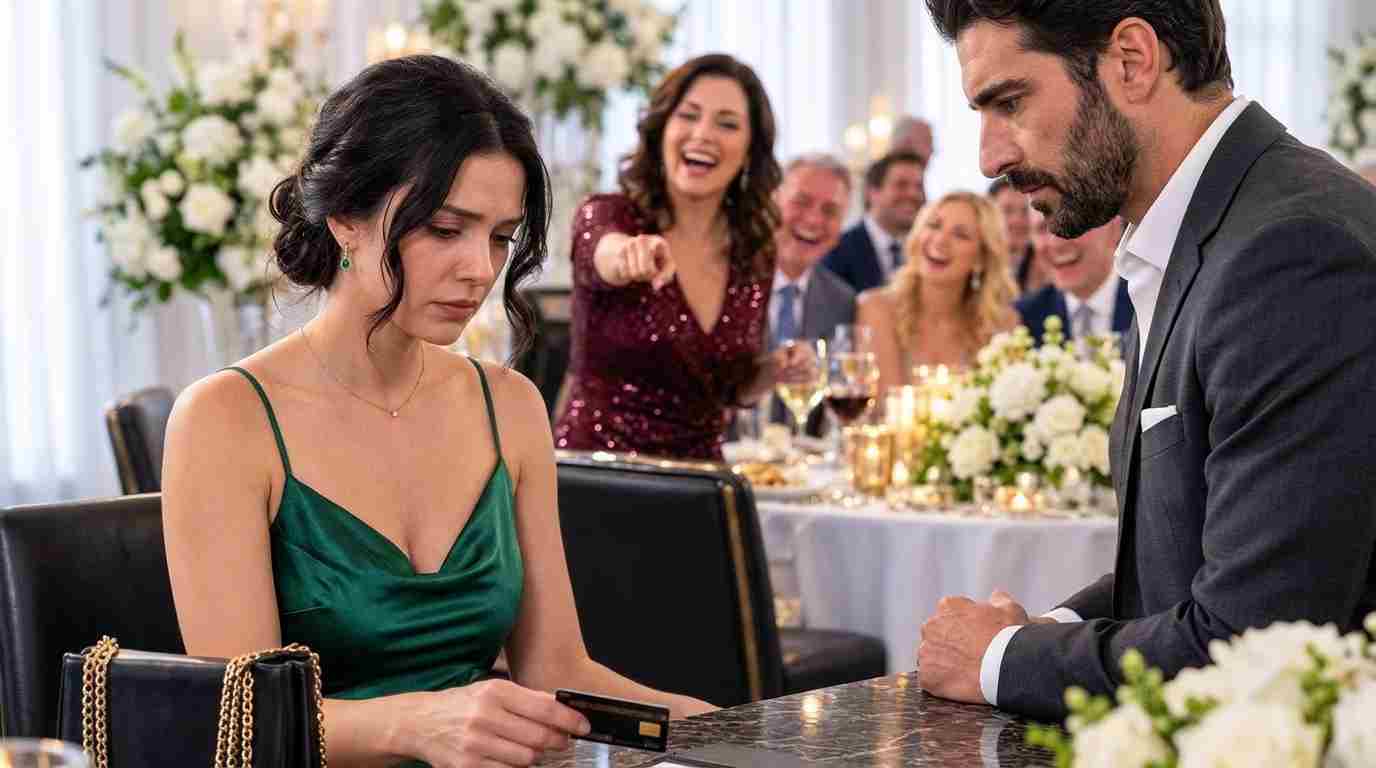
The manager looked down at the second document. Then he read the first sentence aloud. “Consent and Release of Beneficiary Rights — Maren Elizabeth Hartwell.”For a moment, I couldn’t breathe. Beneficiary rights? I looked at my father. Warren Hartwell was standing beside his chair, one hand gripping the white tablecloth so tightly that his knuckles had turned pale. “Please,” he said again. “We can discuss this privately.”
My mother lunged toward the folder.
“Give me that!”
But the manager stepped back.
“Mrs. Hartwell, these documents were submitted to our restaurant as part of tonight’s event arrangements.”
“That was a mistake!”
“Then perhaps you can explain why the document already contains your daughter’s signature.”
The room went silent.
Not the polite silence that follows an uncomfortable joke.
This was something different.
The kind of silence that comes when thirty people realize they may have just witnessed the beginning of a crime.
I slowly turned toward the manager.
“My signature?”
He hesitated.
Then he handed me the page.
At the bottom, beneath several paragraphs of dense legal language, was a signature.
Maren E. Hartwell.
My handwriting.
Almost.
The capital M curved exactly the way mine did.
The final L in Hartwell stretched beneath the last three letters.
Even the small flourish beneath my name looked familiar.
There was just one problem.
I had never signed that document.
I looked at the date.
October 18.
Three days earlier.
On October 18, I had been in Chicago attending a three-day financial compliance conference.
I still had the boarding passes.
The hotel receipt.
The registration badge.
And photographs taken with my colleagues that afternoon.
I raised my eyes.
“Dad,” I said quietly, “who signed my name?”
Nobody moved.
My mother recovered first.
“Oh, for heaven’s sake, Maren. Don’t turn this into one of your dramatic little investigations.”
I stared at her.
“Who signed my name?”
“It’s paperwork.”
“Then why is my signature on paperwork I’ve never seen?”
Blake stood up.
“Can we please not do this in front of everybody?”
I looked at my brother.
The same brother who had laughed when our mother told me to find another table.
The same brother who had ordered the most expensive steak on the menu and three glasses of wine.
“That’s interesting, Blake.”
“What is?”
“You weren’t concerned about an audience when Mom humiliated me.”
His jaw tightened.
I turned back to the manager.
“May I have a copy of everything submitted under my reservation?”
“Of course.”
Celeste’s voice suddenly sharpened.
“You absolutely may not!”
The manager looked at her calmly.
“Ms. Hartwell is the contracting customer.”
My mother pointed toward me.
“She doesn’t understand what she’s looking at.”
And there it was.
The familiar explanation.
When I was a child, I was too sensitive.
When I was a teenager, I was too emotional.
When I became an adult, I was too difficult.
And now, at thirty-four, holding a document bearing my forged signature, I apparently wasn’t intelligent enough to understand it.
I placed the paper carefully on the counter.
“Actually, Mom,” I said, “I understand more than you think.”
My father’s expression changed.
Not anger.
Recognition.
He knew something I didn’t.
Or perhaps he was beginning to understand something about me.
I picked up my handbag.
“Before we continue, there’s someone I’d like to call.”
Celeste folded her arms.
“Your therapist?”
A few relatives gave nervous laughs.
I smiled.
“No.”
I took out my phone.
“My attorney.”
And for the first time in my life, my mother stopped smiling.
The inheritance nobody wanted me to discover
Eight weeks before that birthday dinner, I’d received a letter that changed everything.
It came in a plain cream envelope.
No return address I recognized.
Inside was a single page from an Atlanta law firm.
The letter began:
Dear Ms. Hartwell,
Our office is conducting a review of certain distributions made from the Eleanor Hartwell Family Trust.
As a named beneficiary, you are entitled to information concerning the administration of the trust.
I read those words three times.
Named beneficiary.
I had never heard of the Eleanor Hartwell Family Trust.
But I knew Eleanor.
She was my grandmother.
Or, according to Celeste, my adoptive grandmother.
Eleanor Hartwell had been the only person in that family who never made the distinction.
When I arrived at the Hartwell house at seven years old, I owned two pairs of shoes, a stuffed rabbit with one missing eye, and a yellow suitcase that smelled faintly of the foster home where I’d been living.
Celeste liked to tell people she had rescued me.
Eleanor never used that word.
The first afternoon we met, she took my suitcase upstairs herself.
I remember following her into a beautiful bedroom with pale blue curtains.
There was a quilt folded across the bed.
A little wooden desk beneath the window.
And a bookshelf already filled with children’s stories.
I stood in the doorway.
“Is this really mine?”
Eleanor smiled.
“Unless you know another Maren who’s moving in today.”
I touched the quilt.
“Will I have to give it back?”
Her expression softened.
She knelt until we were eye level.
“No, sweetheart.”
Then she said something I remembered for the rest of my life.
“A home isn’t something you should have to earn every morning.”
I cried that night.
Not because I was frightened.
Because somebody had finally given me something without explaining how grateful I ought to be.
Eleanor died seven years before Celeste’s birthday dinner.
I was twenty-seven.
At her funeral, my mother described her as a remarkable woman who believed family was everything.
Then she instructed me to remain outside the formal family photograph.
“The grandchildren first, Maren.”
I stood beside the funeral director while Blake and Lila gathered around Eleanor’s casket.
Nobody called me back.
Afterward, my father assured me that Eleanor’s estate had been settled.
“She left you some sentimental things,” he explained.
A wooden jewelry box.
A collection of handwritten recipes.
And a silver necklace shaped like a tiny oak leaf.
I cherished those things.
I never questioned the absence of money.
Eleanor had taught me that love wasn’t something measured in bank statements.
But the letter from the law firm made me question something else.
Why had nobody told me I was a beneficiary?
I called the attorney whose name appeared at the bottom.
Naomi Price.
She listened as I explained that my family had never mentioned the trust.
Then she asked a question.
“Ms. Hartwell, how old will you be on your next birthday?”
“Thirty-five.”
There was a pause.
“Then we need to meet.”
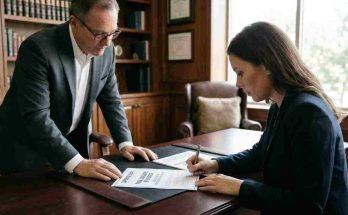
Naomi’s office overlooked downtown Atlanta.
She was in her early fifties, with silver beginning to show in her dark hair and the steady patience of someone accustomed to hearing complicated lies.
She placed a thick binder before me.
“Your grandmother established this trust twelve years before her death.”
I frowned.
“What was it for?”
“Her grandchildren.”
My throat tightened.
“All of them?”
Naomi opened the document.
Then she turned it toward me.
There were three names.
Blake Warren Hartwell.
Lila Celeste Hartwell.
Maren Elizabeth Hartwell.
Mine was listed first.
I stared at it.
“She included me?”
Naomi looked surprised by my question.
“Ms. Hartwell, she did considerably more than include you.”
She opened another section.
“Your grandmother owned a controlling interest in Hartwell Commercial Properties, a company holding several commercial buildings and parcels of land around Atlanta.”
I knew the company.
My father had spent his career managing it.
Blake worked there as executive vice president.
Lila received a salary for something vaguely described as brand development.
I had never worked there.
Whenever I showed an interest, Celeste reminded me that family businesses required family loyalty.
Naomi continued.
“Eleanor placed her ownership interests into this trust. She allocated portions to all three grandchildren, but she gave you fifty-one percent of the beneficial interest in those holdings.”
I actually laughed.
It was an involuntary sound.
“I’m sorry. Fifty-one percent of what?”
Naomi slid a valuation report across the desk.
My eyes went to the bottom.
I stopped breathing.
The estimated value of the trust’s business interests was just over fourteen million dollars.
My portion represented millions.
Not a sentimental keepsake.
Not a savings bond.
A controlling economic interest in assets my father had managed for years.
I shook my head.
“No. Something’s wrong.”
“Why do you say that?”
“Because my family would have told me.”
Naomi didn’t answer immediately.
Then she placed another document beside the valuation.
“Your father is the acting trustee.”
I looked up.
“And?”
“And distributions to you should have been reported and accounted for.”
She turned a page.
There were figures.
Dates.
Transactions.
Payments totaling hundreds of thousands of dollars.
Each marked as made for my benefit.
I leaned forward.
“What’s this?”
Naomi pointed to the first entry.
“Educational support.”
$84,000.
The next.
“Housing and maintenance.”
$126,500.
Another.
“Medical and personal expenses.”
$72,000.
I stared at her.
“I paid for college with scholarships and student loans.”
Naomi watched my face.
“I see.”
“I’ve never received housing support from them.”
She made a note.
I pointed toward the figures.
“Where did this money go?”
“That,” she said, closing the binder, “is precisely what we’re trying to establish.”
I sat motionless.
The room seemed to tilt around me.
Then I remembered every Christmas when Celeste complained about how much my upbringing had cost.
Every family dinner where Blake joked that I was lucky not to have been raised by strangers.
Every time my father claimed he’d already done more than enough for me.
And suddenly I wondered whether all those speeches had served a purpose.
Not gratitude.
Guilt.
A lifetime of guilt could make a person afraid to ask questions.
Naomi leaned forward.
“Maren, I need you to understand something. Your grandmother’s trust contains a provision that changes when you turn thirty-five.”
“What kind of provision?”
“You become entitled to direct control over the administration of your share, and certain governance rights tied to the business interests can be exercised through the trust.”
My birthday was eleven days away.
I stared at her.
“Does my father know?”
“He signed the trust documents.”
I looked down at my hands.
“And does my mother?”
Naomi hesitated.
“We have correspondence indicating she knew about the arrangement.”
I thought about the upcoming birthday dinner.
The reservation I’d made for Celeste.
The way she insisted everything be organized before my birthday.
And the unusual number of calls Blake had made to me recently, asking whether I planned to travel the following month.
For the first time, those details no longer felt random.
Naomi pushed a business card toward me.
“Do not sign anything your family brings you. Not even something presented as routine paperwork.”
I nodded.
“Why?”
“Because someone has already asked the trustee’s office to prepare a beneficiary release.”
I felt cold.
“A release of what?”
“Potentially, your right to challenge earlier distributions.”
She waited.
Then added:
“And I have reason to believe they intend to obtain your signature before your birthday.”
The signature that gave them away
Back at The Alder Room, my attorney answered on the third ring.
“Maren?”
“Naomi. It’s happening.”
I heard a chair move.
“Where are you?”
“At my mother’s birthday dinner.”
“Are you safe?”
“Yes.”
“What’s happened?”
I looked at the paper in front of me.
“They’ve produced a beneficiary release bearing my signature.”
Naomi went silent.
Then her voice became very precise.
“Have you signed anything tonight?”
“No.”
“Have you touched the signature page?”
“Only held it.”
“Do not give it back to your family. Ask the manager to preserve the file exactly as it was submitted, including the email and attachments. Please put me on speaker if you’re comfortable.”
I did.
Celeste’s expression grew darker as Naomi introduced herself.
“Good evening,” Naomi said. “My name is Naomi Price. I represent Maren Hartwell regarding her interests in the Eleanor Hartwell Family Trust.”
Blake swore beneath his breath.
My father sank back into his chair.
Naomi continued.
“I understand a document bearing my client’s signature was submitted to this restaurant. Mr. Manager, can you confirm how you received it?”
The manager introduced himself as Daniel Mercer.
“Yes, ma’am. It was sent from the email address associated with Mrs. Celeste Hartwell’s event updates.”
“When?”
“Yesterday afternoon.”
“Was the document presented as something Maren had already signed?”
“Yes. The instructions said the release had been executed and should be printed for inclusion in the evening’s family presentation.”
My mother interrupted.
“This is absurd! Daniel, you are going to destroy your restaurant’s reputation with this nonsense!”
Daniel remained composed.
“Mrs. Hartwell, our staff were asked to assist with printed materials for your event. We became concerned when the person whose signature appeared on the document was specifically instructed to sit separately from the guests.”
Celeste’s cheeks reddened.
“You’re a restaurant manager. Not a detective.”
“No, ma’am,” Daniel replied. “Which is why I did not make any conclusions. I simply preserved the document and asked the account holder about it.”
Naomi spoke again.
“Maren, please look at the signature page. Is there a witness section?”
I lowered my eyes.
There was.
Two signatures.
One belonged to Warren Hartwell.
The other belonged to a man named Thomas Bell.
I recognized the name.
Thomas Bell was my father’s longtime business associate.
He was sitting three seats away, beside a woman who had spent the evening complimenting my mother’s jewelry.
I looked toward him.
“Mr. Bell?”
He went pale.
I held up the paper.
“Did you witness me signing this?”
He didn’t answer.
I took one step toward him.
“It’s a simple question.”
Thomas looked at my father.
Then at Celeste.
Finally, he cleared his throat.
“I was told you had signed it earlier.”
Naomi’s voice came sharply through the phone.
“Then you did not witness her signature.”
“No.”
“Did you sign a statement saying you had?”
Thomas lowered his eyes.
“Yes.”
My mother slapped her palm against the table.
“Enough!”
The sound echoed through the restaurant.
A few diners beyond the glass divider turned to look.
Celeste stood perfectly straight.
“I am not going to be interrogated by a woman on a telephone at my own birthday dinner.”
I met her eyes.
“Then answer me yourself, Mom.”
She lifted her chin.
“Answer what?”
“Why did you forge my name?”
For once, she had no immediate reply.
And that frightened me more than her anger.
Because my mother always had an answer.
She could turn cruelty into humor.
She could turn manipulation into concern.
She could make thirty people believe the victim was the person who objected.
But now, in front of those same thirty people, she had nothing.
My father finally spoke.
“Celeste, sit down.”
She turned toward him.
“Don’t you dare.”
“Sit down.”
His voice was louder.
Sharper.
It was the first time I had heard him challenge her in years.
Celeste looked stunned.
Then Blake stepped between them.
“Dad, we can fix this.”
I turned toward him.
“Fix what?”
He froze.
I took another step.
“What exactly needs fixing, Blake?”
His eyes flickered toward the documents.
And I understood.
He knew.
Not some of it.
Not rumors or misunderstandings.
He knew about the trust.
He knew about the money.
And he knew about the forged release.
I felt something inside me break.
Not dramatically.
Not with an explosion of anger.
It was quieter than that.
It was the moment I finally stopped looking for a person at that table who might defend me.
The confession behind the champagne
I wanted to scream.
I wanted to ask how many birthdays, holidays, and family dinners had been spent laughing at me while they lived comfortably on money that was supposed to be protected for me.
Instead, I returned to the bar.
I took a sip of water.
And waited.
Naomi told me she would make immediate arrangements to preserve the evidence and pursue an independent accounting.
She cautioned everyone not to destroy or alter records.
Before ending the call, she said something I will never forget.
“Maren, whatever they tell you tonight, do not confuse pressure with obligation. You don’t have to resolve this at their table.”
I thanked her.
Then I hung up.
My father was approaching.
Without Celeste.
Without Blake.
He looked ten years older than he had an hour earlier.
“Maren.”
I didn’t turn.
“Dad.”
“Please come outside.”
“No.”
“Sweetheart—”
I looked at him.
“Don’t.”
His mouth closed.
“You don’t get to call me that because you need something.”
He lowered his head.
For a moment, I thought he might cry.
Then he pulled out the chair beside me.
“Can I sit?”
I glanced at the empty seat.
I thought about the one I’d been forbidden to occupy.
Then I said, “It’s a public restaurant.”
He sat.
For several seconds, neither of us spoke.
Finally, he whispered, “I never wanted it to go this far.”
I stared at him.
“How far was acceptable?”
He closed his eyes.
“That’s not fair.”
“Was taking money from my trust acceptable?”
His shoulders tightened.
“Things were complicated.”
“Was lying about Grandma’s will acceptable?”
“Maren, please—”
“Was letting Mom call me an outsider acceptable?”
He looked down.
I leaned closer.
“Or was signing my name on a document I never saw the part that finally made you uncomfortable?”
He said nothing.
And suddenly, I remembered something from childhood.
I was eleven.
Celeste had taken Blake and Lila shopping for school clothes.
I asked if I could go.
She told me there wasn’t enough room in the car.
I watched them leave.
That evening, Eleanor found me sitting on the stairs.
“What’s wrong, little oak?”
That was her nickname for me.
Little oak.
Because she said strong things didn’t always grow in easy places.
I told her everything was fine.
She sat beside me.
Then she said, “People who love you shouldn’t make you disappear to keep everyone else comfortable.”
I had forgotten that conversation for years.
Now it returned with painful clarity.
I looked at my father.
“Grandma knew, didn’t she?”
His eyes filled.
“Knew what?”
“That I was never really welcome.”
He swallowed.
“Your grandmother knew you were loved.”
“By her.”
He nodded slowly.
“Yes.”
The admission struck harder than an insult.
Because he hadn’t said by us.
I asked him the question I’d been avoiding for years.
“Why did you adopt me?”
His face twisted.
“Because your mother and I wanted to help you.”
“Then why did you spend the next twenty-seven years reminding me I needed help?”
He stared at the bar.
When he finally spoke, his voice was barely audible.
“Celeste wanted people to see us as a certain kind of family.”
I waited.
“She was active in the children’s charity. There were interviews. Fundraisers. Adoption became part of our story.”
I felt my stomach turn.
“Our story?”
He winced.
“That’s not how I meant it.”
I laughed without humor.
“So I was a good story?”
“No.”
“A beautiful little girl you rescued? Something for the charity newsletters?”
“Maren—”
“Did you ever think about what happened to that little girl when the cameras went away?”
He put both hands over his face.
I waited.
He had spent years protecting my mother from uncomfortable questions.
For once, I wanted him to sit inside one.
Finally, he said, “I failed you.”
The words were quiet.
But they were not enough.
I stood.
“Yes,” I whispered. “You did.”
The daughter who had kept a secret
I was collecting my things when Lila appeared beside the bar.
She looked nothing like the sister I’d watched posing for photographs an hour earlier.
Her mascara had smudged.
Her hands were trembling.
“Maren.”
I turned.
“What?”
She glanced toward Celeste.
“Can we talk somewhere?”
I almost laughed.
Everybody suddenly wanted privacy.
Privacy to confess.
Privacy to bargain.
Privacy to keep the ugly parts of the family hidden from the public.
“No,” I said.
Her eyes filled.
“Please.”
Something in her voice stopped me.
Not because I trusted her.
Because I recognized genuine fear.
Daniel offered us an empty alcove near the entrance, where we could still see the bar.
Lila followed me.
She closed her hands around the strap of her purse.
Then she said, “I took the photograph.”
I frowned.
“What photograph?”
“The one they used for your signature.”
The air left my lungs.
She continued quickly.
“Last Christmas, you signed that donation authorization for Mom’s foundation. Remember? You were helping with the year-end fundraiser.”
I remembered.
Celeste had asked me to help arrange a charitable contribution.
She said the paperwork was urgent.
I signed one form.
Then Lila photographed it so the foundation’s accountant could process it.
I stared at her.
“You gave them my signature?”
Lila started crying.
“Mom said she only needed it for a record correction.”
“Record correction?”
“I didn’t know she would put it on another document.”
I watched her.
“You’re telling me you didn’t know anything about the trust?”
Lila looked away.
And there was my answer.
I felt almost physically tired.
“How long?”
She whispered, “Since I was twenty-four.”
Six years.
My sister had known about the trust for six years.
Six years of Christmases.
Six years of vacations.
Six years of listening to Celeste call me ungrateful.
I stepped back.
“You knew?”
Lila nodded.
“Dad told me Grandma left you most of her business interests.”
“Most?”
“He said she thought Blake would run everything into the ground if nobody stopped him.”
Despite everything, a small bitter laugh escaped me.
Eleanor had understood Blake better than anybody.
Lila reached for my hand.
I pulled away.
“Don’t.”
She started crying harder.
“Maren, I was scared.”
“Of what?”
“Mom.”
I stared at her.
“She controls everything. The money. The house. My job. Every time I tried to disagree with her, she threatened to cut me off.”
I wanted to comfort her.
An old instinct.
The instinct that had made me solve everyone’s problems for years.
But then I remembered standing alone beside the private dining room while she kept looking at her phone.
“You watched her humiliate me.”
Lila nodded.
“You laughed.”
She covered her mouth.
“I know.”
“You knew I was paying for the dinner.”
“I didn’t know about the bill until tonight.”
“But you knew she planned to leave me out.”
She lowered her head.
“Yes.”
I looked through the glass divider.
Celeste was talking urgently with Blake.
My father sat alone.
Thomas Bell had disappeared.
Lila whispered, “There’s something else.”
I looked back at her.
“What?”
“Dad didn’t start all of this.”
I felt my pulse quicken.
“What do you mean?”
She wiped her cheeks.
“Mom did.”
I shook my head.
“Mom doesn’t manage the trust.”
“No,” Lila said. “But she manages Dad.”
Then she told me about the meeting.
Three years earlier.
She had gone into my father’s study to borrow a charger.
Celeste and Blake were arguing.
Blake’s company had taken on a disastrous development project.
Contractors were threatening lawsuits.
Banks were calling.
The family needed money quickly.
Celeste had said there was more than enough sitting in Eleanor’s trust.
Warren argued that the money wasn’t theirs.
And Blake had answered:
“It’s Maren’s. She’ll never know.”
I felt my heart slam against my ribs.
Lila continued.
“Mom told Dad he’d spent his whole life providing for this family and deserved to use what Eleanor had left behind.”
I closed my eyes.
“She said Maren owed us,” Lila whispered. “For taking her in.”
There it was.
The truth beneath every remark.
Every joke.
Every reminder.
They hadn’t simply treated me as less than family.
They had convinced themselves I was indebted to them forever.
Even when the money belonged to me.
Lila opened her purse.
She removed a small USB drive.
I stared at it.
“What’s that?”
“Copies of the files from Dad’s office.”
My eyes widened.
“Lila—”
“I know. I should have done something sooner.”
She placed it in my palm.
“There are emails. Financial reports. Documents from Blake’s project.”
I closed my fingers around the drive.
“Why are you giving this to me now?”
Her lips trembled.
“Because Mom told me something yesterday.”
“What?”
“She said that after the release was finalized, they’d make sure you never got another cent.”
I stared at her.
Lila’s voice dropped.
“And then she said something worse.”
I barely breathed.
“She said, ‘Maren should have been grateful we let her use our name.’”
For a moment, I was seven years old again.
Standing in that bedroom with my yellow suitcase.
Afraid to touch the quilt because I wasn’t sure it really belonged to me.
Lila cried quietly.
“I don’t expect you to forgive me.”
I looked at my sister.
“Then don’t ask me to.”
She nodded.
I tucked the USB drive into my purse.
“And Lila?”
She lifted her eyes.
“If you want to make this right, tell Naomi everything. Not just the parts that make you look innocent.”
She swallowed.
“I will.”
I believed she wanted to.
Whether she would actually do it was another question.
My mother’s final performance
When we returned to the dining room, most of the guests had gathered near the entrance.
They were whispering.
Some looked embarrassed.
Others appeared eager to leave before their names became attached to the night’s scandal.
Celeste stood beside the cake.
Her beautiful birthday cake.
The sugared orchids were beginning to droop.
One candle had fallen sideways into the frosting.
She looked at me and straightened.
“Maren, darling.”
That voice.
Sweet as honey.
Sharp as broken glass underneath.
“I think we’ve all had a very emotional evening.”
I didn’t answer.
She gestured toward the table.
“Why don’t we all sit down and talk like adults?”
I looked at the empty chair beside Lila.
The chair I’d been forbidden to use.
“Now there’s room for me?”
A few guests lowered their eyes.
Celeste’s smile hardened.
“Must you be difficult?”
I walked toward her.
Slowly.
Not because I was trying to frighten her.
Because I was no longer rushing to make her comfortable.
“Mom, I want to ask you one question.”
She sighed.
“Go ahead.”
“Did you love me?”
For the first time, her expression changed.
Something uncertain passed over her face.
Then she gave a small laugh.
“What an absurd question.”
“Did you?”
“Of course I did.”
“Then why was I always the one who had to leave the table?”
She looked around.
“Maren, surely you understand that people say things in jest.”
“Was the forged signature a joke?”
Her smile vanished.
“Lower your voice.”
“Was taking money from my trust a joke?”
“Maren!”
“Was telling the restaurant I wasn’t family a joke?”
Her face flushed.
“After everything I’ve done for you, this is how you repay me?”
I nodded slowly.
“There it is.”
“What?”
“The bill.”
She frowned.
“The restaurant bill?”
“No.”
I looked around at the people who had laughed at her remark.
“The bill you’ve been handing me since I was seven.”
Nobody spoke.
I continued.
“Every meal. Every Christmas present. Every school uniform. Every birthday party. You kept the total in your head.”
Celeste’s eyes narrowed.
“That’s a cruel thing to say.”
“Do you know what’s cruel?”
I felt tears gathering, but my voice remained steady.
“Making a child believe she has to spend her entire life paying for the privilege of being loved.”
My mother stared at me.
For a second, I saw a strange flicker in her eyes.
Not sorrow.
Not shame.
Something closer to frustration.
As if I had become inconvenient.
She stepped closer.
“You think Eleanor made you special because she left you money?”
I shook my head.
“No.”
“She was sentimental. She didn’t understand the sacrifices we made.”
“Grandma understood plenty.”
Celeste laughed bitterly.
“Oh, she understood everything, did she?”
I looked at her.
“She understood you.”
Her expression hardened.
Then the words came.
The words she could never take back.
“You were never my real daughter.”
The room went still.
A woman near the entrance gasped.
Lila covered her mouth.
My father stood.
“Celeste!”
But my mother wasn’t finished.
“You came into this house with nothing! We gave you a name, an education, opportunities you never would have had!”
I listened.
Strangely calm.
“You think a piece of paper makes you equal to my children?”
I watched her face as she said it.
All those years, I had wondered whether she sometimes forgot I was adopted.
Whether she accidentally hurt me.
Whether I was simply too sensitive.
But there was nothing accidental about this.
She meant every word.
And now everyone had heard it.
I nodded once.
“Thank you.”
She blinked.
“For what?”
“For finally saying the truth without dressing it up as a joke.”
I turned away.
Celeste grabbed my wrist.
“Maren, you are not walking away from me.”
I looked down at her hand.
Then back at her.
“Let go.”
She tightened her grip.
“You will not destroy this family over money.”
I gently freed my wrist.
“You did that long before I found out about the money.”
Then I walked toward the entrance.
Behind me, my father called my name.
I didn’t stop.
But Daniel did.
He stepped beside me, holding a white envelope.
“Ms. Hartwell?”
I turned.
“I made copies of the submitted event documents for you. The original electronic records will be preserved.”
I took the envelope.
“Thank you.”
He hesitated.
Then said something quietly enough that nobody else could hear.
“For what it’s worth, your grandmother would have been proud of you.”
I stared at him.
“You knew my grandmother?”
A sad smile crossed his face.
“She helped my family years ago. I remember her very well.”
I looked at him.
“How?”
Daniel glanced toward the dining room.
“She helped finance the renovation of this restaurant when the original owners were struggling. She insisted the staff be treated fairly and kept their jobs.”
I looked around.
The walnut bar.
The brass light fixtures.
The olive tree by the entrance.
Eleanor had helped preserve this place.
And I’d never known.
Daniel continued.
“She once told me that restaurants have a particular responsibility.”
I swallowed.
“What responsibility?”
“To make sure nobody feels alone when they sit down to eat.”
My eyes burned.
He looked toward the table where I’d sat alone.
“I wish we’d known earlier what was happening tonight.”
I shook my head.
“You weren’t responsible.”
He nodded.
Then said, “Good night, Ms. Hartwell.”
I looked back once.
Thirty-one emptying chairs.
My mother’s ruined cake.
My father standing beside the woman he’d protected for decades.
And the family table I’d spent my entire life trying to earn a place at.
I walked outside.
Into the cool Atlanta night.
And for the first time, I didn’t feel as though I was leaving my family behind.
I felt as though I was finally finding myself.
The morning after
My phone began ringing at 6:12 the next morning.
Celeste.
I let it ring.
At 6:19, Blake called.
At 6:24, my father sent a message.
Maren, please don’t do anything rash. We need to discuss the trust before outsiders become involved.
I read it twice.
Then forwarded it to Naomi.
At eight o’clock, I was sitting in her office.
The USB drive Lila had given me was on the conference table.
Naomi had already arranged for a digital evidence specialist to create a forensic copy and review the files.
She looked at me.
“Are you prepared for what we might find?”
I thought of Eleanor.
I thought of the silver oak-leaf necklace in my jewelry box.
And I thought of Celeste telling me I’d never been her real daughter.
“Yes.”
Naomi nodded.
“Then we begin with the accounting.”
Over the next two weeks, the truth unfolded.
Not in one dramatic revelation.
In spreadsheets.
Emails.
Bank statements.
Board meeting notes.
And documents bearing signatures that didn’t belong to the people whose names appeared on them.
The original trust allowed certain expenses for beneficiaries, but it did not authorize my father to move money into Blake’s private development business.
Yet that was exactly what had happened.
Hundreds of thousands had been transferred through accounts described as family advances.
Some payments were recorded as being made for my education.
Others for my housing.
Several were entered as medical reimbursements.
I had never received any of them.
The preliminary accounting identified more than $840,000 in questionable transactions.
And that wasn’t the end.
Naomi uncovered another document.
A letter written by Eleanor shortly before she died.
It had been kept with the attorney who originally drafted her trust.
My father had never shown it to me.
The letter was addressed:
To my son Warren, regarding my granddaughter Maren.
I opened it with trembling hands.
Eleanor’s handwriting was familiar.
Elegant.
Slightly slanted.
The same handwriting that filled the recipe cards she’d left me.
I read slowly.
Warren,
I know Celeste has never fully accepted Maren as one of our own.
I have watched that child try to earn a place in a family that should have offered her one without conditions.
I have watched her apologize for things she did not do, and thank people for kindness they should have given freely.
Tears blurred the words.
I wiped my eyes and continued.
The choices I have made in my estate plan are deliberate.
Blake and Lila have been provided for. Maren has been given a larger share of my business interests because she has demonstrated the honesty, patience, and responsibility that I believe those holdings will need.
Do not mistake this for an act of pity.
I am not compensating her for being adopted.
I am recognizing the person she has become.
I pressed a hand over my mouth.
Then I read the final paragraph.
Most importantly, Warren, I expect you to honor the obligations you accepted as her father.
If you ever find yourself speaking of her as though she is less than your daughter, remember this: the day you adopted her, you did not give her the privilege of becoming your child.
You accepted the privilege of becoming her father.
I broke down.
Not the controlled tears I’d hidden at the restaurant.
Not the silent crying I’d practiced as a child.
I cried so hard I could barely breathe.
Naomi moved the tissue box toward me.
She didn’t interrupt.
She didn’t tell me to be strong.
She simply let me grieve the grandmother I’d lost and the family I should have had.
When I finally looked up, Naomi said softly, “There’s another document.”
I almost laughed.
“Of course there is.”
She smiled sadly.
“This one is from the trust’s original drafting file.”
She handed me a photograph.
It showed Eleanor sitting on a garden bench.
Beside her was a little girl.
Seven years old.
Yellow dress.
Dark braids.
A stuffed rabbit with one missing eye.
Me.
On the back, Eleanor had written:
The day my granddaughter came home.
Not my adopted granddaughter.
Not the girl we took in.
My granddaughter.
I held that photograph against my chest.
And for the first time since Eleanor’s funeral, I felt her close.
The betrayal that went deeper
Three weeks later, Naomi called with another discovery.
“Maren, we found where some of the money went.”
I was sitting at my kitchen table.
Outside, rain tapped against the window.
“Blake’s company?”
“Some of it.”
I closed my eyes.
“What else?”
She hesitated.
“Your mother’s foundation.”
I sat upright.
“The children’s foundation?”
“Yes.”
Celeste Hartwell had spent twenty years chairing charity luncheons, hosting fundraising galas, and giving speeches about providing opportunities for underprivileged children.
Her name appeared on plaques.
Magazine profiles.
Donor walls.
She liked introducing me at events as proof of her commitment to adoption.
My stomach twisted.
“Please tell me she wasn’t taking donations.”
“We haven’t found evidence that she diverted other donors’ restricted contributions,” Naomi replied carefully. “But we did find trust funds routed through accounts connected to the foundation and then used for expenses that require explanation.”
I stared at the rain.
“What expenses?”
“Event costs. Consulting invoices. Personal reimbursements.”
I thought of the restaurant.
The birthday cake.
The flowers.
The imported wine.
“Naomi?”
“Yes?”
“Did they ever reimburse me for the dinner?”
“No.”
I looked at my bank app.
The charge had posted.
$3,924.17, including the additional tip.
I had paid nearly four thousand dollars to be told I wasn’t family.
And my mother had spent years presenting herself as a philanthropist.
Naomi continued.
“There’s more. We found correspondence suggesting your parents expected the release to protect the earlier trust distributions from being challenged.”
I gripped the phone.
“So the document at the restaurant wasn’t just about my inheritance?”
“No. It appears designed to close off your ability to demand repayment or hold the trustee accountable.”
I sat back.
My mother hadn’t simply wanted my money.
She wanted my silence.
The distinction mattered.
Because money could be repaid.
But silence was what allowed the abuse to continue.
I looked at Eleanor’s photograph on the table.
“Naomi, what happens now?”
“We petition for a full accounting, seek appropriate protective orders, and request your father’s removal as trustee. The evidence concerning the signatures will be addressed separately.”
I nodded.
“Do it.”
“Are you sure?”
I thought about my father begging me not to involve outsiders.
My sister crying.
My mother accusing me of destroying the family.
Then I answered.
“Yes.”
And I meant it.
When the family came to my door
Four days after the court filing, my mother appeared at my house.
No appointment.
No warning.
Just her black Mercedes parked at the curb.
She rang the bell three times.
When I opened the door, she was standing on my porch wearing a camel coat and oversized sunglasses.
For a moment, she looked exactly like the woman who had dropped me off at college without getting out of the car because she didn’t want to ruin her shoes in the rain.
“Maren.”
I kept one hand on the door.
“Mom.”
She glanced inside.
“Aren’t you going to invite me in?”
“No.”
Her lips tightened.
“Really?”
“What do you need?”
She removed her sunglasses.
Her eyes were red.
I wondered whether she’d been crying.
Then I reminded myself that tears did not automatically mean remorse.
“Maren, your father is falling apart.”
I waited.
“He barely sleeps. He’s hardly eating. His attorney says this situation could ruin him.”
I said nothing.
“Blake’s company is in trouble.”
Still nothing.
“The foundation board is asking questions.”
I looked at her.
“Good.”
She recoiled.
“Good?”
“Questions are how people find out the truth.”
She stared at me.
Then her expression softened.
“Maren, sweetheart, I know I hurt you at the restaurant.”
I felt my heartbeat quicken.
For one dangerous second, I wanted to believe her.
I wanted the next words to be simple.
I’m sorry.
You deserved better.
I was wrong.
Instead, she said, “But surely you understand how humiliating this has been for me.”
I looked down.
Almost smiled.
There it was again.
Her humiliation.
Her reputation.
Her suffering.
I asked, “What exactly do you want?”
She took a breath.
“Withdraw the court filing.”
“No.”
“Maren—”
“No.”
Her eyes flashed.
“You don’t understand what you’re doing.”
“I understand perfectly.”
“You’ll ruin your father’s life.”
I met her stare.
“Then why didn’t he stop before he signed my name?”
She opened her mouth.
Closed it.
Then whispered, “You’re being vindictive.”
I shook my head.
“No. I was vindictive in my imagination for about ten minutes after the restaurant.”
She looked confused.
“I imagined telling everybody your secrets. Taking pictures of your faces. Making you feel as small as you made me feel.”
I paused.
“But I went home instead. I called my attorney. And now I’m asking for an accounting.”
She crossed her arms.
“It’s the same thing.”
“No, Mom. It isn’t.”
She studied me.
Then her voice changed.
Became colder.
“You know, the saddest part of this is that I really did try with you.”
I felt the old familiar sting.
She continued.
“You were always so distant. So suspicious. Lila was affectionate. Blake was easy. But you always looked at us as if we owed you something.”
I stared at her.
“I was a child.”
“You were difficult.”
“I was seven.”
“You made everything into a test of love.”
I swallowed.
“Because I kept failing yours.”
For a moment, she looked genuinely shaken.
Then her face closed again.
“Maren, I’m offering you a chance to make this right.”
I shook my head.
“No. You’re offering me another opportunity to make things right for you.”
Her mouth tightened.
I continued.
“I spent twenty-seven years trying to earn a seat at your table. I won’t spend the next twenty-seven buying your forgiveness.”
She stepped backward.
“So that’s it?”
I nodded.
“That’s it.”
Her eyes filled with angry tears.
“After everything?”
I looked at her.
“Yes.”
Then I closed the door.
My hands shook afterward.
I leaned against the wall and cried.
But I didn’t reopen it.
The day my father finally told the truth
The legal proceedings took months.
There were hearings.
Depositions.
Account reviews.
And a painful inventory of transactions my father had authorized.
The court appointed an independent fiduciary to protect the trust while the disputed conduct was examined.
My father stepped aside from managing its assets.
Blake’s development company faced demands for repayment.
Celeste resigned from her foundation leadership role while the board arranged an independent financial review.
People who had laughed at her birthday dinner suddenly became very quiet whenever the Hartwell name appeared in conversation.
But I never celebrated their embarrassment.
That wasn’t what I wanted.
I wanted the records corrected.
I wanted the money accounted for.
And I wanted the truth to exist somewhere outside my own memory.
During a court-ordered mediation, my father asked to speak directly to me.
Naomi looked at me.
“You don’t have to.”
I knew that.
For once, I truly knew I had a choice.
But I agreed.
We met in a quiet conference room.
My father looked thinner.
The expensive confidence that once surrounded him had disappeared.
He sat across from me.
No Celeste.
No Blake.
No audience.
Just Warren Hartwell and the daughter he’d spent so long failing to protect.
He folded his hands.
“I’ve been trying to figure out how to apologize.”
I remained silent.
He took a shaky breath.
“I don’t think there are words for it.”
“Then tell me the truth.”
He nodded.
And finally, he did.
He admitted that he’d concealed the trust from me.
He admitted that he’d approved transfers benefiting Blake’s company.
He admitted that financial records had been falsely characterized as support for me.
And then he confessed the thing I hadn’t expected.
“Your grandmother warned me.”
I looked at him.
“About what?”
“About Celeste. About Blake. About my habit of avoiding conflict.”
I remembered Eleanor’s letter.
He continued.
“She told me that if I kept sacrificing the right thing to preserve peace, one day there wouldn’t be any peace left.”
A bitter smile crossed my face.
“She was right.”
He nodded.
“Yes.”
His eyes filled.
“Maren, I need you to know I did love you.”
The words hit me harder than I expected.
Because despite everything, a part of me had been waiting to hear them.
I looked at him.
“Then why didn’t you act like it?”
He cried.
Quietly.
Without covering his face.
“I was weak.”
I let the silence settle.
Then I said, “You were weak when Mom insulted me. You were weak when Blake mocked me. But when it came time to sign documents and move money, you were strong enough to do that.”
He looked down.
“You’re right.”
“I needed a father.”
“I know.”
“No,” I whispered. “I don’t think you do.”
He looked up.
I felt tears filling my eyes.
“I didn’t need expensive presents. I didn’t need a perfect house or private schools.”
My voice cracked.
“I needed someone to tell me I belonged there.”
He reached across the table.
I moved my hand away.
He stopped.
After a long silence, he said, “Your grandmother would be ashamed of me.”
I shook my head.
“Grandma loved you.”
His eyes lifted.
“But she would have expected you to be better.”
He nodded.
“Yes.”
When the meeting ended, he stood.
“Maren?”
I paused at the doorway.
“Is there any chance you’ll forgive me?”
I looked at the man who had once carried me upstairs when I fell asleep as a little girl.
The man who had taught me to ride a bicycle.
The man who had watched his wife hurt me and never intervened.
I felt love.
Anger.
Grief.
All tangled together.
“I don’t know, Dad.”
He lowered his head.
“I understand.”
I opened the door.
Then turned back.
“But if I ever do, it won’t mean what happened was acceptable.”
He nodded.
“And it won’t mean you get to do it again.”
Eleven months later
By the following autumn, an agreement had been reached on the financial claims against my father and Blake’s business.
The accounting confirmed substantial improper distributions.
My father permanently relinquished his role as trustee.
A repayment arrangement required assets to be sold, including Blake’s interest in a commercial development.
The court approved measures to restore the trust as far as the available assets allowed.
The disputed signatures and related records had also been referred to the appropriate authorities for review.
Not every legal question was resolved.
There were still documents to examine, repayments to monitor, and consequences that would take time.
But the people who had treated my inheritance as their private emergency fund could no longer control it.
My thirty-fifth birthday had come and gone during the proceedings.
I didn’t throw a party.
I spent the day with Eleanor’s recipes spread across my kitchen counter, making the lemon cake she’d baked for me every year.
I cried when I tasted the frosting.
It was almost right.
Almost.
Some things can’t be recreated perfectly.
But they can still be remembered with love.
I also made one decision about the trust that surprised Naomi.
I wanted to fund educational scholarships for young people who had spent part of their childhood in foster care.
Not through Celeste’s foundation.
Not under the Hartwell family name.
I wanted independent administrators, transparent records, and real accountability.
I named the program the Little Oak Scholarship.
Because Eleanor had taught me that where a person started did not have to determine where they ended.
The first scholarship committee meeting was held that September.
There were four people in the room.
Naomi.
A former foster-care coordinator.
A college financial-aid director.
And me.
No cameras.
No newspaper interviews.
No speeches about rescuing children.
Just people trying to make sure young adults had somewhere to turn when they needed help.
Afterward, Naomi asked whether I was happy.
I thought about it.
Then said, “I’m learning how.”
She smiled.
“That’s a good answer.”
One last invitation
The following October, almost exactly a year after Celeste’s birthday dinner, I received a message from Lila.
Can we have dinner? Just the two of us?
I stared at the screen.
Lila had cooperated with the investigation.
She had provided documents.
She had admitted what she knew and accepted the consequences of her choices.
She had also left the family business.
For the first time in her adult life, she was supporting herself.
Our relationship was far from repaired.
Some days I wanted to call her.
Other days, I couldn’t bear to hear her voice.
But she’d stopped asking me to pretend the past had never happened.
That mattered.
I replied:
Dinner is okay.
A minute later, another message appeared.
Where would you like to go?
I looked at the date.
Then at Eleanor’s photograph on my desk.
And I knew.
The Alder Room.
Lila responded almost immediately.
Are you sure?
I typed:
Yes.
I arrived at 7:00 p.m.
The same walnut bar gleamed beneath the same golden lights.
The air smelled of rosemary, roasted garlic, and warm bread.
Daniel Mercer stood near the entrance.
When he recognized me, his expression softened.
“Ms. Hartwell.”
“Hello, Daniel.”
“It’s good to see you.”
He paused.
“Welcome back.”
I smiled.
“Thank you.”
He led me through the dining room.
Past the potted olive tree.
Past the smoked-glass divider.
Toward a small table beside the windows.
Two place settings.
Two glasses.
A single candle.
I stood there for a moment.
Remembering the humiliation.
The laughter.
The heavy leather bill holder.
The forged signature.
The terrible feeling of being surrounded by people who called themselves my family while leaving me completely alone.
Daniel quietly asked, “Is this table all right?”
I looked at the second chair.
Then nodded.
“It’s perfect.”
Lila arrived ten minutes later.
She wore a simple navy dress.
No diamonds.
No designer handbag.
She looked nervous.
“Hi.”
“Hi.”
She glanced around.
“I didn’t think I’d ever come back here.”
“Neither did I.”
We sat.
For several minutes, we talked about ordinary things.
Her new job.
My scholarship program.
The ridiculous amount of rain Atlanta had received that week.
Then she reached across the table.
Not to take my hand.
Just to place a small envelope beside my plate.
“What’s this?”
“A photograph.”
I opened it.
It was an old picture from one of Eleanor’s Christmas parties.
I must have been nine.
Blake and Lila were sitting beside the fireplace.
Eleanor stood behind them.
And I was in the corner of the photograph, half-hidden by the Christmas tree.
I frowned.
“I’ve never seen this.”
Lila nodded.
“Mom didn’t put it in the family album.”
I looked up.
“How did you find it?”
“I was going through some boxes Dad gave me.”
She swallowed.
“There were a lot of pictures of you that never made it into the albums.”
I looked back at the photograph.
Little Maren.
Standing quietly.
Trying not to take up too much room.
My throat tightened.
Lila whispered, “I’m sorry.”
I looked at her.
She continued.
“Not just for the dinner. Not just for the trust. I’m sorry I let you spend your whole life thinking you had to be grateful for scraps.”
Tears filled my eyes.
Lila’s voice broke.
“You were my sister. You were always my sister. I should have acted like it.”
I didn’t answer immediately.
Then I reached for her hand.
She started crying.
I did too.
It wasn’t a magical reconciliation.
Years of hurt don’t disappear because someone finally finds the right words.
But it was a beginning.
And for that evening, a beginning was enough.
The woman who stood at the door
We had just finished dessert when I noticed someone standing near the entrance.
A woman in a cream-colored coat.
Silver hair.
A familiar posture.
Celeste.
My mother.
She was looking directly at us.
I felt my whole body tense.
Lila followed my gaze.
“Oh, God.”
I set down my spoon.
“Did you invite her?”
“No,” Lila whispered. “I swear I didn’t.”
Celeste approached slowly.
For once, she looked uncertain.
No theatrical smile.
No grand entrance.
No audience waiting to applaud.
She stopped beside our table.
“Maren.”
I looked at her.
“Celeste.”
She flinched at the use of her name.
Then glanced at Lila.
“I heard you two were having dinner.”
I said nothing.
She looked at the empty space between our chairs.
Then back at me.
“May I sit?”
There it was.
The question I’d once wanted someone to ask on my behalf.
May I sit?
I looked at the woman who had raised me.
Who had given me shelter.
Who had also taught me to fear losing it.
For a moment, I imagined the seven-year-old version of myself looking up at her with hope.
Still waiting to be chosen.
Still willing to forgive anything for a little affection.
I took a slow breath.
“Celeste, this dinner is for Lila and me.”
Her eyes filled.
“I only wanted to talk.”
“You can contact me through the arrangements we’ve already discussed. But not tonight.”
She stared at me.
“I’m your mother.”
I felt the words settle.
A year earlier, I might have begged her to mean them.
Now I simply looked into her eyes.
“You told me I wasn’t your real daughter.”
Her lips trembled.
“I was angry.”
“I know.”
“I didn’t mean it.”
I paused.
“Maybe you didn’t want to mean it.”
She lowered her head.
“But you said it. And you lived as though it were true.”
A tear slipped down her cheek.
For the first time, I didn’t rush to wipe it away.
I wasn’t punishing her.
I wasn’t trying to make her suffer.
I was simply allowing her to experience feelings that belonged to her.
She whispered, “I don’t know how to fix this.”
I looked at her for a long moment.
“Then begin by not asking me to fix it for you.”
She covered her mouth.
Then nodded slowly.
Without another word, she turned and walked away.
Lila watched her leave.
Then looked at me.
“Are you okay?”
I took a breath.
“Yes.”
And to my surprise, I was.
Sad.
Shaken.
But okay.
Because healing hadn’t made me forget what happened.
It had taught me that I could remember everything and still choose what came next.
When the check arrived, Daniel placed it gently between Lila and me.
We both reached for it at the same time.
Lila laughed.
“Absolutely not. I’m paying.”
I raised an eyebrow.
“Are you sure?”
She nodded.
“Completely.”
I smiled.
“Fine. But I’m leaving the tip.”
Daniel chuckled softly.
And I laughed.
A real laugh.
Not the polite one I’d used to survive my mother’s insults.
Not the nervous one I’d given when someone made another cruel joke.
A laugh that belonged entirely to me.
Then Daniel handed me a small folded card.
“Almost forgot,” he said. “We found this in an old file after you came here last year. I thought you might like it.”
I opened it.
It was a copy of a note Eleanor had written when she’d helped the restaurant years earlier.
Just a few sentences.
At the bottom, in her unmistakable handwriting, was a line:
Always make room for one more.
I stared at it.
Then began crying again.
Lila leaned closer.
“What is it?”
I showed her.
She smiled through her tears.
“That’s Grandma.”
I nodded.
“Yes.”
It was.
That night, when I returned home, I placed the note beside Eleanor’s photograph.
Then I opened my jewelry box.
Inside lay the little silver oak-leaf necklace.
The one she’d left me.
I fastened it around my neck.
For years, I’d worn it only on special occasions.
Now I decided I would wear it whenever I wanted.
Because I finally understood what Eleanor had tried to teach me all those years ago.
Family wasn’t a prize given to the most obedient child.
Love wasn’t a debt that could be collected with interest.
And a person’s worth wasn’t determined by whether somebody else was willing to pull out a chair.
I thought about that first dinner.
My mother laughing.
My father looking away.
Blake raising his glass.
Lila staring at her phone.
Thirty-one people sitting around a beautiful table while I ate alone.
And the $3,270.14 bill they’d left for me.
At the time, I thought the greatest humiliation was being forced to pay for a celebration where I wasn’t welcome.
I was wrong.
The greatest tragedy was how long I’d believed that paying enough might finally make them accept me.
But that night, my mother accidentally gave me something more valuable than an inheritance.
She gave me the moment I stopped begging.
The forged document exposed the money.
The investigation exposed the lies.
But her words exposed the truth I’d spent my whole life trying not to see.
I had never needed to become worthy of that family.
They had needed to become worthy of me.
And as I stood beside my bedroom window, watching the lights of Atlanta flicker in the distance, I thought of a frightened little girl with a yellow suitcase.
I wished I could go back and kneel beside her.
I wished I could take her small hands in mine and tell her that she wouldn’t always feel unwanted.
That one day she’d have a home where nobody could threaten to send her away.
That she’d learn to love without accepting cruelty.
That she’d stop confusing silence with peace.
And most importantly, that one day she’d sit at a table and never again wonder whether she belonged.
I touched the silver oak leaf resting against my heart.
Then I whispered the words Eleanor had given me so many years before.
“I’m home, Grandma.”
And this time, I believed them.
Because the most important seat at any table isn’t the one someone finally allows you to occupy.
It’s the one you learn you never needed their permission to deserve.
THE END! THANK YOU FOR READING!