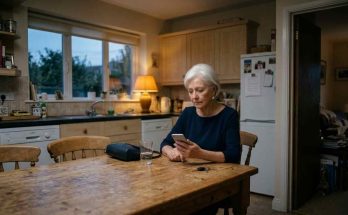
My parents skipped my baby shower to go on vacation with my sister.
My parents skipped my baby shower to go on vacation with my sister. “She’s the real family,” Mom texted me. I replied, “Fine. Be prepared for the consequences.” That same afternoon, she tried to withdraw $2,400 from my account. I canceled every card she had access to. Two hours later, she kept calling me nonstop, but it was already too late. I’d done more…
Everyone except, of course, my parents.
I only looked at my phone because I heard it vibrate.
I wasn’t expecting anything unusual. Maybe a last-minute congratulations or a message from my mother asking if I needed anything.
Instead, I saw this:
“We won’t be able to make it. Your sister booked a surprise trip to Napa. You know how she gets when she wants something. She’s the real family. Don’t make me feel guilty.”
I read it twice.
Then I read it again.
The real family.
Those words hit me harder than I expected.
I had quietly held on to the hope that they would show up at the last minute. That they would surprise me, hug me, and maybe even cry a little.
Instead, they packed their bags, went off to wine country with my sister, and acted as though this wasn’t one of the most important days of my life.
And then there was that sentence.
“She’s the real family.”
Apparently, I wasn’t.
At first, I didn’t tell my husband. I simply put my phone down and continued folding the baby clothes.
A minute later, I picked it up again and replied:
“She’s the real family,” my mother wrote.
“Fine. Be prepared for the consequences,” I replied.
That same afternoon, she tried to withdraw $2,400 from my account. I canceled every card she had access to.
Two hours later, she was calling me nonstop, but it was already too late. I had done more.
I was folding tiny baby clothes on the couch when the message arrived.
I almost didn’t look at it. I was in a good mood. Tired, sore, and 34 weeks pregnant, but genuinely happy.
My baby shower was that afternoon. My best friend, my mother-in-law, and my two aunts had planned every detail: pink and gold balloons, a surprise cake shaped like a teddy bear, and even a photo wall with our last name spelled out in fresh flowers.
My husband was in the kitchen, humming while he prepared a tray of mini quiches and deviled eggs. He had even ironed his shirt that morning.
That was how seriously we were taking it.
It wasn’t just a party. It felt like a rite of passage, a milestone announcing that we were about to become parents.
People were coming from far away, sending gifts, and offering to help.
Everyone except, of course, my parents.
I only looked at my phone because I heard it vibrate.
I wasn’t expecting anything unusual. Maybe a last-minute congratulations or a message from my mother asking if I needed anything.
Instead, I saw this:
“We won’t be able to make it. Your sister booked a surprise trip to Napa. You know how she gets when she wants something. She’s the real family. Don’t make me feel guilty.”
I read it twice.
Then I read it again.
The real family.
Those words hit me harder than I expected.
I had quietly held on to the hope that they would show up at the last minute. That they would surprise me, hug me, and maybe even cry a little.
Instead, they packed their bags, went off to wine country with my sister, and acted as though this wasn’t one of the most important days of my life.
And then there was that sentence.
“She’s the real family.”
Apparently, I wasn’t.
At first, I didn’t tell my husband. I simply put my phone down and continued folding the baby clothes.
A minute later, I picked it up again and replied:
“Fine. Be prepared for the consequences.”
I didn’t tell anyone at the baby shower.
People came through the door carrying gifts and offering warm hugs. My mother-in-law brought an extra cake shaped like a bassinet.
My father-in-law set up a camera to record everything so we could watch it again after the baby was born.
Everyone was so present, so generous.
Except my side of the family.
They didn’t even send a card.
Then, in the middle of the party, just after my husband’s grandmother gave us a handmade quilt embroidered with the baby’s initials, I received a fraud alert from my bank.
Someone had attempted to withdraw $2,400 from my checking account.
At first, I panicked.
I thought my account had been hacked.
I slipped quietly into the guest bathroom and opened my banking app.
But it wasn’t a stranger committing fraud.
It was my mother.
She had used one of the credit cards I had forgotten she could still access, a card she hadn’t touched in months.
And she hadn’t tried just once.
She had tried three times, using three different cards.
One of them was connected to the joint account I shared with my husband.
That was when the calm I had been feeling inside completely shattered.
My mother had tried to take money from me during my baby shower, on the very same day she had abandoned me to go drinking wine with my sister.
I didn’t cry.
I didn’t get emotional.
I went silent.
I locked every account, canceled every card, changed every password, and closed every remaining opening she could use to access our money.
Those were openings I had left in place because I was still trying to be a good daughter.
Because some part of me still believed that, eventually, she would come through for me.
Two hours later, I had 16 missed calls.
Then 23.
Then the text messages started.
“Why aren’t the cards working?”
“I just needed to move some money around.”
“Don’t be dramatic.”
“I’m still your mother. You owe me after everything I’ve done for you.”
She left a voicemail after that last message.
I didn’t listen to it.
I simply deleted it.
My husband found me sitting on the edge of our bed when I came out of the bathroom.
He didn’t ask any questions.
He had that look on his face, the one he gets when he’s already figured out that something is wrong.
When I told him what had happened, he didn’t say anything for a moment.
Then he spoke.
“We’re cutting them off completely.”
And we did.
But that was only the beginning.
They had no idea what was coming next.
By the following morning, I had 37 missed calls and nine voicemails.
Half were from my mother. The others were divided between my father and my sister.
The text messages were worse.
My sister started with:
“This is ridiculous.”
Then:
“It’s just money. You’re acting like we robbed a stranger.”
And finally, the one that really hurt:
“You’re not the victim here. Grow up.”
My mother joined in later that evening.
“You’ve made this into something bigger than it is. I told you your sister surprised us. She’s family too.”
That word again.
Family.
I didn’t respond.
I didn’t need to.
I simply watched as everything they had depended on began to fall apart.
First came the health insurance.
My father had been unemployed for almost a year. After months of listening to my mother cry about their growing medical bills, I had quietly added them to our family health insurance plan through my husband’s employer.
She didn’t understand how the arrangement worked.
She only knew that their copays had suddenly become lower and their prescriptions less expensive.
That stopped immediately.
They were at a pharmacy when their coverage was denied.
My father’s blood pressure medication.
My mother’s thyroid pills.
Both denied.
She left me a voicemail from the pharmacy parking lot.
She said I was putting their health at risk.
She said I was being childish.
Next came the gas bill, the internet, and the Amazon Prime subscription she used as though it belonged to her.
The credit card she had kept for emergencies was closed.
My accountant froze the automatic payments I had been sending toward their mortgage every other month.
It was like pulling the foundation out from beneath their house, one brick at a time.
And still, there was no apology.
Only denial.
Only more blame.
Meanwhile, my husband’s family saw everything with brutal clarity.
His father, who barely speaks at family dinners, said, “They can’t bite the hand that feeds them and still expect dessert afterward.”
His mother called me privately and told me that if they tried showing up after the baby was born, she would handle them herself.
And she would have.
My mother-in-law doesn’t bluff.
But it wasn’t just her anger.
It was my husband.
I had never seen him so serious.
That weekend, while I lay on the couch with my feet elevated and a heating pad against my back, he opened his laptop and went through every account we shared.
He removed access from anything connected to my family’s names.
He made sure that even old passwords I barely remembered weren’t linked to any cards they could still use.
Then he sat beside me and said, “She’s not going to grow up thinking any of this is normal. Not your mother. Not your sister. She deserves better.”
Those words reached me in a way nothing else had.
Because he wasn’t only talking about our baby.
He was talking about me.
The final blow came the following week.
My sister posted a carousel of photos from the Napa trip.
Wineglasses.
Spa robes.
Pictures of her and my mother laughing beside a firepit while wearing matching sunglasses.
One photo had a caption:
“Napa over baby showers, honestly.”
Underneath it, my mother had commented:
“Best decision we’ve ever made.”
I stared at that comment for a long time.
Then I took a screenshot and sent it to my husband.
No explanation.
Just the picture.
He replied:
“Let’s cancel the retirement contributions too.”
I didn’t even ask questions.
I just nodded.
We had been sending money into my parents’ joint retirement account every month.
Quietly.
It was an arrangement we never talked about out loud.
My mother used to say it was only until things settled down.
Things had never settled down.
But now that arrangement was over.
Three weeks passed.
Then my father called.
Not to apologize.
Not to make peace.
He called because the checks had stopped arriving.
He didn’t even try to hide it.
“We’ve noticed the accounts are empty,” he said. “There must be some mistake.”
I didn’t answer him.
But he wouldn’t give up.
He called my husband.
That was his mistake.
I only heard my husband’s side of the conversation from the other room.
His voice was calm.
His sentences were short.
Then I heard him say:
“Don’t ever put my wife in this position again. You made your choice. Now live with it.”
And he hung up.
The silence afterward felt strange.
At first, it felt like peace.
But it didn’t last.
Because once they ran out of money, they did something I still can’t believe.
Something they thought would return everything to normal.
Instead, they humiliated themselves.
And they did it in front of everyone who mattered.
It began with a Facebook post.
I was eight months pregnant, exhausted, and could barely get out of bed without groaning like a dying walrus.
My phone vibrated, and I saw a message from my aunt.
It contained only three words:
“What is this?”
She had attached a screenshot of something my mother had posted.
My mother had written a public plea in one of those local community Facebook groups she followed.
The kind where people sell used furniture or share neighborhood yard sale schedules.
But her post wasn’t about a missing cat or free lawn chairs.
It was titled:
“We Need Support.”
“Our family is going through a difficult time,” she wrote.
She explained that my father had lost his job, that they were facing financial collapse, and that someone had unexpectedly removed their access to our accounts.
She didn’t name me.
But she made it painfully obvious who she meant.
She claimed that her younger daughter, my sister, had recently suffered a major personal loss and that they were emotionally and financially drained.
She referred to me only as:
“Our older daughter, from whom we’re estranged, who has unfortunately cut off communication.”
Then came the final line, written in large, bold letters:
“Any help is appreciated. Please support our family.”
I stared at that post for five full minutes.
I didn’t know whether to laugh or scream.
Everything was worded to make it seem as though I had turned my back on them for no reason.
As though I were some wealthy, spoiled daughter punishing her poor, helpless parents out of spite.
Nothing about my baby shower.
Nothing about the attempted $2,400 withdrawal.
Nothing about the years I had spent quietly paying their bills while they posted vacation pictures and treated my sister like royalty.
I didn’t respond publicly.
I refused to give them what they wanted.
A reaction.
But news travels fast.
A cousin called me twenty minutes later, completely stunned.
“Did something happen? I thought you and your mother were really close.”
By that evening, my husband’s entire family had seen the post.
His father was furious.
His mother called me and said, “I’m sorry, but your mother isn’t just selfish. She’s dangerous.”
Then my husband saw it.
He walked over to the dining room table, opened his laptop, and typed for a few minutes.
I didn’t know what he was doing until I saw his post later.
He wrote:
“If someone uses a distorted version of the truth to make you feel guilty, that’s not asking for help. That’s emotional blackmail. Don’t donate to people who leave entire chapters out of their story.”
He didn’t tag anyone.
He didn’t need to.
Within two hours, my mother deleted her post.
But the damage had already been done.
I thought they would take the hint.
I thought they would stay quiet for a while.
But when desperation sets in, people like them become bolder.
The following day, I received a message from an old high school friend I hadn’t spoken to in years.
“Hey, I just saw your mom’s GoFundMe. Is everything okay?”
I nearly dropped my phone.
Yes.
She had created an actual GoFundMe campaign.
It told the same heartbreaking story.
They had been abandoned by family.
They were facing eviction.
They were supporting a daughter who was going through trauma.
There were pictures of my parents looking solemn in their living room.
My mother had even included a photograph of my sister wiping her eyes in what looked like fake tears.
They raised $10 on the first day.
Two donations came from people who used to work with my father.
That evening, my mother-in-law hosted a quiet dinner at her house.
It was supposed to be a small gathering for family and close friends before the baby arrived.
She invited my parents.
I was genuinely surprised.
But she told me, “I want this out in the open. I want to see how far they’re willing to go.”
My parents showed up.
My father brought a bottle of cheap wine.
My mother acted as though everything was normal.
She smiled, complimented the decorations, and took her seat as if she hadn’t just accused me of abandoning her on the internet.
Halfway through dinner, my mother-in-law stood and raised her glass.
“I just want to say how grateful we are for everyone’s support during this time. And I’d like to clear a few things up, since there’s been a lot of confusion lately.”
The room went completely silent.
Then she turned toward my mother and asked calmly:
“Why did you try to withdraw $2,400 from her bank account on the day of her baby shower?”
My mother blinked.
Then she smiled again.
I watched her grip her wineglass a little tighter.
“That’s already been cleared up,” she said. “It was all a big misunderstanding. We’ve moved past that.”
That was when my husband stood.
“No,” he said. “We haven’t moved past it. We’ve moved past you.”
Silence.
Everyone at the table stared.
My father looked as though he wanted the floor to swallow him.
My sister wouldn’t make eye contact with anyone.
My mother tried to laugh it off.
She said something about how families argue and how emotions run high during pregnancy.
But it was too late.
They left ten minutes later.
By the following morning, the GoFundMe campaign had disappeared too.
But they still weren’t finished.
Not yet.
Because in a few weeks, the baby would arrive.
And that was when they would make one last desperate attempt to get back into our lives.
It would be pathetic.
It would be public.
And it would divide the family in two.
My daughter was born on a rainy Tuesday afternoon, two weeks earlier than expected.
The delivery room was calm.
No drama.
No rushing.
Just me, my husband, and a nurse who kept whispering encouraging things as though we were in a library instead of a hospital.
Our daughter entered the world with a thick head of dark hair and a little frown that made me laugh through my tears.
My husband cut the umbilical cord.
I held her against my chest and whispered her name.
And for a moment, everything else faded away.
Every betrayal.
Every lie.
Every pathetic request for money.
For the first two days, we lived inside a bubble of happiness.
My husband barely slept.
He brought me food and water and took turns holding our daughter so I could rest.
His parents came that evening.
His mother cried when she held the baby.
His father, who rarely said more than a sentence at a time, whispered, “She’s perfect.”
I waited to hear from my own parents.
Nothing.
Not one message.
Not one call.
No flowers.
Not even a cheap gift left at the nurses’ station.
Three days later, we were home.
And that was when it started.
My sister posted a picture of herself holding a glass of champagne.
The caption read:
“Some people pop bottles. Others give birth to babies. Guess who’s doing better?”
My husband saw it before I did.
He showed it to me with an expression that was part disgust and part pity.
I said nothing.
I was exhausted, hormonal, trying to breastfeed, and failing.
My body still hurt.
But the real blow came later that afternoon.
Someone knocked on the door.
I thought it was a delivery.
My husband opened it and froze.
My parents were standing on the porch.
I was in the living room, holding our daughter.
My husband didn’t say a word to me.
He simply stepped outside and closed the door behind him.
I couldn’t hear everything, but I caught a few phrases.
“We just want to see her.”
“You can’t keep her away from us.”
“This is cruel.”
He told them to leave.
Not tomorrow.
Not after another conversation.
Right now.
My mother’s voice rose.
I heard her call my name the way someone might call a dog.
That was when my husband opened the door again and called to me.
“Do you want to handle this, or should I?”
I stood up, walked toward the doorway, and said, “No.”
My parents tried to peer around him to see the baby.
I turned away and walked back inside.
They remained on our porch for another minute before finally leaving.
My husband stood by the window and watched until they were gone.
Later that night, my sister posted another picture.
It was a photo of our house taken through her car window.
The caption said:
“Guess who won’t let her own parents meet their granddaughter?”
That was when everything exploded.
Someone commented:
“You weren’t even at her baby shower. You’ve got some nerve.”
Another person wrote:
“Weren’t you asking people for donations last month?”
People started messaging me privately, sending screenshots.
I received a call from a second cousin I hadn’t spoken to in years, asking what was really going on.
That weekend, my husband’s parents invited a few relatives over to meet the baby.
My parents weren’t invited.
Neither was my sister.
But someone—and we still don’t know who—told them about the gathering.
They showed up halfway through.
Dressed nicely, hair done, carrying a gift bag, as though that would somehow fix everything.
My husband opened the door.
He looked them up and down and said:
“Turn around. You’re not invited.”
They pushed past him.
I heard my mother’s voice before I saw her.
“There’s no law saying we can’t see our own granddaughter!”
That was when my mother-in-law stepped in.
She walked straight toward them, blocked the hallway, and spoke in the calmest, most casual voice I had ever heard.
“You had every opportunity to be part of her life. You chose wine and money instead. Get out of this house.”
For the first time in my life, I saw my mother completely speechless.
They left.
Only this time, they didn’t simply leave our house.
They left behind whatever dignity they had left.
They were officially shut out.
Not only by us, but by the rest of the family.
People took sides.
And almost nobody chose theirs.
But what happened a month later was something I never expected.
They came back.
Not to our door.
Not with another scheme.
They came back with something that shook everything, including my determination.
It started with a letter.
A plain white envelope appeared in our mailbox with my name written in my mother’s handwriting.
The same handwriting she used to scribble grocery lists and reminders on sticky notes when I was a little girl.
I recognized it instantly.
My stomach twisted the moment I saw it.
A month had passed since the scene at our house.
A month since they showed up uninvited, pushed past my husband, and were thrown out by his mother in front of everyone.
A month of complete silence.
No messages.
No emails.
Not one acknowledgment of their behavior.
And now, suddenly, there was this letter.
I left it on the kitchen counter for three days.
My husband saw it.
At first, he didn’t say anything.
On the third night, he quietly asked, “Are you going to open it, or should I throw it away?”
I didn’t answer.
He didn’t push.
The following morning, while he took the baby on her first stroller walk around the neighborhood, I finally opened it.
It wasn’t an apology.
It was a manifesto of guilt.
My mother wrote that things had been overwhelming lately.
That their financial situation was the result of stress and misunderstandings.
She said she missed me and hoped things were going well with the baby, as though she couldn’t even bring herself to use her granddaughter’s name.
She brought up old memories.
My high school graduation.
The day I left for college.
As if nostalgia were strong enough to glue together everything they had broken.
Then came the sentence I will never forget.
“We’re your parents. That means something, even when you’re angry.”
There was no mention of the baby shower.
No mention of the money she had tried to take.
No accountability.
Just a vague sense of wounded pride disguised as an attempt at reconciliation.
At the bottom of the letter, attached to the paper like some kind of peace offering, was a photograph of me as a little girl sitting on my father’s shoulders.
I stared at it.
I didn’t cry.
I didn’t scream.
I simply felt empty.
When my husband got home, he saw the open letter and didn’t say a word.
He just lifted our daughter out of her stroller and carried her into the nursery.
A few minutes later, he came back and asked the same question.
“So, what are you going to do?”
“I don’t know,” I said.
And honestly, I didn’t.
I wasn’t angry anymore.
Not in the same way.
The rage had hardened into something colder, something more difficult to carry.
But it also made me wonder.
If they truly felt no remorse, what was I supposed to do with their silence, their fake regret, and their theatrical sadness?
The pressure started not long afterward.
A cousin messaged me on Instagram.
“Your mom showed me a picture of the baby. She’s beautiful. I’m glad you two are making up.”
We weren’t making up.
A few days later, my aunt called.
She spent ten minutes circling around the subject before finally saying it outright.
“They’ve been punished enough, Ella. Maybe it’s time to let it go.”
My husband didn’t know about any of this.
At first, I kept it from him.
But then I made the one mistake that reopened everything.
I sent my mother a picture.
Just one.
It wasn’t anything special.
It was a photo of the baby sleeping on her blanket, her tiny hand curled near her face.
No message.
No emojis.
I didn’t even include her name.
My mother replied less than a minute later.
“She’s beautiful. Can I come see her?”
I stared at the message.
My hands went cold.
I didn’t respond.
I told myself it meant nothing.
That it was only a picture.
But the truth was that I had opened a door I wasn’t prepared to deal with.
Three days later, she showed up without warning.
No message.
Just a knock at the door in the middle of the afternoon while I was trying to rock the baby to sleep.
I glanced through the blinds and saw her standing there.
She was holding a small bag and wearing that hesitant smile, as if we were neighbors who hadn’t seen each other in years.
I froze.
Then my husband walked into the room.
He looked through the window.
His face went pale.
Then his expression hardened.
He didn’t speak to me.
He simply opened the front door.
He said something to her.
I don’t know what.
I couldn’t hear it from inside.
But he stood there with his arms crossed and let her talk for about ten seconds before answering.
Whatever he said, she lowered her eyes to the ground, turned around, and walked back to her car.
She didn’t return.
That night, after we put the baby to bed, my husband sat on the edge of our bed.
“I meant what I said, Ella,” he told me. “I love you more than anything, but I’m not going through this. I won’t let her manipulate you, and I definitely won’t let her near our daughter.”
I nodded.
I told him I understood.
But what I didn’t say—what I couldn’t say—was that I had already crossed a line.
And once you cross that line, there’s no going back.
The next time my parents came, it wasn’t unannounced.
I was the one who invited them.
And it nearly destroyed everything.
I don’t even know why I did it.
Maybe it was guilt.
Maybe it was the silence after they had left our porch the last time.
Maybe it was watching my daughter sleep one night and wondering if she would someday ask why her grandparents were strangers.
Or maybe I simply wanted to believe there was still something worth saving.
Whatever the reason, I invited them.
I told my husband two days beforehand.
I said it quietly while we were folding laundry.
“I asked them to come over for just a few minutes so they can meet her.”
He didn’t yell.
He didn’t even look at me.
He just stopped folding.
He put down the baby onesie he was holding and walked out of the room.
That night, he slept on the couch.
He didn’t say a word.
The following morning, he got up, fed the baby, took her for a walk, came home, and continued with his day as though I hadn’t just set something off between us.
When the day arrived, I regretted my decision the second I heard the knock at the door.
My mother came in wearing a soft smile and carrying a small bag of baby clothes.
My father followed her, stiff and silent, as though he wasn’t sure what he was allowed to say.
They stood just inside the doorway until I nodded toward the couch.
My mother sat down as if she owned the place.
As though nothing had ever happened.
My father remained standing, uncomfortable and strangely quiet, as though he were waiting for permission to speak.
Permission that never came.
My daughter was sleeping in her bassinet.
My mother looked at her and said, “She’s beautiful. She looks just like you did when you were little.”
Then she added, as though it meant something:
“I’ve missed you, Ella.”
I didn’t say anything.
The visit lasted eleven minutes.
My husband came home during the ninth minute.
He walked in, saw them, stopped, and then went straight to the bedroom without looking at me.
My mother glanced toward the hallway and whispered, “He’s still mad, huh?”
That was when I told them it was time to leave.
She didn’t argue.
She stood up, handed me the bag, and said, “Maybe next time we can hold her.”
I didn’t promise anything.
When they left, the silence in the house felt heavy.
My husband didn’t come out of the bedroom until dinnertime.
I found him sitting on the edge of the bed, staring at the wall.
He looked at me.
For one second, I thought he might cry.
But he didn’t.
He said only one thing.
“You lied to me.”
I tried to explain myself.
I said it wasn’t really a visit.
It was just a moment.
Just an opportunity for them to see our daughter with their own eyes.
I said it didn’t mean anything.
But to him, it meant everything.
The next day, he packed a bag and took our daughter to his parents’ house.
He said he needed space.
I didn’t try to stop him.
I knew better than to do that.
His mother called me that evening.
She said she loved me, but she didn’t understand what I was doing.
She said I had every right to forgive my parents.
But I didn’t have the right to risk everything for people who wouldn’t care if they burned my life to the ground.
A week passed.
Eventually, my husband came home.
But something between us had changed.
He slept in the guest room.
He spoke to me as though I were someone he used to know.
He still loved me.
I knew that.
But the trust?
That was gone.
And my parents never asked to visit again.
They never called.
They never sent another letter.
It was as though that one visit had been enough to satisfy their egos.
Enough for them to tell themselves:
“We still matter.”
I never truly let them back into our lives.
Not completely.
Not ever.
But the damage had already been done.
Not by them this time.
By me.
I chose them.
Even if it was only for a moment.
❤️ THE END! THANK YOU FOR READING!