The moment my son placed that envelope on my kitchen table, I knew something was terribly wrong. Owen had always been a nervous boy. When he was little, he would twist the hem of his shirt whenever he had something difficult to confess. At thirty-seven years old, he was doing exactly the same thing. Except this time, his hands were trembling so badly that he could barely hold the envelope. “Mom,” he whispered, “before you open that, I need you to promise me something.” I remained standing beside the kitchen table.
“What kind of promise?”
“Promise you’ll hear me out before you decide what to do.”
I looked at him for a long moment.
Three weeks earlier, I might have immediately agreed. I would have offered him coffee, worried about his pale face, and assured him that nothing he could possibly say would change how much I loved him.
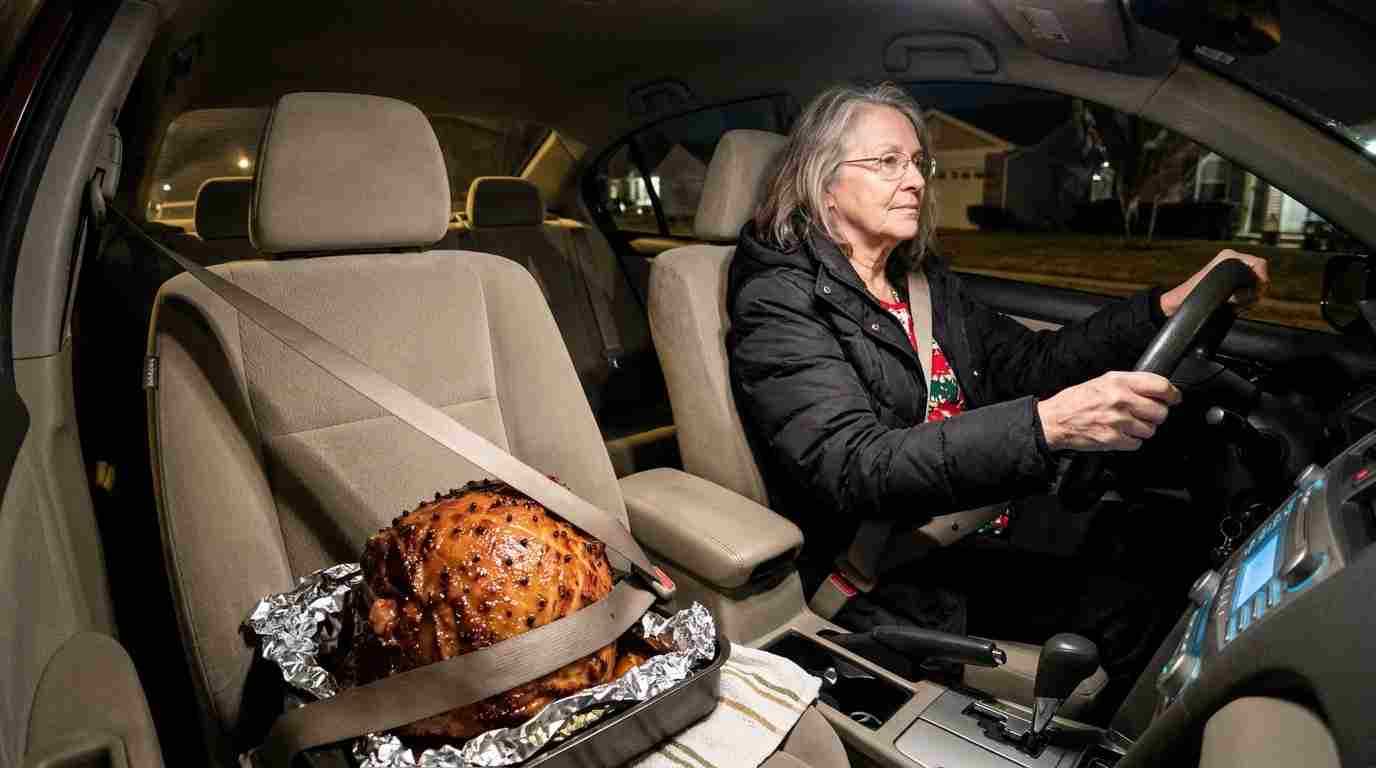
But something had changed inside me since the night I drove home with a twelve-pound ham strapped into my passenger seat.
I had discovered that love did not require me to surrender my judgment.
“No, Owen,” I said quietly. “I’m not making promises before I know what you’re asking.”
His expression crumpled.
For a moment, I saw the nine-year-old boy who had stood beside our front window, waiting for a father who never came back.
Then he pushed the envelope toward me.
“Okay,” he whispered. “You deserve to know everything.”
I sat down and opened it.
Inside were six sheets of paper, two folded bank statements, and a photograph of a document that appeared to have been taken with someone’s phone.
At first, nothing made sense.
Then I saw my name.
DOROTHY ELAINE HALE.
Underneath it was my home address.
And below that, in bold letters, were the words:
HOME EQUITY FINANCING — PRELIMINARY APPLICATION.
I blinked.
My house?
The little brick house where I had raised Owen?
The home I had spent thirty-one years paying for?
I turned the page.
There was a proposed loan amount.
$96,000.
My stomach tightened.
“Owen,” I said slowly, “what is this?”
He wouldn’t look at me.
“Mom, please—”
“What is this?”
He swallowed.
“Christa and her father have been trying to arrange financing.”
“Using my house?”
He nodded.
I looked down again.
Near the bottom of the application was a signature.
My signature.
Or rather, something that looked remarkably like it.
For several seconds, I couldn’t speak.
Then I held up the page.
“Owen, I have never seen this document before.”
“I know.”
“I have never agreed to borrow ninety-six thousand dollars.”
“I know.”
“And I certainly haven’t agreed to put my home at risk.”
He pressed both hands against his forehead.
“Mom, I didn’t know she’d actually submitted it.”
The room seemed to tilt.
Submitted?
I had thought I was looking at an ugly family discussion that had gone too far.
Now my son was telling me that someone had taken action.
I pushed back my chair.
“Explain. Everything. Right now.”
Owen began crying.
Not loudly. Not theatrically.
He simply lowered his head, and tears dropped onto the table.
“I’ve been a coward,” he said.
I waited.
He wiped his face.
“About four years ago, Christa started talking about your house. She said it didn’t make sense for you to have so much equity sitting there when we were struggling.”
I stared at him.
“Struggling?”
“That’s what she said.”
“Owen, you both have jobs. Christa drives a vehicle that costs more than I spent on my first house.”
“I know.”
“Her parents own a lake house and travel to Europe twice a year.”
He gave a miserable laugh.
“That’s what I thought, too.”
Something in his voice made me stop.
“What do you mean?”
He slid one of the bank statements across the table.
“Mom, Gerald’s business is failing.”
I looked at the statement.
It showed an account associated with a property management company I recognized as belonging to Christa’s father.
The balance was negative.
Thousands of dollars in overdue expenses were listed on a separate page.
Owen took a shaky breath.
“The lake house is heavily mortgaged. Their business has outstanding loans. Gerald’s been borrowing money to keep everything looking normal.”
I stared at the papers.
Gerald.
The same man who had sat at my son’s beautifully decorated dinner table, complimenting the expensive wine while I stood in the kitchen wondering why there wasn’t a sixth plate.
The man who had once advised me to enjoy retirement because, as he liked to say, people with money should never worry about small things.
Apparently, he had been worrying about very large things indeed.
“How long have you known?”
“About the business? Six months.”
“And the idea of using my house?”
His silence answered before his words did.
“Four years.”
I closed my eyes.
Four years.
For four years, my son had known that his wife viewed my paid-off home as a possible solution to someone else’s financial problems.
And he had never told me.
“Why didn’t you say anything?”
He rubbed his hands together.
“Because I thought it was just talk. I told Christa you would never agree, and I thought that ended it.”
“Then why am I holding an application with my name on it?”
He reached into his pocket and removed his phone.
“Because last week, I found this.”
He showed me a message from Christa.
It was addressed to her father.
If Dorothy keeps refusing to help, we’ll need another approach. Owen won’t stand in my way forever. She trusts him.
I read it twice.
The words seemed ordinary at first.
Then their meaning sank in.
She trusts him.
I looked at my son.
“Was that the plan? Have you convince me?”
His face went white.
“Mom, no. I swear I never agreed to sign anything for you.”
“But you knew she wanted my money.”
“Yes.”
“And you continued letting me pay your phone bills, your insurance, and four hundred dollars a month?”
He didn’t answer.
I felt something inside my chest give way.
Not anger.
Something quieter.
Grief.
Because the boy I had raised to be kind, independent, and honest had grown into a man who had mistaken avoiding conflict for being a good husband.
And somewhere along the way, he had allowed his mother to become the person everyone used but no one defended.
I gathered the pages together.
“Is this loan active?”
“I don’t think so. The copy says it’s under review.”
“That wasn’t my question.”
“I don’t know, Mom.”
I stood.
“Then we’re going to find out.”
He reached for my hand.
“Please don’t call Christa yet.”
I pulled my hand away.
“Why?”
“Because she’ll say I betrayed her.”
I looked at him with an exhaustion that seemed to reach all the way back to his childhood.
“Owen, your wife may have put my home at risk. And you’re worried she’ll be angry with you?”
His lips trembled.
I lowered my voice.
“I love you. I always will. But loving you does not mean I can protect you from the consequences of your choices.”
He stared at the table.
For the first time that afternoon, he didn’t try to argue.
I picked up the telephone.
And that was when the second surprise arrived.
Because the person who answered my call at the credit union recognized my name.
“Mrs. Hale?” the woman said cautiously. “We were actually preparing to contact you.”
My fingers tightened around the phone.
“Why?”
There was a pause.
“Because someone requested an update to the contact information associated with a financing application. We need to verify several things directly with the property owner.”
I looked across the table at Owen.
He had stopped crying.
“What kind of update?” I asked.
The woman hesitated.
“A request to replace your telephone number with another number.”
I felt cold.
“Whose number?”
She read the last four digits.
I knew them immediately.
They belonged to Christa.
I had lived through plenty of frightening moments in my sixty-three years.
I remembered holding Owen in the emergency room when he was five, his forehead bleeding after he fell from his bicycle.
I remembered the day his father walked out, leaving a suitcase-sized hole in our lives.
And I remembered opening bills when I was a young single mother, trying to figure out which payment could wait until payday.
But nothing had prepared me for hearing that my daughter-in-law had apparently tried to place herself between me and a financial institution discussing my own house.
The credit union employee transferred me to its fraud department.
A calm man named Mr. Barrett explained that the application was still pending and that no loan had been funded or lien placed on my property.
I nearly cried with relief.
Then he asked a question that made my heart sink again.
“Mrs. Hale, did you authorize anyone to submit an application on your behalf?”
“No.”
“Did you give anyone permission to reproduce your signature?”
“Absolutely not.”
He paused.
“Then I recommend that we formally flag this application as potentially fraudulent. We’ll document your statement and provide you with instructions for submitting a written report.”
I wrote down every word.
He also advised me to review my credit reports, place protective freezes where appropriate, and speak with an attorney.
When the call ended, I remained seated for a long time.
Owen watched me nervously.
“Mom?”
I looked toward the hallway.
On the wall was a faded photograph of him at his eighth birthday party.
He was wearing a paper crown, grinning proudly beside a chocolate cake I had baked after working a twelve-hour shift.
Behind him, my younger self stood with one arm around his shoulders.
I remembered that afternoon.
He had made a wish before blowing out his candles.
Later, when I asked what he had wished for, he whispered, “I wished you wouldn’t have to work so much anymore.”
I had held him tightly and told him that one day things would get easier.
And they had.
But never in my wildest imagination had I expected that, decades later, the home I worked so hard to pay off would become a target for someone who called me family.
I turned back toward him.
“Did you know about the signature?”
He shook his head.
“I saw the application after it was submitted. I recognized that it wasn’t yours.”
“Why didn’t you come immediately?”
His eyes filled again.
“I wanted to figure out what Christa had done first.”
“And?”
“She said it was just a preliminary inquiry. She said nobody would lose anything, and that you’d eventually understand.”
I shook my head.
“Owen, people don’t get to gamble with someone else’s security and then call it a misunderstanding.”
He nodded miserably.
“You’re right.”
I studied him.
“There’s something else, isn’t there?”
He looked startled.
“What?”
“You’re still holding something back.”
He slowly opened the envelope again and pulled out a smaller sheet.
“This is what I really came to show you.”
It was a spreadsheet.
Across the top were three columns.
Monthly Income. Household Expenses. Outside Assistance.
I recognized the amounts immediately.
My four hundred dollars.
The phone bill.
The insurance premium.
Occasional grocery transfers.
Even the summer cottage rental.
Someone had carefully documented every contribution I had made.
But the most painful part wasn’t the numbers.
It was the label written beside my name.
Reliable family support — expected to continue.
I stared at it.
“Expected?”
Owen lowered his eyes.
“Christa used that spreadsheet when we were planning our budget.”
I turned the page.
At the bottom was a note.
Potential additional support: Dorothy’s home equity, subject to family discussion.
Suddenly, the missing dinner plate made perfect sense.
I had not been treated like a guest because, in their minds, I had stopped being one.
I was part of the household budget.
A dependable source of money.
A safety net.
Something to use when their own plans became too expensive.
But not someone who needed a chair at the table.
I set the paper down.
Very carefully.
“Do you know what hurts the most?” I asked.
Owen shook his head.
“It isn’t the money.”
My voice broke.
“It isn’t even the house.”
He began crying again.
“It’s that all those years, whenever I asked whether you needed anything, you said you were fine. Whenever I gave you money, you thanked me. And whenever I worried about being a burden, you told me I was being silly.”
I looked directly into his eyes.
“But somehow, I really was a burden when it came time to put another plate on the table.”
“Mom—”
“No. Please. Let me finish.”
He closed his mouth.
“I don’t need expensive gifts. I don’t need vacations or fancy restaurants. I would have happily eaten a peanut butter sandwich sitting beside you and Maya.”
My throat tightened.
“All I ever wanted was to belong.”
Owen covered his face.
And for the first time since he had arrived, I didn’t reach across the table to comfort him.
He needed to feel the weight of what had happened.
Not because I wanted him to suffer.
But because I had spent too many years carrying everyone else’s discomfort so they wouldn’t have to.
That afternoon, after Owen left, I made another decision.
I called an attorney.
Her name was Margaret Bell, and she had handled the paperwork when I finally paid off my mortgage eleven years earlier.
I hadn’t spoken with her in almost a decade.
But when I explained the situation, her voice became serious.
“Dorothy, I want you to bring every document you have. Don’t sign anything. Don’t let anyone pressure you into a private family settlement. And please preserve the messages and application exactly as they are.”
“Do you think they could actually take my house?”
“From what you’ve described, no financing has been completed. That’s important. But we need to confirm the property’s records and determine whether any other documents have been submitted.”
I thanked her.
Then I asked the question that had been haunting me.
“Margaret, what if my son knew more than he’s telling me?”
She was quiet for a moment.
“Then we’ll need to deal with the facts, Dorothy. Even when the facts are painful.”
After I hung up, I went into the kitchen.
The refrigerator hummed softly.
On the bottom shelf sat the last container of honey-glazed ham.
I took it out, placed two slices between pieces of bread, and sat at my little kitchen table.
For the first time in weeks, I was eating without guilt.
Then my phone rang.
The caller was Elaine.
Christa’s mother.
I almost let it go to voicemail.
But something made me answer.
“Hello?”
“Dorothy?” she said.
Her voice sounded strained.
“Yes, Elaine.”
“I need to ask you something, and I need you to tell me the truth.”
I waited.
She took a shaky breath.
“Did you really refuse to come to our family dinner because you were angry that Christa wouldn’t pay you for cooking?”
I closed my eyes.
So that was the story Christa had told her parents.
I put my sandwich down.
“No, Elaine. I left because your daughter told me to eat leftovers from the refrigerator while everyone else enjoyed the dinner I prepared.”
Silence.
Then a small, horrified gasp.
“She told you what?”
I repeated Christa’s words exactly.
There was another silence.
Longer this time.
Finally, Elaine whispered, “Oh, Dorothy. I am so sorry.”
Something about the sincerity in her voice nearly undid me.
Then she said something I hadn’t expected.
“I think you and I have both been lied to.”
And before I could ask what she meant, she added:
“There’s something you need to know about the money Gerald and I have been giving Christa.”
For several seconds, I couldn’t speak.
“What money?” I finally asked.
Elaine’s voice dropped.
“Gerald and I have been sending Christa five hundred dollars every month for Maya’s future. We started when she turned three. Christa told us she’d opened an education savings account.”
I sat straighter.
“Five hundred dollars?”
“Every month. And extra money on birthdays and Christmas.”
My heart began pounding.
“Elaine, I send Christa four hundred dollars every month for Maya’s expenses. Or at least, I did until recently.”
The silence on the other end of the phone was almost unbearable.
Then Elaine whispered, “She told us you never contributed anything.”
I stared at the refrigerator.
“What?”
“Christa said you loved Maya, but that you were very careful with your money. She told us you preferred to buy little gifts rather than help with anything important.”
I actually laughed.
It was a strange, hollow sound.
For years, I had been paying bills quietly, buying groceries when necessary, helping with birthdays, and covering household expenses without keeping a record.
And somehow, Christa had managed to convince her parents that I was the stingy grandmother.
“Elaine,” I said, “I think we need to meet.”
“I agree.”
“Without Christa.”
“Absolutely.”
She hesitated.
“And Dorothy?”
“Yes?”
“Please don’t tell Gerald yet.”
A cold feeling settled over me.
“Why?”
Her voice broke.
“Because I found something in his office this morning. And I’m afraid my husband knows exactly where that money went.”
Two days later, Elaine arrived at my house carrying a blue folder.
She looked nothing like the polished woman I’d known for six years.
Her hair was pulled back carelessly. Her eyes were swollen, and she wore an ordinary gray cardigan instead of the expensive tailored jackets she usually preferred.
I invited her inside.
She sat at my kitchen table and looked around.
“I’ve never actually spent time in your home,” she said softly.
“No,” I replied. “You haven’t.”
She studied the family photographs on the walls.
Then she noticed a framed picture of Owen and Maya planting flowers in my garden.
“She’s happy here,” Elaine whispered.
“She always has been.”
Elaine opened the folder.
Inside were copies of canceled checks, bank transfers, and handwritten notes.
“The account was supposed to be for Maya’s education,” she explained. “Gerald handled the first few payments, but after he became busy with the business, I continued making most of them.”
She pointed to a list.
For nearly four years, money had been transferred into an account controlled by Christa.
There were also larger contributions on holidays.
The total was more than twenty-seven thousand dollars.
I stared at the figure.
“Have you ever seen a statement from Maya’s education account?”
Elaine’s face crumpled.
“No.”
“Did you ask?”
“Several times. Christa always said she’d bring it when she visited.”
“And she never did.”
Elaine shook her head.
Then she reached for a tissue.
“Yesterday, I finally demanded to see it. Christa said there had been some unexpected expenses and that she needed a little time to organize everything.”
My chest tightened.
“What kind of expenses?”
“She wouldn’t say.”
Elaine reached into the folder again.
“This is what I found in Gerald’s office.”
She placed three sheets in front of me.
They were transfers from Christa’s account to Gerald’s business.
The dates matched several of the deposits intended for Maya.
Some payments were only a few hundred dollars.
Others were thousands.
One was for $8,500.
I felt sick.
“Elaine, are you telling me Christa was using Maya’s education money to support Gerald’s company?”
“That’s what it looks like.”
“Did Gerald know the money was meant for Maya?”
Elaine’s eyes filled with tears.
“He knew where it came from. I don’t know what he told himself about it.”
I leaned back in my chair.
For years, Christa had presented herself as a devoted mother, carefully planning her daughter’s future.
Yet money from both grandmothers had been flowing into a household that continued to insist it needed more.
And now they wanted my house involved.
Elaine covered her mouth.
“I don’t know how my family became like this.”
I looked at her.
For the first time, I understood that the expensive dinners, beautiful clothes, and immaculate appearances had been hiding something very ugly.
But another question troubled me.
“Elaine, why didn’t you speak up that Sunday when Christa told me to eat in the kitchen?”
She lowered her eyes.
“I didn’t hear what she said. When you left, Christa told us you’d become upset because she hadn’t offered you money for the meal.”
I shook my head.
“Nobody offered me money because I never asked for any.”
“I know that now.”
Elaine reached across the table.
“I should have come to you instead of believing what I was told.”
Her hand trembled.
“I’m sorry, Dorothy.”
I looked at her fingers resting near mine.
I had waited so long for someone from that family to acknowledge what had happened.
But I had also learned that an apology and restored trust were not the same thing.
“Thank you,” I said quietly. “I appreciate you saying that.”
She nodded.
Then she gave me a sad smile.
“Do you know what Maya said after you left?”
I felt my throat tighten.
“What?”
“She asked why Grandma Dorothy didn’t get to eat her own ham.”
I looked away.
Elaine continued.
“Christa said you weren’t feeling well. But Maya told her, ‘Grandma wasn’t sick. Grandma looked sad.’”
A tear rolled down my cheek.
Elaine reached for another tissue.
“Then Maya asked whether being a grown-up meant you weren’t allowed to say when someone hurt your feelings.”
That broke me.
I covered my face.
For several minutes, neither of us spoke.
I could endure being misunderstood by Christa.
I could survive the disappointment of my son.
But the thought of my granddaughter learning that love required silence and humiliation was unbearable.
Finally, I wiped my eyes.
“Elaine, whatever happens between the adults, we have to protect Maya from this.”
She nodded firmly.
“Yes. We do.”
And for the first time, we were not two grandmothers being compared or played against each other.
We were two women who loved the same little girl.
And we finally had a reason to stand together.
The following Monday, Margaret Bell examined every document.
She listened without interrupting as Elaine and I explained the money, the application, and the messages Owen had provided.
When we finished, Margaret removed her glasses.
“Dorothy, there are two separate issues here,” she said. “One concerns your home and the unauthorized financing application. The other concerns the money intended for Maya.”
I nodded.
“Can we stop the application?”
“The credit union has already flagged it, and we’re requesting written confirmation that it won’t proceed. We’ll also verify the public property records and take additional steps to protect you.”
She looked at Elaine.
“As for Maya’s money, we’ll need the full account history before anyone can determine what happened to every dollar.”
Elaine nodded.
“I’ll provide whatever you need.”
Margaret turned back to me.
“There’s something else, Dorothy. You’re going to have to decide what kind of relationship you want with Owen after this.”
I stared at her.
“He’s my son.”
“Of course he is.”
She leaned forward.
“But there is a difference between loving someone and trusting them with access to your home, your finances, or your decisions.”
I looked down at my hands.
They were older now.
The knuckles were larger, and a few brown spots had appeared across the backs.
These were the hands that had held Owen as a baby.
The hands that had scrubbed floors when money was tight.
The hands that had cooked thousands of meals, written checks, repaired clothing, and worked until my fingers ached.
I had never expected those same hands to be signing documents to protect me from my own family.
“I want him in my life,” I finally said. “But I don’t know how to trust him again.”
Margaret’s expression softened.
“Then don’t force yourself to decide today.”
It was the simplest advice anyone had given me in weeks.
And perhaps the most important.
That evening, Owen came to my house again.
This time, he knocked.
I noticed that immediately.
He waited on the porch until I opened the door.
“Hi, Mom.”
“Hello, Owen.”
He held a small paper bag.
“I brought you something.”
I almost smiled.
“Please tell me it’s not another envelope.”
He gave a nervous laugh.
“No. It’s lemon cake from the bakery you like.”
I stepped aside.
He entered cautiously, as though the floor might give way beneath him.
We sat in the living room.
For a while, neither of us spoke.
Then he said, “Christa knows I gave you the paperwork.”
I looked up.
“What happened?”
“She was furious.”
“At you?”
“At everyone.”
He rubbed his forehead.
“She said you’ve turned Elaine against her. She says you’re exaggerating what happened at dinner and making her look like a criminal.”
I said nothing.
“Then she told me she wanted me to convince you to withdraw your complaint.”
I stared at him.
“And what did you say?”
Owen took a long breath.
“I told her no.”
I watched him carefully.
“Just like that?”
“Not exactly.”
He looked down.
“We argued for almost three hours.”
“And?”
“She said if I didn’t support her, I could leave.”
A heavy silence settled between us.
“Owen, I’m sorry.”
He shook his head.
“Don’t be. I should have spoken up years ago.”
He wiped his eyes.
“I keep thinking about that dinner, Mom.”
I looked toward the window.
“Which part?”
“The way you looked at me when Christa told you to eat leftovers.”
My throat tightened.
He continued.
“I saw your face. I knew you were hurt. And I stood there pretending I didn’t hear anything because I didn’t want another argument.”
His voice broke.
“Then I texted you asking where the ham was.”
I closed my eyes.
That message had hurt me more than almost anything else.
Mom, where did you go? Christa’s parents are waiting for the ham.
He swallowed.
“I didn’t even ask whether you were okay.”
“No,” I whispered. “You didn’t.”
“I’ve been doing that for years.”
I opened my eyes.
He looked at me.
“Whenever Christa said something cruel, I told myself she was tired. Whenever you seemed hurt, I assumed you’d forgive her. And whenever she complained about the money, I let you keep paying because it was easier than telling her we needed to live within our means.”
His expression twisted.
“I kept choosing whatever made my own life easier.”
I felt tears gathering.
“Owen, I didn’t expect you to choose between your wife and your mother.”
“I know.”
“I only expected you to recognize when something was wrong.”
He nodded.
“I know that now.”
Then he reached into his jacket pocket.
For one horrible second, I thought another financial document was coming.
Instead, he placed a folded piece of paper on the coffee table.
It was handwritten.
A simple list.
He pushed it toward me.
“I made this after I moved into the guest room.”
I unfolded it.
At the top, he had written:
Things I should have done without being asked.
Below were several sentences.
I should have paid my own bills.
I should have thanked Mom when she helped us.
I should have told Christa that excluding Mom from dinner was unacceptable.
I should have protected Mom’s privacy.
I should have warned her about the discussion involving her house.
I should have listened when she was hurt.
I looked at the final sentence.
I should have remembered that being a son doesn’t end when you become a husband.
I pressed my fingers against my mouth.
“Owen…”
He began crying.
“I’m not asking you to forgive me today. I just want you to know I’m going to change.”
For the first time, I believed he understood that a simple apology would never be enough.
I reached across the coffee table and took his hand.
“I hope you do.”
He squeezed my fingers.
Then he said something that surprised me.
“I’ve already arranged my own car insurance. And our phone accounts are being separated.”
I nodded.
“Good.”
“I also opened a savings account for Maya that Christa can’t access alone. I won’t put money into it without sorting out the legal arrangements first. I want everything handled properly.”
“That’s sensible.”
“And Mom?”
“Yes?”
“I don’t want you sending us any more monthly money.”
I stared at him.
He gave a sad smile.
“We both work. We should have been managing our own expenses.”
I looked at my son for a long time.
Then I said, “I’m proud of you for finally saying that.”
His face crumpled.
He leaned forward and hugged me.
And for a moment, I held him the way I had held him when he was little.
But when he eventually stood to leave, I didn’t offer him a spare key.
He didn’t ask for one.
That mattered more than either of us said aloud.
The confrontation happened eleven days later.
Not at my house.
Not at Owen’s house.
And certainly not around another dinner table.
Margaret arranged a meeting in her office with everyone who agreed to attend.
Christa arrived wearing a cream-colored suit, carrying an expensive handbag, and looking as though she expected to take control of the room.
Gerald walked beside her.
Elaine came separately.
Owen arrived before everyone else.
I was already sitting beside Margaret when Christa entered.
She stopped when she saw me.
“Well,” she said, “I see this has become a family tribunal.”
Margaret folded her hands.
“This is a meeting to discuss documentation and resolve several serious questions. Nobody is required to remain, and I suggest we keep the conversation respectful.”
Christa rolled her eyes.
“Dorothy, this is ridiculous.”
I looked at her calmly.
“Good morning, Christa.”
She seemed irritated that I wasn’t angry.
Gerald sat heavily beside her.
He looked older than I remembered.
His expensive suit couldn’t hide the dark circles beneath his eyes.
Christa crossed her arms.
“Can we please settle this nonsense? My father has real business problems to deal with.”
I almost laughed.
Real business problems.
Apparently, my home was not considered one of them.
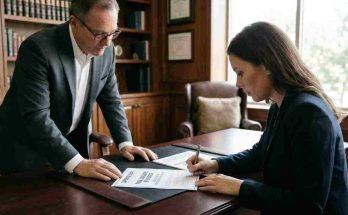
Margaret opened the first folder.
“Let’s begin with the application submitted using Mrs. Hale’s name and property information.”
Christa’s expression changed.
Only slightly.
But I saw it.
“That was just an inquiry,” she said.
Margaret looked at the document.
“It contained a signature presented as Mrs. Hale’s authorization.”
Christa waved a hand.
“It wasn’t final.”
“Did Dorothy authorize it?” Elaine asked.
Christa turned sharply.
“Mom, please stay out of this.”
“Answer the question.”
“Everybody was supposed to benefit!”
I spoke for the first time.
“How?”
Christa looked at me.
“What?”
“Explain how I was supposed to benefit from risking my paid-off home to help finance your father’s business.”
She opened her mouth.
Nothing came out.
Gerald shifted in his chair.
“The business was going through a temporary cash-flow problem,” he said. “There was no intention to put Dorothy in a difficult position.”
I turned toward him.
“Then why wasn’t I asked?”
He cleared his throat.
“We believed you’d be receptive to helping the family.”
“Believing something doesn’t make it permission.”
His face reddened.
Margaret remained calm.
“We have requested records showing how the application was created and submitted. The credit union has confirmed in writing that it will not process this application without resolving the authorization concerns.”
Christa leaned forward.
“Are you seriously threatening to take legal action against your own family, Dorothy?”
I looked directly into her eyes.
“No, Christa. I’m protecting myself from something that should never have happened.”
She laughed bitterly.
“All because I didn’t give you a plate at dinner.”
There it was.
The sentence she had been repeating for weeks.
The explanation she preferred because it made my behavior sound unreasonable and hers sound harmless.
I felt something settle inside me.
Not anger.
Clarity.
“Christa,” I said, “you are confusing the moment I finally noticed the problem with the problem itself.”
She stared at me.
I continued.
“That dinner wasn’t the beginning of your disrespect. It was the moment I stopped pretending not to see it.”
Owen lowered his head.
Elaine’s eyes filled.
Christa looked around the room.
“Unbelievable.”
Margaret opened the second folder.
“Now, about the funds Elaine and Gerald contributed for Maya.”
Christa went completely still.
Elaine leaned forward.
“Where is the education account, sweetheart?”
Christa’s face tightened.
“I told you I’d handle it.”
“Where is it?”
“I had to make some adjustments.”
“What adjustments?”
Christa looked toward Gerald.
He stared at the table.
Elaine noticed.
“Gerald?”
He sighed heavily.
“Some of the money was used as a short-term loan to the business.”
Elaine went pale.
“You knew?”
He didn’t answer.
“Gerald, I asked whether the money was being saved for our granddaughter.”
“It was temporary.”
She pressed a hand against her chest.
“How much?”
He looked at Christa.
Christa looked away.
Elaine’s voice rose.
“How much of Maya’s money did you take?”
Gerald finally answered.
“Most of it.”
The room went silent.
Elaine sank back in her chair.
For a moment, I thought she might faint.
Then she began to cry.
Not quietly.
Not politely.
She cried like someone whose understanding of her own family had just shattered.
“You used our granddaughter’s future to cover your business losses?”
Gerald began explaining cash flow, expected contracts, and payments he hoped would arrive.
But Elaine held up her hand.
“No.”
He stopped.
“No more explanations about what you hoped would happen. I want to know what actually happened.”
I glanced at Owen.
He looked devastated.
Christa shifted in her chair.
“Mom, Dad needed help. What was I supposed to do?”
Elaine looked at her daughter.
“Tell me the truth.”
Christa blinked.
“What?”
“You could have told me the truth.”
For the first time, Christa had no answer.
Margaret explained that the transfers would need to be reviewed and that any agreement regarding repayment would have to be documented separately.
Then Gerald turned toward me.
“Dorothy, surely you understand what it means to help your children when they’re struggling.”
I stared at him.
The nerve of that question nearly took my breath away.
“I understand it very well, Gerald.”
He nodded quickly.
“Exactly.”
“But there’s something you don’t seem to understand.”
His expression changed.
“What’s that?”
“Helping your children is a choice. It isn’t an entitlement. And it certainly doesn’t give anyone permission to take what belongs to somebody else.”
He looked down.
I turned to Christa.
“I would have listened if you’d told me you were frightened about your father’s business. I might have helped you find advice or look at your budget.”
She stared at me.
“But you didn’t ask for my help.”
I touched the folder in front of me.
“You tried to make the decision for me.”
Her jaw tightened.
“You’re acting like we’ve spent years exploiting you.”
I looked at her steadily.
“Then tell me something, Christa.”
She folded her arms.
“What?”
“Before that Sunday dinner, when was the last time you invited me over without needing money, childcare, cooking, or a favor?”
She opened her mouth.
Then closed it.
I waited.
The room stayed silent.
Finally, she muttered, “That’s unfair.”
“Perhaps.”
I leaned back.
“But I’ve spent six years being afraid to ask that question.”
The meeting ended without hugs, tearful reconciliations, or promises that everything would suddenly return to normal.
Gerald agreed to cooperate with the review of the transfers.
Christa agreed to provide records of the accounts she controlled.
Margaret made it clear that an agreement in a conference room would not replace the credit union’s investigation or any other necessary reporting.
Elaine left with a copy of the financial documents.
Owen stayed behind to speak with his wife.
And I walked outside into a beautiful spring afternoon.
The sun was shining.
Birds were calling from the trees.
Traffic moved steadily along the street.
For a strange moment, I felt almost disappointed.
I had expected the world to look different after something so important.
Instead, ordinary life was continuing.
A woman across the road was walking a golden retriever.
A delivery truck stopped outside an office building.
Someone laughed nearby.
And I realized that perhaps this was exactly what freedom looked like.
Not fireworks.
Not dramatic revenge.
Just the ability to walk away from a situation that had been controlling me for years.
I drove home with the radio playing softly.
And when I pulled into my driveway, I noticed something I hadn’t truly appreciated before.
My front door.
The old white door I’d painted myself the summer Owen went to college.
The brass handle I’d polished every Christmas.
The little stained-glass window that caught the afternoon sunlight.
My home.
Still mine.
And for the first time in years, I wasn’t afraid someone might arrive expecting me to give part of it away.
Six weeks passed.
During that time, my life changed in ways I had never anticipated.
The unauthorized application was formally closed. Margaret helped me obtain written confirmation and verify that no new lien had appeared against my property.
I reviewed my credit reports and kept the protective freezes in place.
The questions surrounding the signature were documented for the appropriate authorities and the lender’s investigation.
I learned that resolving something like this wasn’t as simple as making one angry telephone call.
There were forms, records, follow-up conversations, and uncomfortable details.
But every step gave me back a little more confidence.
Meanwhile, Elaine and Gerald separated.
She moved into a small apartment near her sister.
I didn’t know whether their marriage would survive.
That wasn’t my decision to make.
But Elaine called me one afternoon and said something I would never forget.
“Dorothy, I spent forty years believing that looking successful meant we were successful. I didn’t realize how much trouble we were hiding behind beautiful furniture.”
I understood more than she knew.
For years, I had believed that keeping everyone happy meant our family was happy.
We had both been measuring the wrong things.
As for the money intended for Maya, the review continued.
Gerald signed a written repayment agreement concerning the money traced to his business, although no one pretended that a signature alone meant the funds had been restored.
Elaine insisted on independent oversight of any future money she set aside for her granddaughter.
Owen began arranging Maya’s future savings with proper safeguards and direct account statements.
And Christa?
For a while, she blamed everyone.
She blamed Owen for revealing the documents.
She blamed Elaine for asking questions.
She blamed me for withdrawing my money.
She even blamed Margaret for taking the situation seriously.
But what she couldn’t do anymore was make everyone else carry the consequences while she controlled the story.
Owen eventually moved into a rented apartment nearby.
He and Christa began working through their separation and parenting arrangements.
I didn’t celebrate their problems.
I had once hoped their marriage would last a lifetime.
But I also refused to believe that keeping a marriage together justified allowing dishonesty to continue.
One afternoon, Owen called.
“Mom, can I bring Maya over Saturday?”
I smiled.
“Of course.”
He hesitated.
“Just for a visit. Not because I need you to watch her while I do something.”
I laughed softly.
“Owen, you’re allowed to ask me for help sometimes.”
“I know.”
“But asking and assuming are different things.”
“I understand.”
Then he said, “Mom?”
“Yes?”
“Thank you for not giving up on me.”
I looked toward the garden.
“I haven’t given up on you, sweetheart. I’m simply no longer willing to give up on myself.”
Saturday arrived bright and warm.
I was cutting roses when Owen’s car pulled into the driveway.
Maya climbed out before he had finished parking.
“GRANDMA!”
She ran toward me with both arms outstretched.
I dropped my gardening gloves and caught her.
“Oh, my goodness! Look how tall you’ve gotten!”
She giggled.
“You always say that!”
“Because you keep growing!”
She wrapped her arms around my neck.
And just like that, something in my heart began to heal.
Owen carried a small overnight bag onto the porch, then stopped.
“Mom, Maya has something she wants to show you.”
My granddaughter suddenly became shy.
She reached into her backpack and pulled out a folded piece of construction paper.
“It’s for you.”
I opened it carefully.
It was a drawing.
A long dining table.
Six chairs.
Six smiling people sitting together.
In the center was a large brown oval with little yellow lines across it.
I knew immediately what it was supposed to be.
The ham.
Maya pointed at the figures.
“That’s Daddy. That’s Mommy. That’s me. That’s Grandma Elaine and Grandpa Gerald.”
Then she pointed at the woman at the end of the table.
“And that’s you.”
My throat tightened.
“That’s beautiful, sweetheart.”
She looked up at me with serious blue eyes.
“Grandma?”
“Yes?”
“Why didn’t you get a chair last time?”
I glanced at Owen.
His eyes were already wet.
I knelt beside her.
“Sometimes grown-ups make mistakes, honey.”
She frowned.
“But you made the food.”
“I know.”
“And you were invited.”
“Yes.”
She looked down at the drawing.
Then she whispered, “I saved you a chair.”
My heart broke and healed in the same moment.
I hugged her tightly.
“Oh, Maya. Thank you.”
She wrapped her little arms around my neck.
Then she said something I think I will remember for the rest of my life.
“Grandma, next time, you can sit next to me. Then nobody can forget you.”
I pressed my cheek against her hair.
And I cried.
Not because I was ashamed.
Not because I was angry.
But because sometimes the simplest kindness comes from the smallest person in the room.
That evening, I made dinner.
Nothing fancy.
Roasted chicken.
Mashed potatoes.
Green beans with butter.
And a small apple pie.
Owen helped set the table.
I watched him take three plates from the cupboard.
One for himself.
One for Maya.
And one for me.
He placed my plate first.
Then he pulled out my chair.
It was such a small gesture.
Something most people would never notice.
But I noticed.
I noticed everything.
“Mom,” he said quietly, “sit down. We’ll bring the food.”
I smiled.
“Thank you, sweetheart.”
Maya climbed into her chair and looked at the table.
“Everybody has a plate!”
Owen laughed.
“Yes, honey. Everybody does.”
We ate slowly.
We talked about Maya’s school, her favorite books, and the little garden she wanted to plant beside my roses.
Nobody asked me for money.
Nobody criticized my cooking.
Nobody expected me to disappear into the kitchen once the food was ready.
And when Maya asked for another helping of mashed potatoes, Owen got up to serve her.
After dinner, he washed the dishes while I helped Maya with a puzzle.
I listened to the water running in the kitchen.
The sound felt strangely comforting.
For years, I had been doing everything because I thought that was what love required.
Now, for the first time, I was learning what it felt like to receive a little care in return.
Three months after that unforgettable Sunday dinner, Christa came to see me.
This time, she called first.
She asked whether we could talk.
I thought about saying no.
A part of me still remembered the refrigerator.
The empty space at the table.
The financial documents.
The anger on my porch when her key no longer worked.
But another part of me understood that boundaries were not the same thing as permanent hostility.
So I agreed to meet her.
At a café.
Not at my house.
She arrived ten minutes early.
When I walked in, she was sitting near the window with two cups of tea.
She stood when she saw me.
“Hello, Dorothy.”
“Hello, Christa.”
We sat.
For a while, she simply stared at her hands.
Then she said, “I owe you an apology.”
I waited.
She swallowed.
“A real one.”
I didn’t interrupt.
She looked at me.
“I was cruel to you.”
The words seemed difficult for her to say.
“That Sunday, I knew you had spent days preparing dinner. I knew you were excited. And I still treated you like you weren’t important enough to join us.”
My eyes stung.
She continued.
“I told myself you were being dramatic when you left. I told everyone you were trying to embarrass me.”
Her voice cracked.
“But the truth is, I embarrassed myself.”
I looked down at my tea.
Christa wiped her eyes.
“And the money…”
She took a shaky breath.
“I became so used to you helping us that I stopped seeing it as help.”
I nodded slowly.
“Yes, you did.”
She looked at me.
“I convinced myself that because you had a paid-off house and savings, you could afford whatever we needed.”
“Christa, having savings doesn’t mean someone else gets to decide how to spend them.”
“I know.”
She began crying.
“I know that now.”
We sat quietly.
Then she said, “I’m cooperating with the review of the application and the missing education money. I’m not asking you to drop anything.”
I looked at her carefully.
“Good.”
“I also started seeing a counselor.”
I nodded.
“I hope it helps.”
She stared at me.
“Do you hate me?”
I considered the question.
For years, I would have rushed to reassure her.
I would have said absolutely not, reached for her hand, and promised that everything was forgiven.
But I no longer believed that honesty had to be sacrificed to make other people comfortable.
“No, Christa,” I finally said. “I don’t hate you.”
She exhaled shakily.
“But I don’t trust you yet, either.”
Her expression tightened for a moment.
Then she nodded.
“I understand.”
I looked out the window.
“I hope one day we can have a respectful relationship. For Maya’s sake, and because I would prefer peace to bitterness.”
Christa wiped her eyes.
“But that doesn’t mean returning to the way things were.”
“I know.”
“You and Owen will remain responsible for your own household expenses. I won’t be signing financial documents for either of you. And if you visit my home, I expect you to knock.”
A small, embarrassed smile crossed her face.
“Fair enough.”
I picked up my tea.
“And Christa?”
“Yes?”
“If you invite someone to dinner, give them a chair.”
She laughed through her tears.
“I will.”
I didn’t know whether she would keep that promise.
Only time could answer that.
But for the first time, she seemed to understand that I no longer needed her approval to feel worthy of respect.
And that was enough for one afternoon.
By autumn, my life looked different.
I enrolled in a watercolor class at the community center.
I started taking weekend trips with my friend Ruth, who had spent years inviting me places I was always too busy to go.
I replaced the worn carpet in my bedroom.
And one afternoon, I walked into a travel agency and booked a trip to the coast.
I had always wanted to spend a week near the ocean.
For years, I told myself it was too expensive.
Too selfish.
Too unnecessary.
But when I reviewed my finances, I realized something remarkable.
Without the phone bills, insurance payments, automatic transfers, and constant unexpected expenses, I had room to breathe.
I wasn’t wealthy.
I still had to be careful.
But I could afford a modest vacation without worrying that someone else would need the money first.
I sat on the beach one cool morning, listening to the waves and watching gulls circle overhead.
I thought about all the years I’d spent proving my love through sacrifice.
Then I thought about the people who truly loved me.
Maya, who wanted me beside her at the dinner table.
Ruth, who called simply to ask how I was doing.
Elaine, who had started joining me for coffee every other Thursday.
And Owen, who was slowly rebuilding our relationship through actions rather than promises.
We weren’t a perfect family.
Perhaps we never would be.
But I had finally stopped confusing a perfect appearance with a healthy relationship.
And there was peace in that.
The following Thanksgiving, I hosted dinner at my house.
Not because anyone demanded it.
Not because I felt guilty.
But because I wanted to.
Owen arrived early to help.
Maya brought a paper turkey she’d made at school.
Elaine carried a pumpkin pie.
Ruth brought flowers.
Christa joined us later, after asking whether she would be welcome.
The adults were still working through complicated relationships, and the financial matters had not simply vanished.
But everyone understood the rules.
Nobody brought up money at the table.
Nobody expected me to serve them without helping.
And nobody treated kindness as a debt that could be collected later.
I made my famous honey-glazed ham.
Twelve pounds.
The same size as the one I’d carried out of Owen’s house months earlier.
As I placed it on the dining table, Maya clapped excitedly.
“Grandma! It’s your special ham!”
I laughed.
“Yes, sweetheart.”
Owen took the serving platter from me.
“Mom, sit down. I’ll carve.”
I hesitated.
Then I let him.
There were seven chairs around the table.
Seven plates.
Seven glasses.
One for everyone who had agreed to come.
I looked at the place settings and felt tears gathering.
Owen noticed.
He leaned toward me.
“Are you okay, Mom?”
I smiled.
“Yes, sweetheart.”
He squeezed my shoulder.
“Are you sure?”
I nodded.
“I’m better than okay.”
Maya reached for my hand.
“Grandma, you sit here!”
She pointed to the chair beside her.
I sat.
And this time, nobody told me to look in the refrigerator.
Nobody suggested that I eat separately.
Nobody acted as though my presence was less important than anyone else’s.
We shared food.
We shared stories.
We laughed at Maya’s silly jokes.
At one point, Owen stood and raised his glass.
“I’d like to say something.”
The conversation stopped.
He looked at me.
“Mom, this year taught me something I should have learned a long time ago.”
I felt my throat tighten.
He continued.
“Family isn’t just about who helps when you need something. It’s about making sure the people who love you know they matter.”
He swallowed.
“And sometimes the person who’s given the most is the person we’ve thanked the least.”
He raised his glass.
“To Mom. Thank you for everything. But especially thank you for teaching me that love and respect have to go both ways.”
I wiped my eyes.
Everyone raised their glasses.
Even Christa.
And when Maya looked around the table, she announced proudly:
“See, Grandma? Everybody has a chair!”
We all laughed.
But I knew she was saying something far more important than she realized.
Later that evening, after the guests had gone home, I stood alone in my kitchen.
The house was quiet.
A few dishes remained beside the sink.
There were leftovers in the refrigerator.
Real leftovers.
Food from a dinner where everyone had eaten together and enjoyed themselves.
I opened the refrigerator and smiled.
Then I remembered the first Sunday.
The humiliation.
The silence.
The drive home with that ridiculous ham strapped into my passenger seat.
At the time, I had believed I was losing my family.
I thought that saying no would make everyone disappear.
I thought that stopping the money would mean stopping the love.
But I had been wrong.
The people who genuinely cared about me had found ways to remain.
The relationships that survived had begun changing.
And the people who had benefited from my silence had finally been forced to hear my voice.
I closed the refrigerator and turned off the kitchen light.
Before going upstairs, I stopped beside the little table near my front door.
There, in a simple wooden frame, was Maya’s drawing.
The long dining table.
The smiling faces.
The big brown ham.
And the chair she had saved for me.
Underneath it, in her careful handwriting, were five words:
GRANDMA, YOU BELONG HERE TOO.
I touched the frame gently.
For so many years, I had thought that being a good mother meant making sure everyone else was comfortable, even when I wasn’t.
I had believed that giving more would somehow make people love me more.
But I had finally learned that love cannot be bought with paid bills, expensive dinners, or endless sacrifices.
And respect cannot be earned by accepting humiliation.
Sometimes the most powerful thing a person can do is quietly pick up what belongs to them and walk away.
Not to punish anyone.
Not to prove a point.
But to remember their own worth.
That Sunday, Christa thought she was sending an old woman to eat leftovers alone.
She had no idea that she was sending me home to reclaim my life.
And the most important thing I took back wasn’t the money.
It wasn’t my house.
It wasn’t even the key to my front door.
It was the belief that I deserved a place at the table without having to pay for it.
My name is Dorothy Hale.
I’m sixty-three years old.
I’m a mother.
I’m a grandmother.
I’m a woman who spent decades giving everything she could to the people she loved.
And now, finally, I’m learning to give some of that love to myself.
As for the twelve-pound ham?
Well, every Thanksgiving, Maya still asks me to make it.
And every time I do, she runs into the dining room, counts the chairs, and makes sure there’s one waiting for me.
Because my granddaughter understands something that took me sixty-three years to learn.
The people who truly love you won’t make you beg for a seat at their table. They’ll pull out a chair before you even ask.
THE END! THANK YOU FOR READING!